A useful accessory for slower journeys
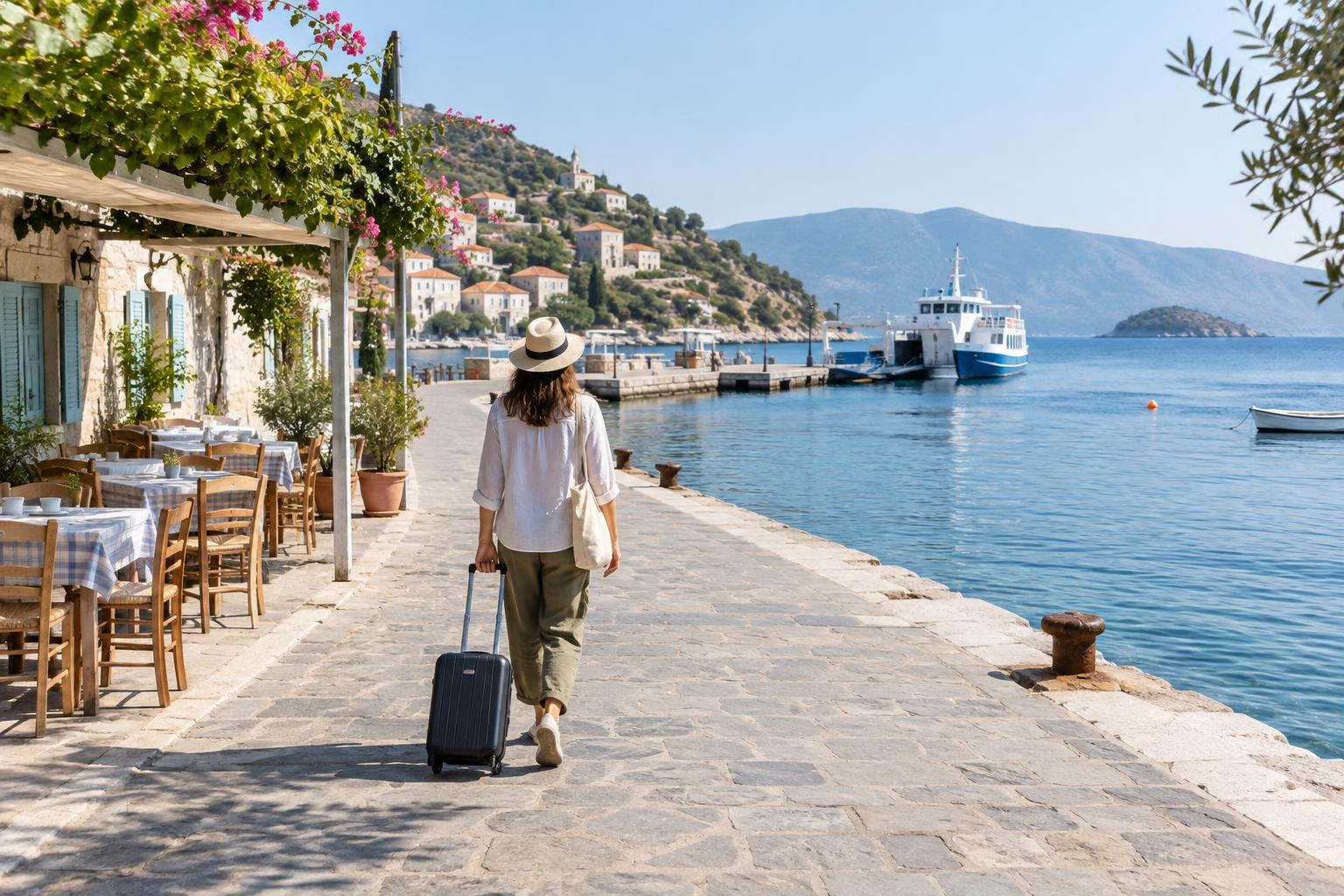
Travel across the water has its own rhythms. There may be time on a ferry deck, an early walk through a fishing town, an unhurried lunch, and a cool return after sunset. Clothing that moves between these moments is more helpful than an outfit planned for only one photograph. A scarf can sit over a light layer when the air changes, soften the line of a coat, or give a simple dress a different emphasis. It asks for little space in a bag, although a substantial winter scarf will naturally take more room than a small square.
Think first about the journey, rather than an imagined ideal wardrobe. Will you spend more time outside by the sea, visiting maritime museums, or sitting over a long meal? Are you packing a raincoat, a wool coat, or a light jacket? Those answers suggest whether to consider a generous wrap, a neck scarf, or a square that can be folded and worn in several ways. The point is not to dress for every possible change in weather. It is to bring one piece with a clear role.
The UniqueYou story, without unnecessary mythology
UniqueYou began in 2014 with scarves and clothing. Its history includes a pause and a return after the domain was recovered, rather than an uninterrupted run of trading. That distinction matters: a brand can have a recognizable beginning without needing a polished story of constant growth. Today, its stated accessory range includes scarves, shawls, wraps and square scarves for women. The emphasis here is on choosing an elegant, accessible addition that fits an existing wardrobe, not on building an entirely new one around a single purchase.
The original brown wordmark, horse motif and “Since 2014” detail give the identity a recognizable point of reference; a neutral taupe palette keeps the presentation understated. Neither a logo nor a color scheme tells you how a scarf will feel against your neck, of course. They are better understood as part of the brand’s visual language. For a thoughtful purchase, move from that first impression to the practical questions: dimensions, composition, color, pattern, and how you expect to wear the piece.
Choose material for the job, not just the name
Silk, wool and cashmere suggest different ways of wearing a scarf, but a category name is only a starting point. A light scarf in a silk category may appeal when you want a soft accent with a shirt or a compact piece for an evening out. A wool-category scarf may be a more intuitive choice for colder walks, while a cashmere-category wrap might suit someone seeking a generous layer with a refined look. Weight, weave, size and the composition of the individual item all affect how it behaves; check the product details rather than assuming every piece in a category is identical.
For a sea crossing, picture the moment when you would reach for the scarf. If it is mainly for warmth on an exposed deck, coverage and the way it sits beneath a coat matter. If it is for a restaurant after a day outside, consider how easily it can be arranged over your shoulders. If you want a small change of color near your face, a square or narrow scarf may be enough. No material needs to serve every occasion. A good choice answers a particular need and leaves the rest of the packing list simpler.
Start with the clothes already in your wardrobe
Before choosing a pattern, lay out the outer layer and two or three outfits you wear most often. A navy coat, pale shirt and dark trousers may welcome a warm brown or a lively print; a wardrobe already full of strong patterns might benefit from a quieter scarf. Look at the colors near your face as well as the colors in a product image. A shade that works beautifully with a handbag may be less useful if it clashes with the jacket you wear every day.
It helps to decide whether the scarf should blend or provide contrast. Blending can mean repeating a color from your coat, knitwear or shoes without matching it exactly. Contrast can mean adding a clear light note to a dark outfit, or a small patterned detail to plain separates. Neither approach is inherently more sophisticated. What matters is whether you can name several outfits in which the scarf would feel natural. If you can imagine wearing it only with something you do not yet own, pause before adding it to your bag.
Patterns, proportions and the art of wearing less
A printed scarf can carry a surprising amount of visual interest, so it often works best when the surrounding clothes give it room. Leopard pattern, checks and strong color can each be effective without competing for attention. Try a patterned square with a plain neckline, or set a more expressive long scarf against a simple coat. If your jacket already has a bold check, a restrained color may make the whole outfit feel more settled.
Size is as important as print. A small square can frame the face, be tied at the neck, or add a modest accent to a daytime outfit. A long scarf allows a loose drape or a comfortable turn around the neck. A shawl or wrap gives broader coverage across the shoulders, which can be useful when moving from an outdoor table to a cooler interior. You need not master elaborate knots. A straightforward fold or relaxed drape often looks more at ease, particularly on a journey where you will take layers on and off.
Pack with changing coastal weather in mind
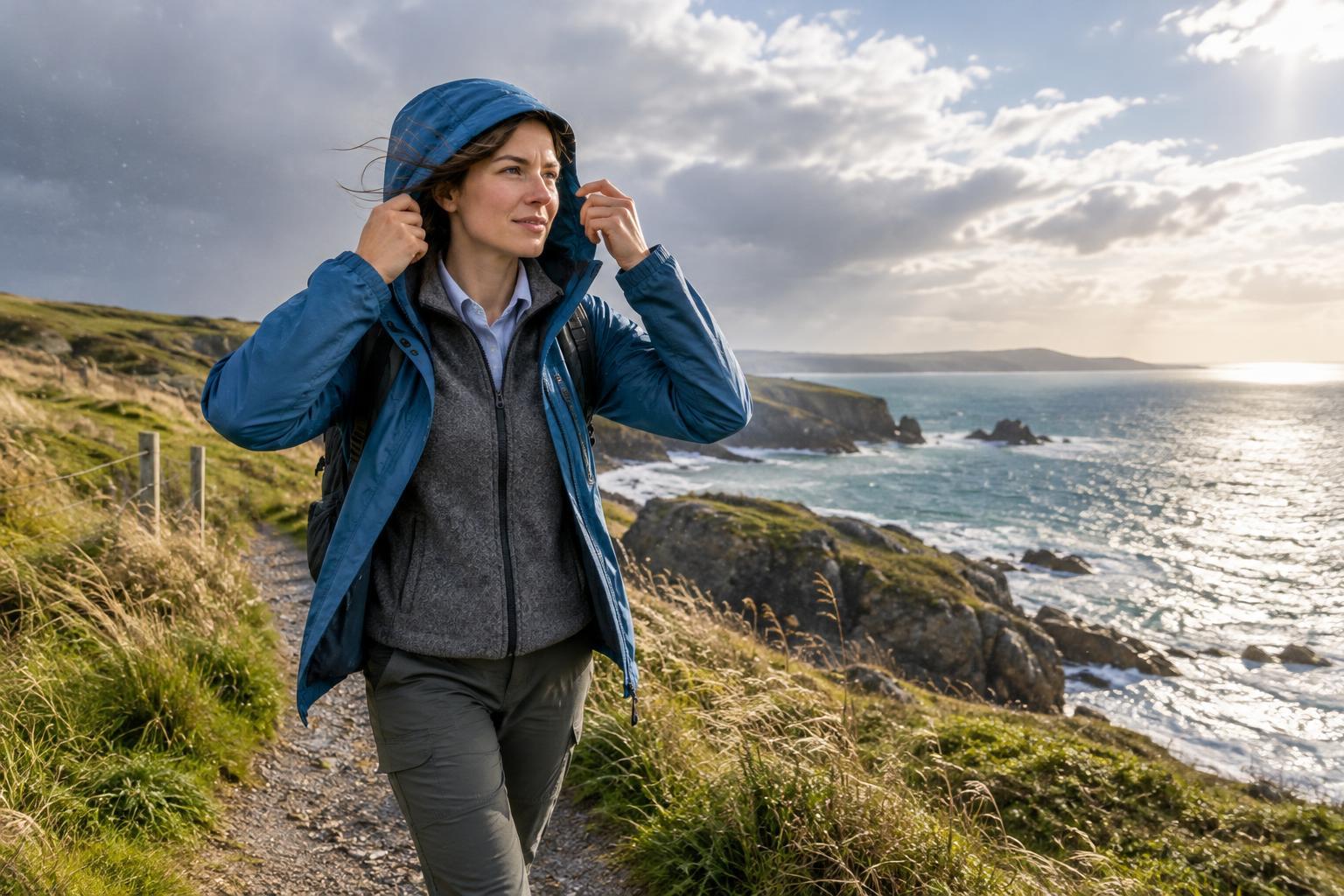
A coastline can be warm in shelter and cool when the wind comes across open water. That does not make a scarf a substitute for a suitable coat or practical rain protection. Instead, treat it as an adjustable layer within a sensible outfit. On a ferry or during an evening harbour walk, a generous scarf can help cover the neckline left open by a jacket. On a mild day, a smaller piece may provide all the extra detail you want without becoming something else to carry.
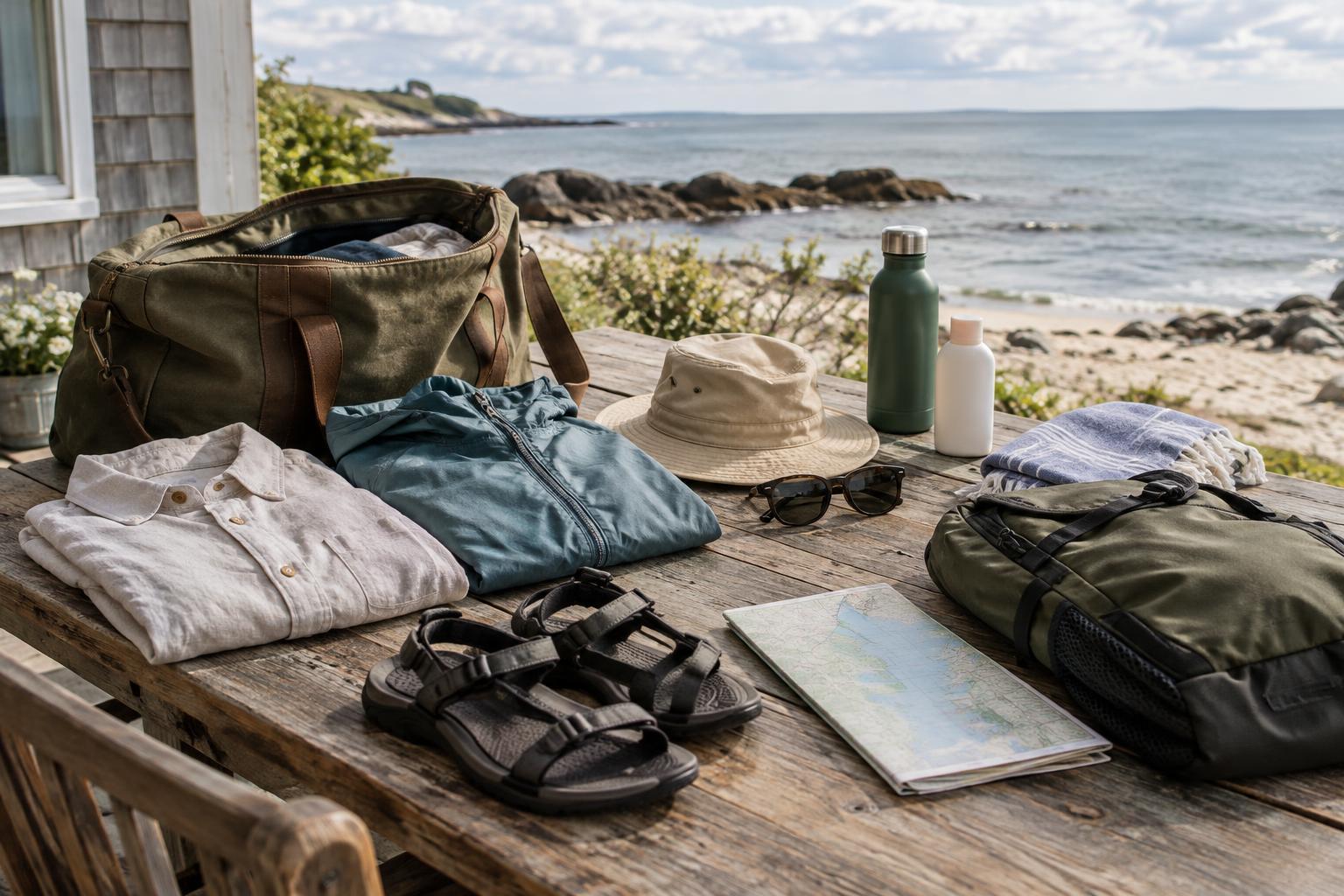
Give your chosen scarf a place in your bag where it will not be caught against sharp objects or forgotten beneath heavier items. Check its care information before departure, particularly if you expect to wear it often or pack it beside toiletries. When planning a trip, it is tempting to bring several versions for imagined occasions. One scarf that works with your main coat and your evening clothes may prove more useful than three that each suit only one look. Leave space for the food, places and people you went to encounter.
A gift chosen around the recipient’s life
A scarf can make a personal gift without requiring the close fit of a tailored garment. The thoughtful part is observing how the recipient actually dresses. Do they reach for quiet neutrals, bright accents, checks, or a particular color? Do they wear scarves close around the neck, or prefer a loose layer over the shoulders? Someone who travels frequently may appreciate a piece that works with the coat they already take everywhere. Someone else may enjoy a square that adds interest to familiar shirts and dresses.
If you are unsure, begin with a color already present in their wardrobe and consider how the dimensions suit their habits. Look at the individual item’s material information instead of treating a category label as a promise about every product. You can also choose with an occasion in mind: a winter journey, a family celebration, or simply an everyday walk to the market. The strongest gift explanation is usually modest and specific: you noticed what they wear, and you thought this would belong beside it.
Find the language and destination that suit you
UniqueYou has 20 regional domains, 21 regional-language versions and 16 distinct languages. Those numbers describe a guide to destinations, not 21 separate languages: countries can share a language, as Germany and Austria share German versions and several destinations use English. The United Arab Emirates has an Arabic root version and an English /en version on the same regional domain. Choosing the right version is useful when you want to browse product categories in the language and regional context intended for you.
The guide below pairs each destination with its language before pointing to a relevant starting place or category. Some local terms will be unfamiliar to English readers; they are included to identify what you will find in that destination’s language, not to suggest that every country dresses alike. Browsing across versions can offer ideas, but the same purchasing principles remain steady: check the particular item, consider the clothes already in your wardrobe, and choose a scarf for the way you will actually wear it.
A regional guide to browsing UniqueYou
Each destination below names its country and browsing language. Follow the local term or brand reference for the indicated starting point or category; then check individual product details before deciding what belongs in your wardrobe or travel bag.
Poland — Polish
For Poland, browse in Polish. Start with the regional UniqueYou destination — UniqueYou. If you are planning for cold walks and want to explore the Polish term for a thick women’s winter scarf, use gruby szal zimowy damski. For a quieter color direction, the brown-scarf category is reached through UniqueYou — UniqueYou. Compare size and composition with the coat you expect to wear.
Germany — German
For Germany, the destination language is German. The regional UniqueYou starting point is UniqueYou. To explore a silk neck-scarf category under its German term, follow halstuch seide; for a broader scarf selection, use UniqueYou — UniqueYou. Think about whether a light accent or a more covering layer will see more use on your own journeys.
Czechia — Czech
For Czechia, browse in Czech. The regional UniqueYou starting point is UniqueYou. A Czech term for a wool scarf leads to that category — šála vlněná; for silk squares, follow UniqueYou — UniqueYou. A square and a longer scarf can play quite different roles, so consider how you prefer to wear fabric around your neckline.
Spain — Spanish
For Spain, the destination language is Spanish. Begin at the regional UniqueYou destination — UniqueYou. The Spanish term for silk scarves opens a focused category — fulares de seda; for a wider selection of squares and scarves, use UniqueYou — UniqueYou. A light piece may be especially easy to picture with the shirts and jackets you already pack.
France — French
For France, browse in French through the regional UniqueYou starting point — UniqueYou. If a distinctive print would suit your plain coats, the French term for browsing leopard scarves online leads to that selection — foulard léopard en ligne. For a different, colder-weather direction, explore wool scarves through UniqueYou — UniqueYou. Let your existing patterns guide how bold a new one should be.
Hungary — Hungarian
For Hungary, the destination language is Hungarian. Find the regional UniqueYou starting point at UniqueYou. A local term for a women’s stole leads to a broader shoulder-layer option — női stóla. If red is a color you already wear with confidence, explore that scarf selection through UniqueYou — UniqueYou. Consider whether the piece is meant for warmth, color, or both.
Italy — Italian
For Italy, browse in Italian. The local phrase for a silk-scarf shop takes you to the regional starting point — negozio di foulard di seta. To go directly to the silk-scarf category, follow UniqueYou — UniqueYou. A scarf chosen for a light jacket and a relaxed evening outfit is often more versatile than one bought for a single imagined occasion.
Romania — Romanian
For Romania, the destination language is Romanian. Begin at the regional UniqueYou destination — UniqueYou. The Romanian term for a head scarf leads to a head-and-hair-scarf category — esarfa de cap; for a restrained black option, follow UniqueYou — UniqueYou. Think about how you would tie the piece and whether its dimensions support that use.
Slovakia — Slovak
For Slovakia, browse in Slovak. The regional UniqueYou starting point is UniqueYou. A Slovak term for neck scarves leads to that selection — šatky do krku; for pieces intended for the head and hair, use UniqueYou — UniqueYou. These are different styling needs, so decide which one fits the clothes and habits you have now.
Finland — Finnish
For Finland, the destination language is Finnish. The local phrase for finding silk scarves online leads to the regional starting point — silkkihuivit netistä. To consider a shoulder-shawl category instead, follow UniqueYou — UniqueYou. If your travels include long stretches outside, compare the coverage you want with the size of the layer you are willing to carry.
Sweden — Swedish
For Sweden, browse in Swedish. The local phrase for a shop with silk scarves points to the regional starting place — butik med sidenscarfar. The silk-scarf category is available through UniqueYou — UniqueYou. Consider a color that can move between an everyday coat and a simple evening outfit, then check the particular item’s details.
Denmark — Danish
For Denmark, the destination language is Danish. The local phrase for a scarf shop leads to the regional starting point — butik med tørklæder. To narrow the selection toward brown scarves, follow UniqueYou — UniqueYou. Brown can work quietly beside navy, cream or other muted clothes, but the useful test is still your own coat and knitwear.
Belgium — Dutch
For Belgium, this destination uses Dutch. The local phrase for an online shop for scarves and small scarves takes you to its starting point — webshop voor sjaals en sjaaltjes. A white-scarf category is reached through UniqueYou — UniqueYou. A pale accessory can lighten darker outerwear; consider how readily it fits the everyday clothes you actually wear.
Austria — German
For Austria, browse in German through the regional UniqueYou starting point — UniqueYou. The German phrase for buying a stole leads to that category — stola kaufen; for neck scarves, follow UniqueYou — UniqueYou. Although Germany also uses German, this is Austria’s own regional destination. Choose between shoulder coverage and a compact neck accent according to your plans.
Netherlands — Dutch
For the Netherlands, the destination language is Dutch. The local phrase for an online shop for scarves and small scarves leads to the regional starting point — webshop voor sjaals en sjaaltjes. To focus on a silk-scarf category, use UniqueYou — UniqueYou. Belgium also has a Dutch version, so choose the destination relevant to you before comparing individual pieces.
United States — English
For the United States, browse in English. The phrase for the regional silk-scarf shop leads to its starting point — silk scarf shop. If you are looking instead at colder-weather layers, explore the wool-scarf category through UniqueYou — UniqueYou. Check each item’s composition and measurements before deciding whether it suits a daily coat or a travel bag.
United Arab Emirates — Arabic
For the United Arab Emirates, this root destination is in Arabic. The Arabic local phrase for a scarf shop leads to that starting point — متجر أوشحة. It is the Arabic version rather than the separate English /en version. Browse in the language you prefer, then judge each scarf by its details and how it fits your existing wardrobe.
United Arab Emirates — English
For the United Arab Emirates, this destination is in English. Follow UniqueYou — UniqueYou — to reach its English /en version on the same regional domain as the Arabic root. The two language versions offer a choice of browsing language, not two different countries. Start with the one in which you find product details easiest to assess.
Ireland — English
For Ireland, browse in English. The phrase for the regional silk-scarf shop takes you to its starting point — silk scarf shop. If checks suit your plain outerwear, explore that scarf category through UniqueYou — UniqueYou. Look at the scale of a pattern against the coats and shirts you wear most; a check can be quiet or prominent.
United Kingdom — English
For the United Kingdom, the destination language is English. The phrase for the regional silk-scarf shop leads to its starting point — silk scarf shop. To consider a more generous shoulder layer, explore the cashmere-wrap category through UniqueYou — UniqueYou. Check the individual item’s composition and size rather than relying on the category name alone.
Portugal — Portuguese
For Portugal, browse in Portuguese through the regional UniqueYou starting point — UniqueYou. The Portuguese term for scarves leads to that category — cachecois; for shawls, follow UniqueYou — UniqueYou. On a journey that moves between a breezy waterfront and an indoor meal, decide whether neck coverage or a layer across the shoulders would serve you better.
A considered scarf need not transform your wardrobe. Choose one that belongs with what you already own, check the details of the individual piece, and let it accompany the journeys you actually make.