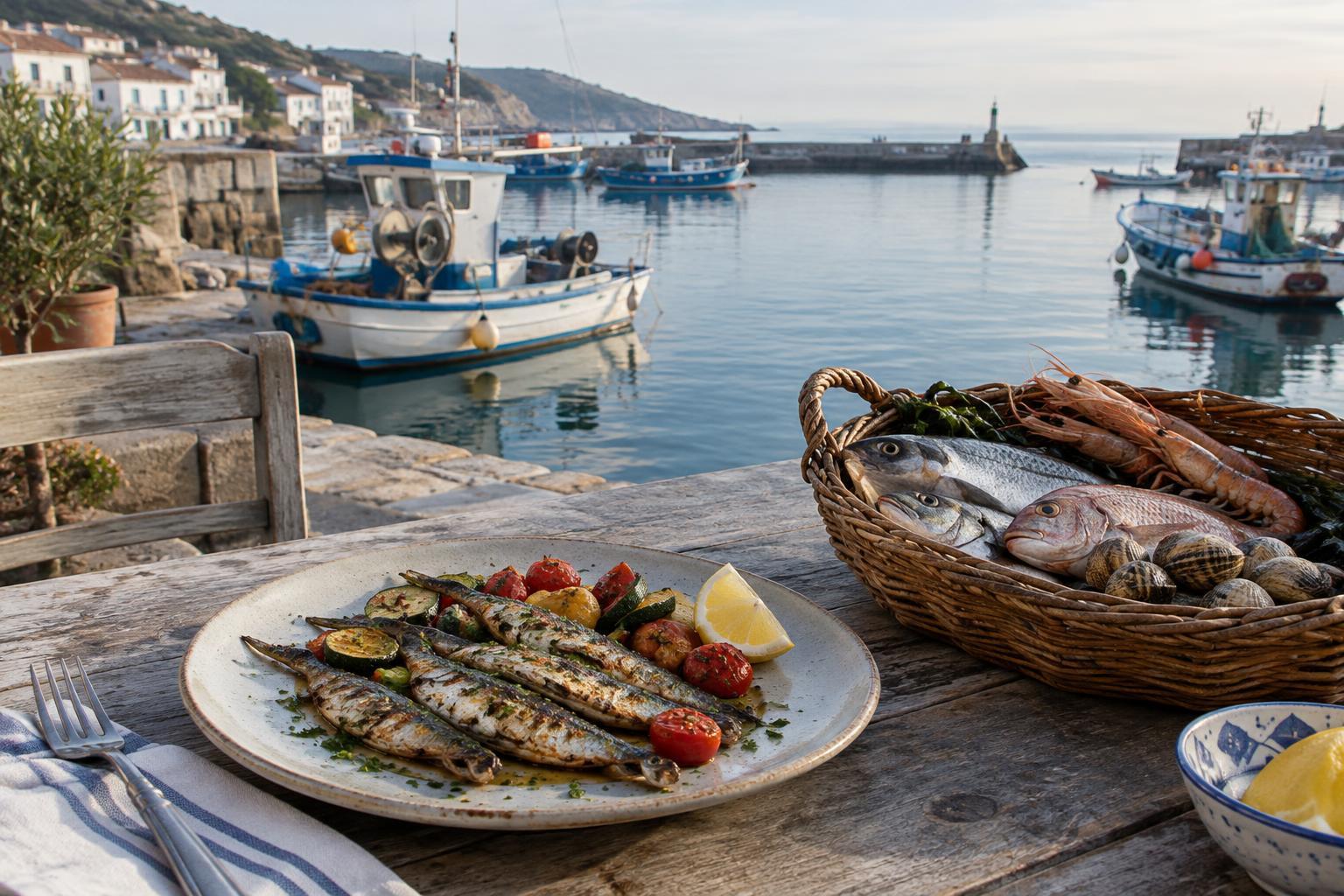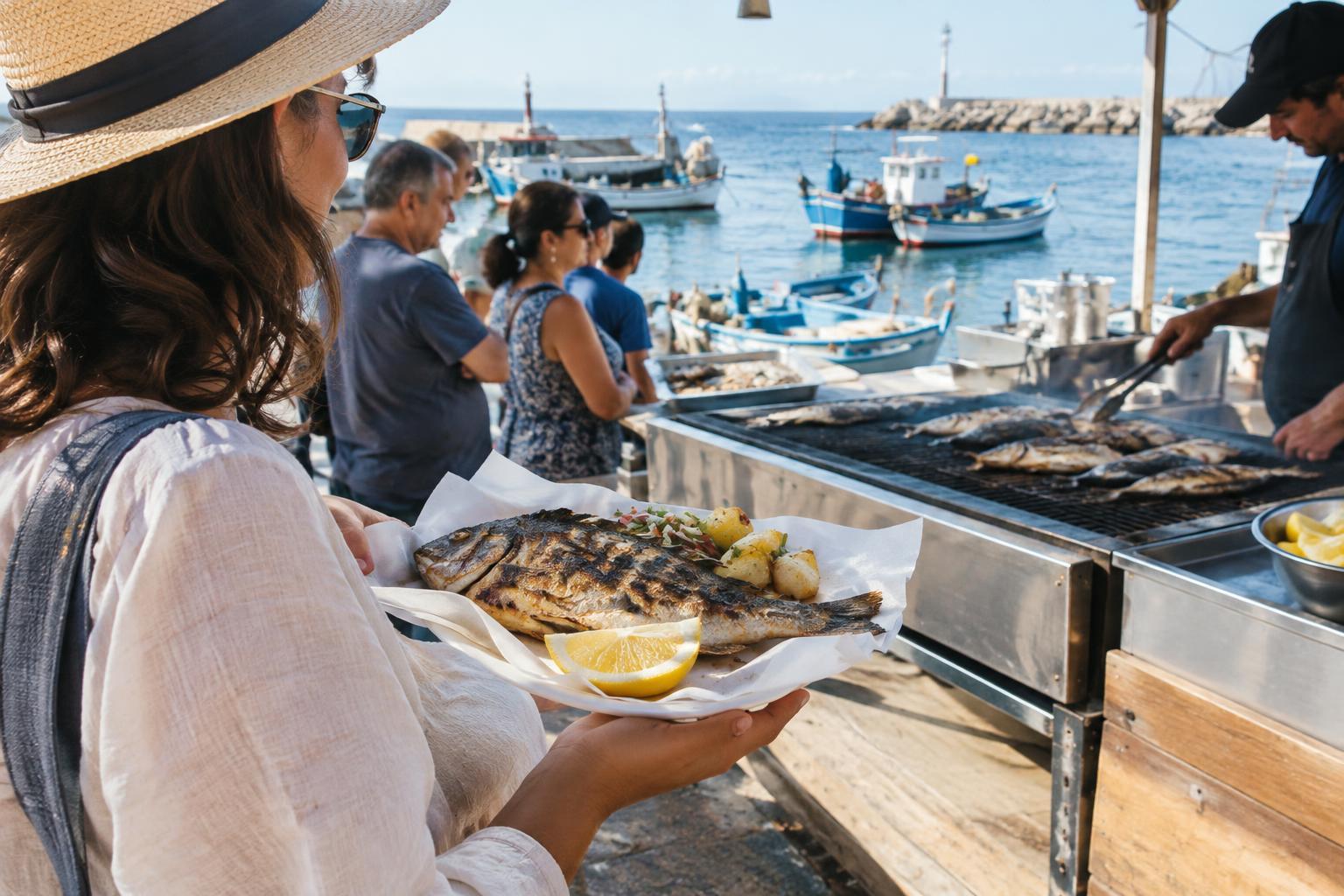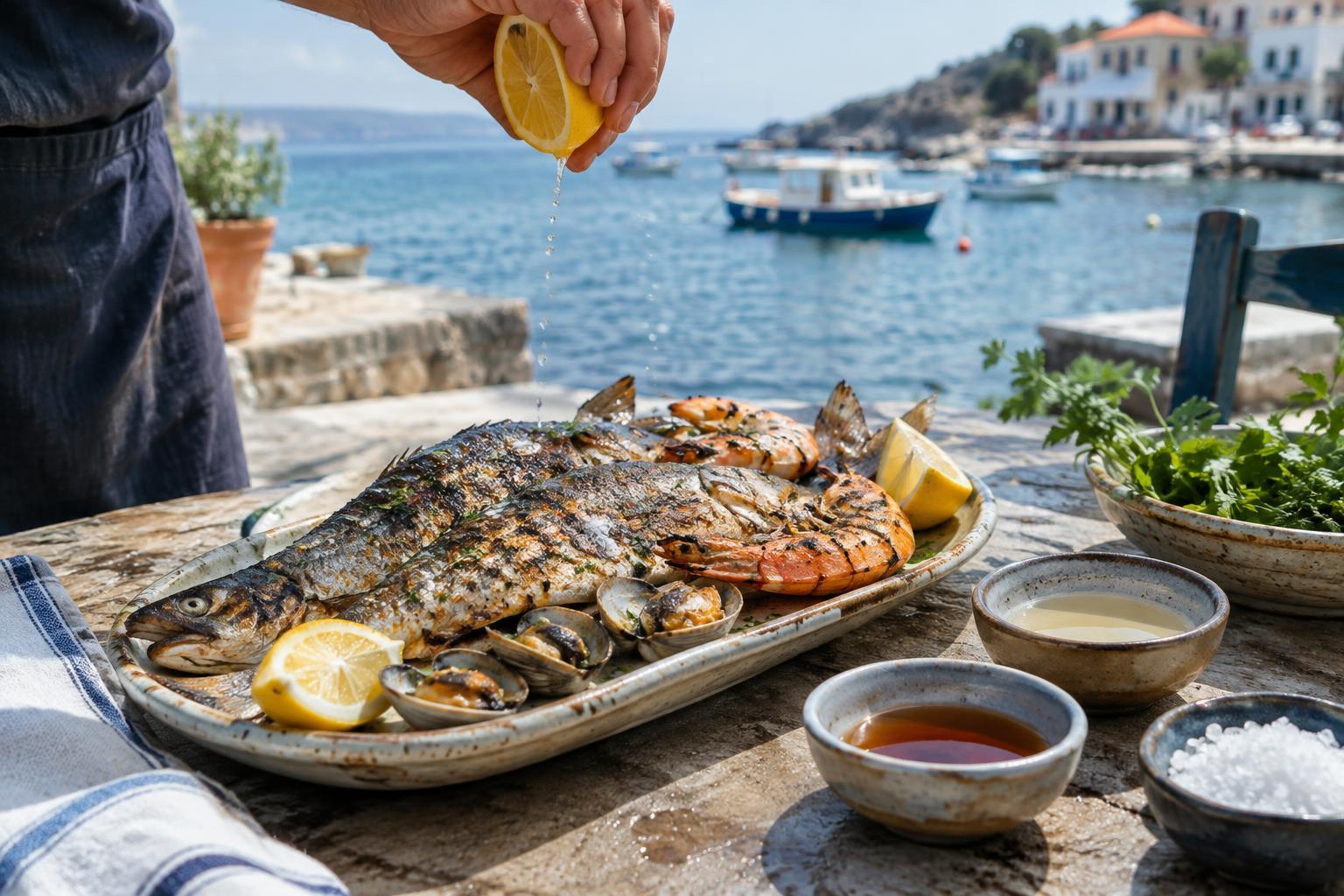
The catch is only part of the meal
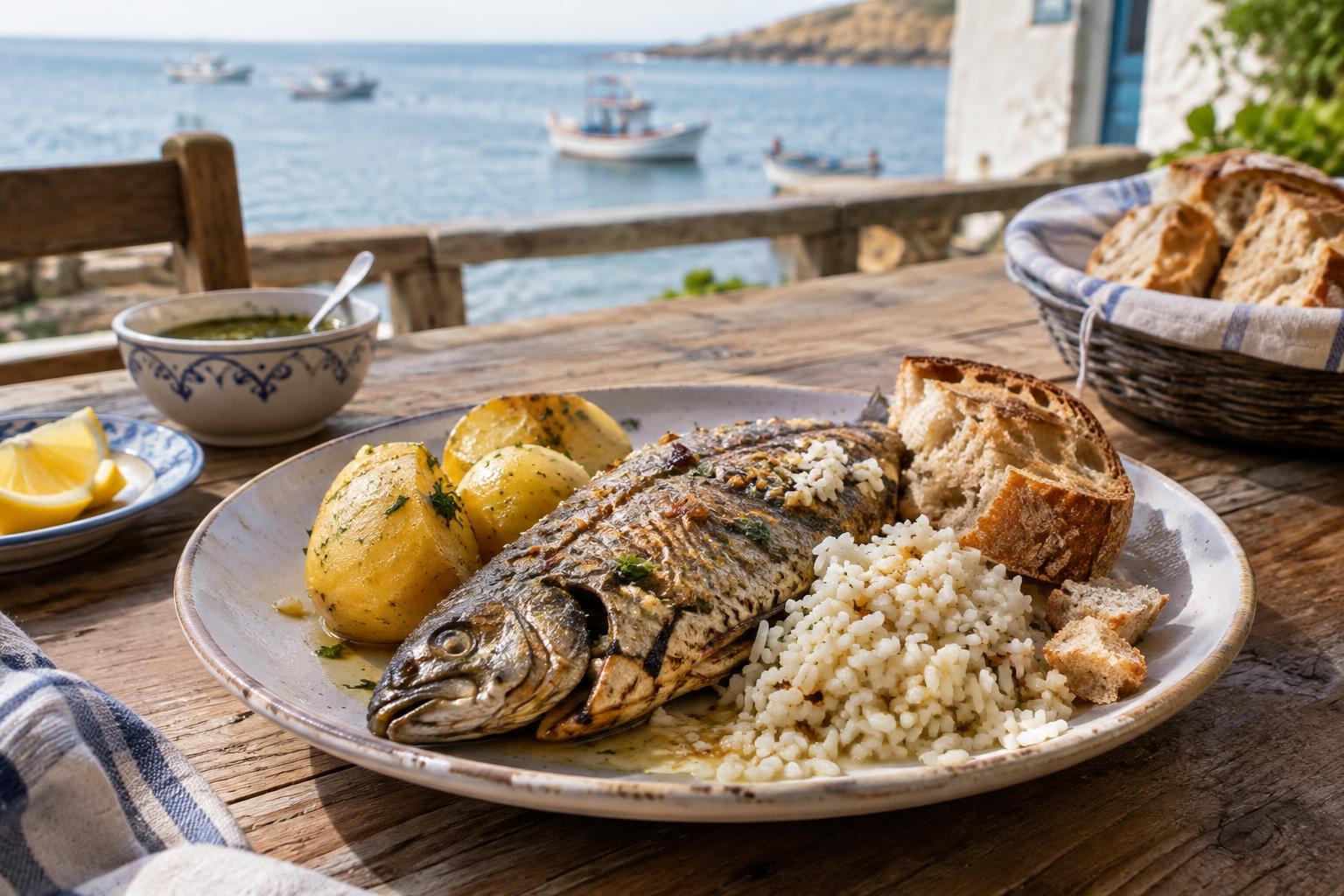
A plate of grilled fish may look like the defining coastal meal, but what sits beside it often tells just as much of the story. Rice, bread, potatoes, cassava and other staples turn seafood into a meal that can be shared around a table. They add substance without demanding that a small or variable catch feed everyone on its own.
There is no single rule for what belongs with fish. Coastal communities differ in what they can grow, obtain through trade, preserve and afford. Even within one place, a weekday lunch may look different from a celebratory dinner. Still, pairing seafood with a familiar staple is a practical pattern: the catch supplies flavor and variety, while the grain, loaf or root helps make the meal dependable.
What grows nearby shapes what goes on the plate
A coast is not a single kind of landscape. Some shores meet fields suited to grains; others rise into rocky slopes or sit beside land where root vegetables are important. Islands may have limited growing space but long histories of exchanging food with nearby shores. The companion to seafood therefore depends on more than proximity to the water. It reflects the land behind the harbor and the routes leading away from it.
Storage matters, too. Dried grains can wait in a cupboard, flour can become bread, and many roots keep longer than delicate greens when stored appropriately. These foods are useful partners for an ingredient that may be available unevenly. A household does not need to plan every dinner around a perfect catch if a filling base is already at hand. That flexibility helps explain why familiar staples remain part of coastal cooking even where fresh seafood is prized.
Staples carry the sauce
The pairing also works at the level of a bite. Bread can catch the juices from a pan of fish, while rice can absorb a broth flavored with shellfish or herbs. Potatoes and other roots can soften a sharp sauce, add texture beside flaky flesh or thicken a stew as they cook. In dishes like these, the accompaniment is not an afterthought. It makes use of flavors that might otherwise be left in the pan or bowl.
Cooking methods often bring the ingredients together naturally. A fish stew can stretch across several portions when spooned over a grain. Seafood can be tucked into a loaf or served with bread that lets diners gather up every drop. Roots can cook alongside a catch in one pot, taking on some of its flavor. These are possibilities rather than a universal coastal menu, but they show why the partnership is appealing: each part improves the way the other is eaten.
The everyday plate has a history
Food traditions grow through repetition, adaptation and exchange. A staple may remain on the table because families know how to prepare it, because it suits the equipment available or because it connects a dish to home. Bread baked for daily meals can become the natural partner for a seafood broth. A grain already central to local cooking can provide the base for whatever comes ashore. Over time, practical combinations can become foods people seek out for comfort and familiarity.
It is worth looking past the idea that a coastal meal must feature a large, pristine piece of fish. In many kitchens, the skill lies in using smaller amounts well: building a broth, seasoning a pot of grains or serving a modest catch with substantial sides. Local preferences, household budgets and access to ingredients all influence the result. What a visitor reads as a signature dish may also be someone else’s straightforward way of making dinner.
How to notice the pairing when you travel
At a market or a small restaurant, read the whole menu rather than looking only for the seafood name. Notice whether fish arrives with a grain, a piece of bread or a root vegetable, and whether that staple is plain, seasoned, fried or cooked in the same pot. Each choice offers a clue about how the meal is meant to be eaten. A side that seems simple may be there to catch a sauce, balance a strong flavor or make the serving more satisfying.
If you are curious, ask what people commonly eat with the dish and how they use the bread or staple on the plate. Listen for variation rather than expecting one definitive answer. The most revealing coastal meal is not necessarily the most elaborate one. Sometimes it is a bowl of seafood and broth with something sturdy alongside it: a reminder that food by the sea is shaped as much by daily life on land as by the water.