Start with the walk, not the container
A small first-aid kit should cover the minor problems you can reasonably manage while walking: a rubbed heel, a shallow scrape or a small cut. It cannot replace a route plan, suitable footwear or help in an emergency. Before packing, consider how long you will be out, whether you are walking alone and how easily you could leave the route if someone needs assistance.
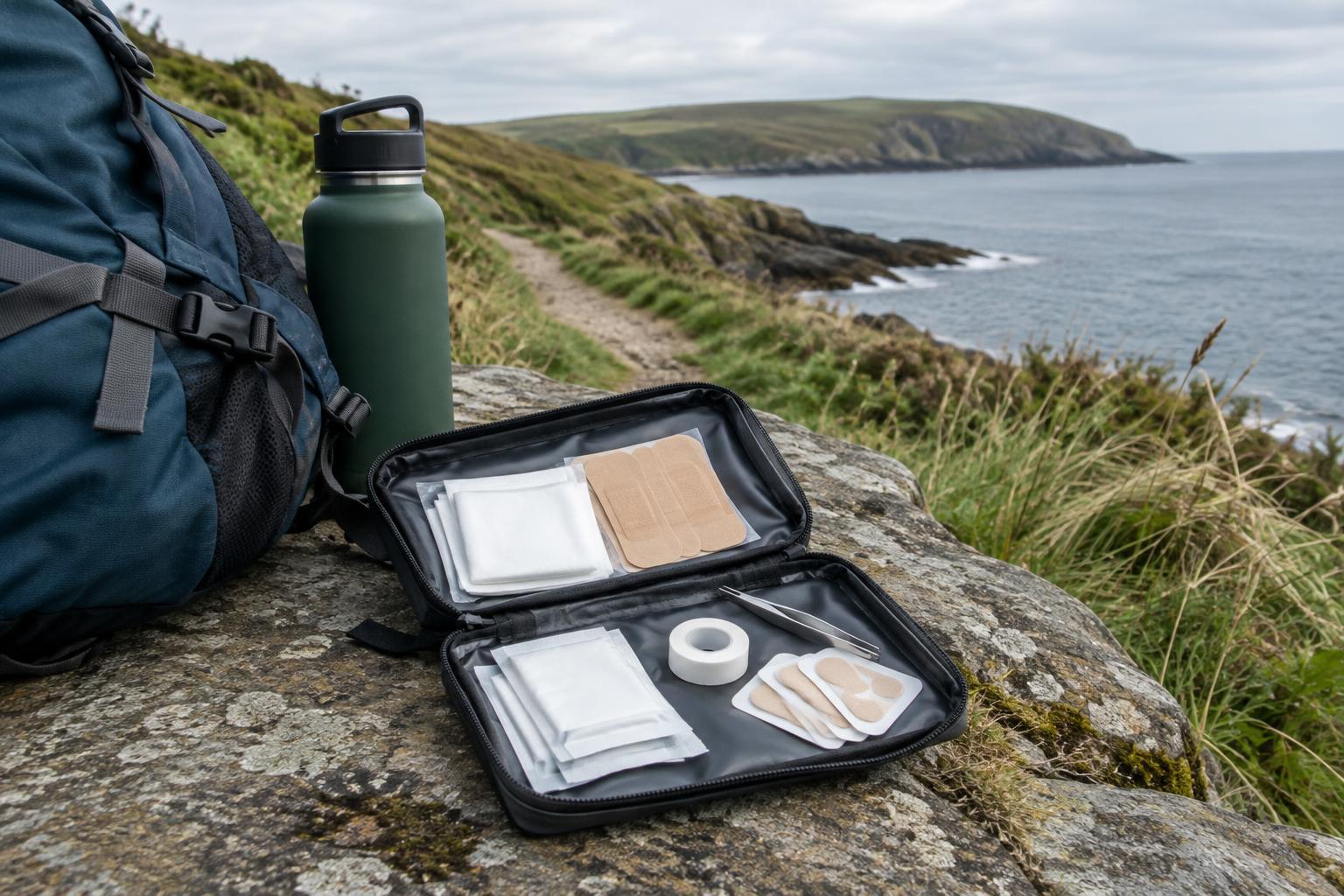
Choose a compact pouch that fits inside your day bag rather than hanging loose where spray or rain can reach it. Keep dressings in their original wrappers and place the kit in a resealable bag or other water-resistant layer. A pouch that is easy to open matters more than one with many compartments. If you walk with others, tell them where you keep it.
Pack the basics for cuts and scrapes
For minor wounds, pack a few adhesive bandages in different sizes, sterile gauze pads, a small roll of medical tape and a non-stick dressing. These cover more situations than a large collection of one type of bandage. Add a few saline pods for rinsing dirt from a small scrape when clean water is not available, along with hand sanitizer for use before handling supplies. Sanitizer is for your hands, not for pouring into a wound.
A small pair of blunt-tipped scissors can help trim tape or gauze; check any transport rules if your journey involves air travel. Disposable gloves are useful when helping someone else. For a cut that is deep, will not stop bleeding with firm pressure, or contains embedded material, do not rely on a pocket kit to solve the problem. Seek appropriate medical help instead.
Make room for feet, sun and personal needs
Blisters can turn an enjoyable shoreline path into a difficult return walk. Pack a couple of blister dressings or protective pads and a little tape to secure them if needed. Apply protection as soon as you notice rubbing, and pause to adjust your socks or footwear. Do not make a habit of carrying supplies that only help after discomfort has become severe.
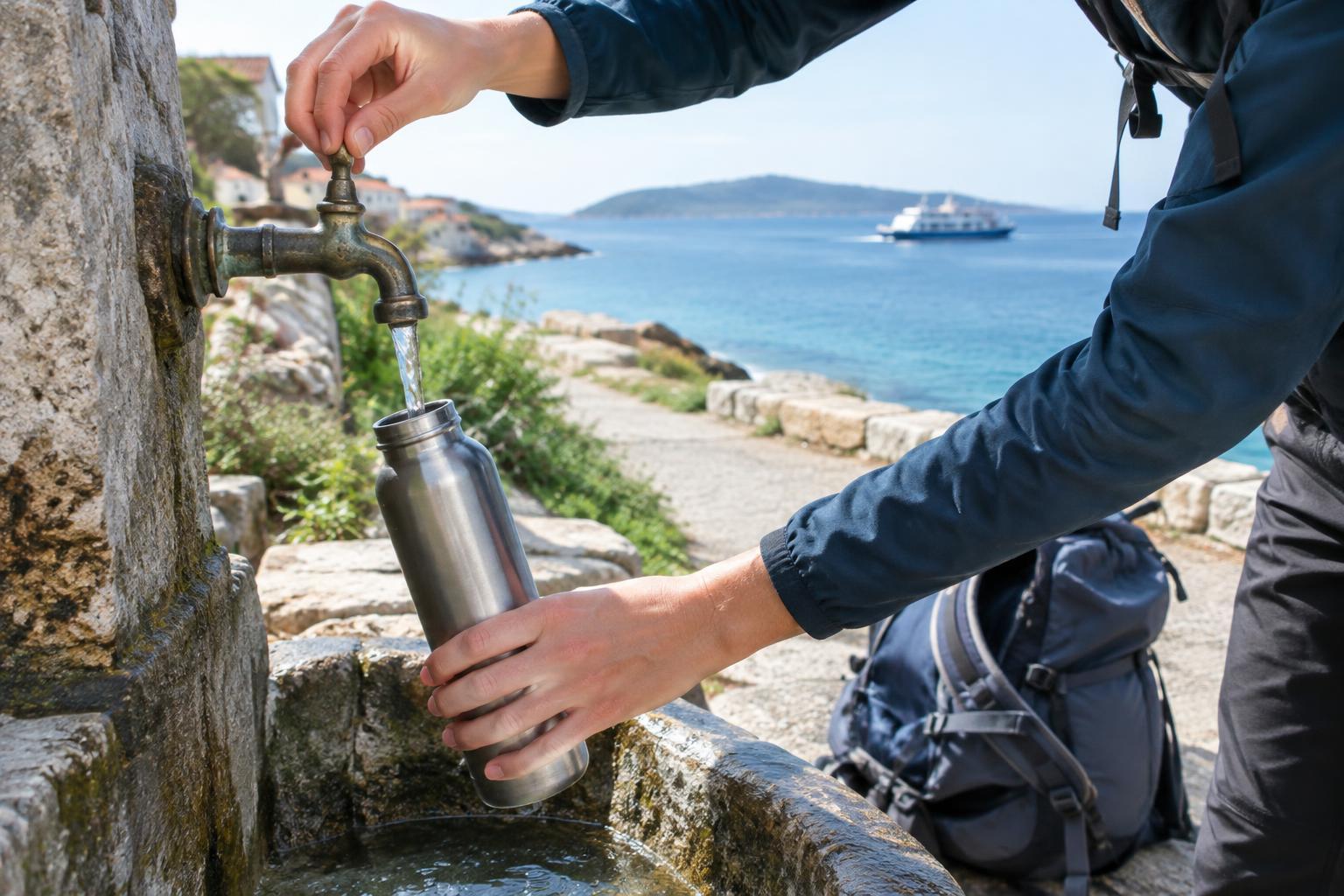
Sunscreen and lip protection belong close at hand, even if they live outside the first-aid pouch. A hat, drinking water and a layer for changing conditions matter just as much as anything in the kit. Coastal paths can also be exposed to wind, with limited shelter along a stretch of trail.
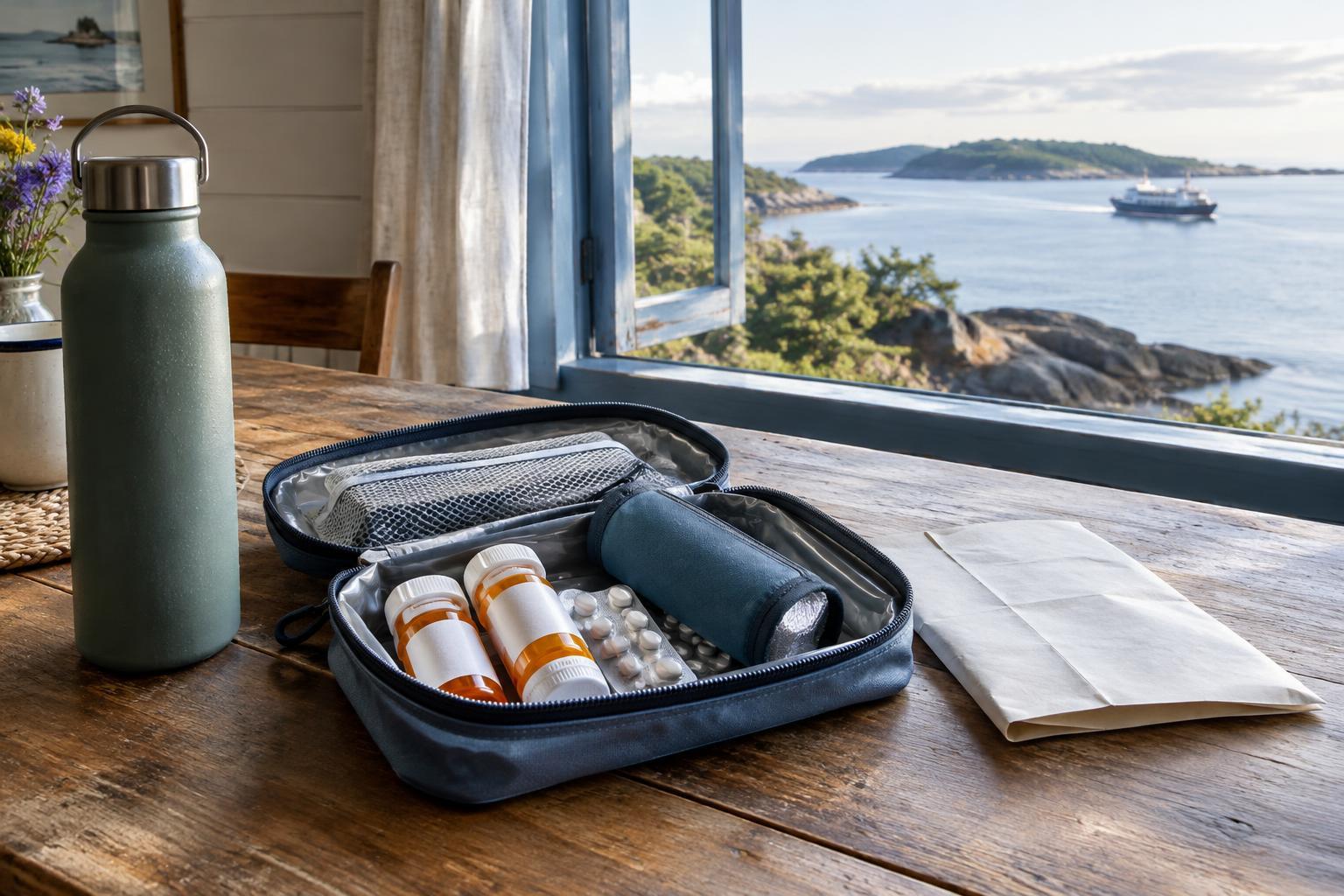
Add any personal medication you may need during the walk, kept according to its storage instructions, and make sure it is accessible. If you have a prescribed emergency treatment, carry it as directed by your clinician and know how to use it. An over-the-counter pain reliever may be useful for some walkers, but only pack medicines you know you can take safely and follow their labels. A small card with relevant health information and an emergency contact can help if you cannot explain your needs yourself.
Keep the kit usable when the weather turns
Salt spray, damp sand and repeated opening can wear down a carefully packed kit. After a walk, check whether wrappers are torn, tape has lost its grip or anything has become wet. Replace used items promptly, and review expiry dates when you repack your bag. If a container has leaked, clean or replace the pouch before your next outing.
Aim for a kit you understand without having to search through unfamiliar products. At home, open the pouch and check that you can find a dressing quickly. Keep a short list of its contents inside; that makes restocking easier and helps you resist adding bulky items you are unlikely to use. For a longer or more remote route, reconsider the contents rather than assuming that the same small kit suits every walk.
Plan for problems a kit cannot fix
Coastal walking brings hazards beyond minor injuries. Check your route and, where relevant, tide information before setting out. Know where you can turn back or reach a safe exit, and tell someone your intended route and expected return time. Keep your phone charged, but do not assume you will have a signal everywhere. In an unfamiliar area, find out how to contact local emergency services before you leave.
If someone has a serious injury, signs of a severe allergic reaction or symptoms that worry you, seek urgent help rather than trying to manage the situation with a small kit. The value of the kit is simpler: it lets you deal with everyday discomforts promptly, while your route planning and judgment guide the bigger decisions.