When a crossing became part of the day
Water can separate two places that are close enough to see from each other. Before a dependable passenger service, making that short crossing might mean finding someone with a boat, waiting for suitable weather or arranging a trip around the needs of a cargo vessel. The difficulty was not always the distance. It was the uncertainty of getting there and back.
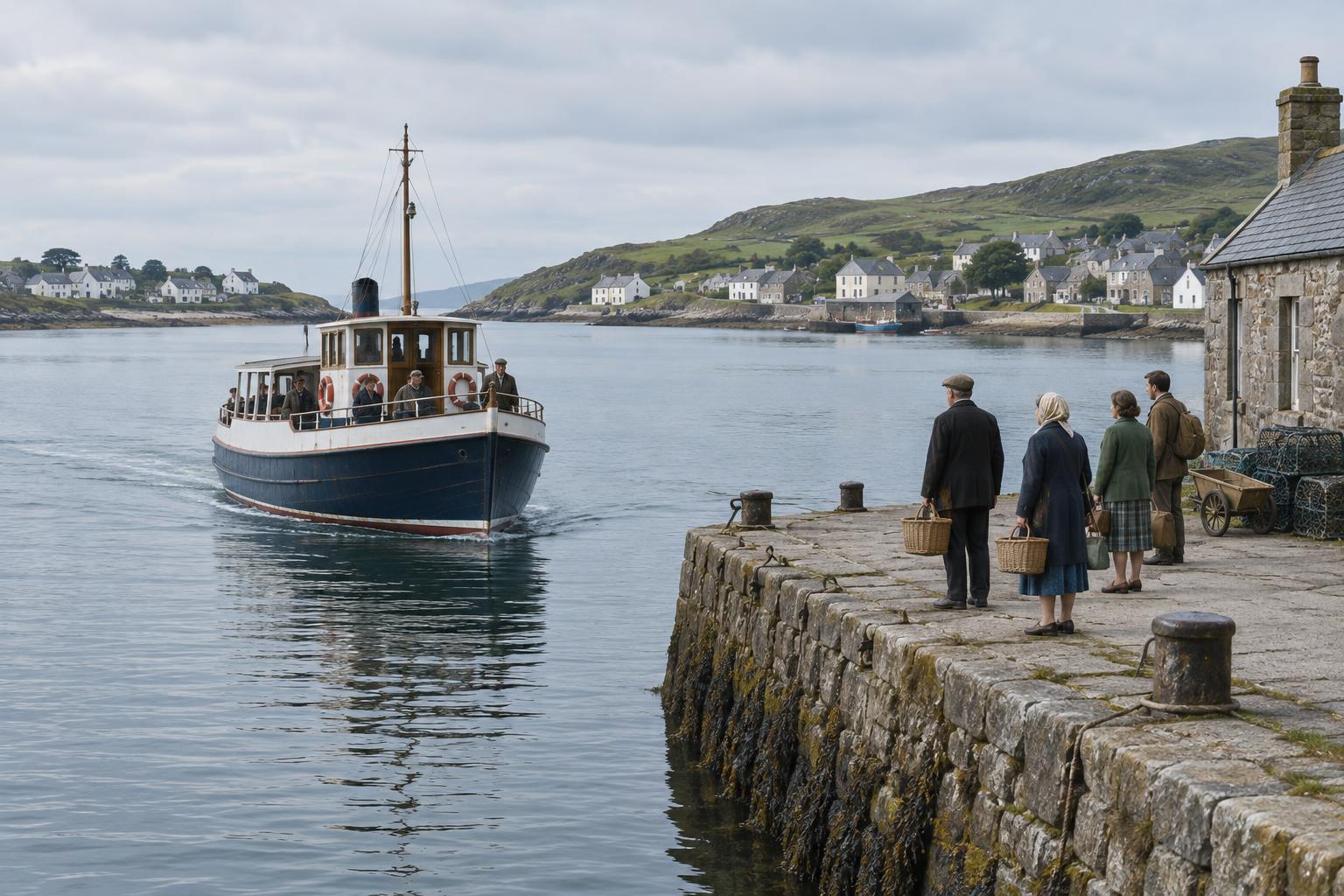
A scheduled ferry changed the question from “Can I cross?” to “Which sailing can I take?” That shift mattered to people visiting relatives, attending markets or keeping appointments on the opposite shore. Services developed differently from place to place, and a timetable never removed the influence of weather. Even so, a crossing people could plan around made the water a more familiar part of everyday travel.
Family, work and services on both shores
Regular ferries widened the practical reach of coastal communities. Someone could live on one shore and work or study on another without treating every journey as an expedition. Families divided by a strait had more opportunities for ordinary visits rather than relying only on lengthy stays. For island residents, a ferry could also make it easier to reach shops and services unavailable close to home.
These possibilities depended on the details of the route. A morning departure might suit commuters but not someone needing to return after an evening event. Fares, seasonal schedules and cancellations could still make access uneven. Looking at a ferry’s history therefore means asking not only where it sailed, but who could use it, how often and at what cost.
What traveled alongside the passengers
Passenger ferries often carried the small necessities of a connected coast: letters, parcels, produce and purchases brought home from a market. Where vessels had room for vehicles or freight, the range of goods could be greater. These movements helped tie local economies together, allowing residents and businesses to buy and sell beyond their immediate shore.
The exchange was cultural as well as practical. Visitors arrived for celebrations; residents returned with recipes, news and ideas gathered elsewhere. Ferry terminals became places of greeting and farewell, where travelers might recognize one another from repeated journeys. Such ties did not erase local differences. They gave neighboring communities more chances to encounter and understand them.
The shore changed to meet the boat
A regular service needs a place to land. Piers, waiting rooms, ticket offices and approaches from nearby streets can all become part of a ferry route’s story. In some towns, activity gathered around the landing: a place to buy food before departure, a road shaped by arriving vehicles or a waterfront where people waited to meet someone coming off the boat.
That infrastructure was not always simple to build or maintain. Tides, exposed harbors and changing vessel sizes could affect where and how passengers boarded. The waterfront might also serve fishing boats, cargo operations and leisure craft. Reading its layout today can reveal how a community made room for different uses of the sea, even where the original ferry facilities have been altered.
Reading ferry history on a journey today
Ferries remain valuable ways to understand maritime heritage because the crossing makes geography tangible. From the deck, the relationship between headlands, islands, harbors and settlements is easier to grasp than it may be on a map. At the terminal, notice how people reach the vessel, where goods are handled and which parts of the waterfront seem designed for an earlier pattern of travel.
It is worth resisting a purely nostalgic view. A ferry can be a pleasant part of a visitor’s trip while remaining an essential, sometimes inconvenient link for residents. Routes may change as travel needs, costs and other transport options change. The lasting heritage lies not just in a vessel or a pier, but in the connections people built around the possibility of crossing regularly.