The problem beneath the waterline
Much of a ship’s most important maintenance happens where a crew cannot easily see it: beneath the waterline. Hull planks or plates may need repair, seams may need attention, and fittings such as rudders and propellers must be inspected. Marine growth can also build up on a hull, adding drag and making the vessel harder to move efficiently. These jobs require access to surfaces normally covered by water.
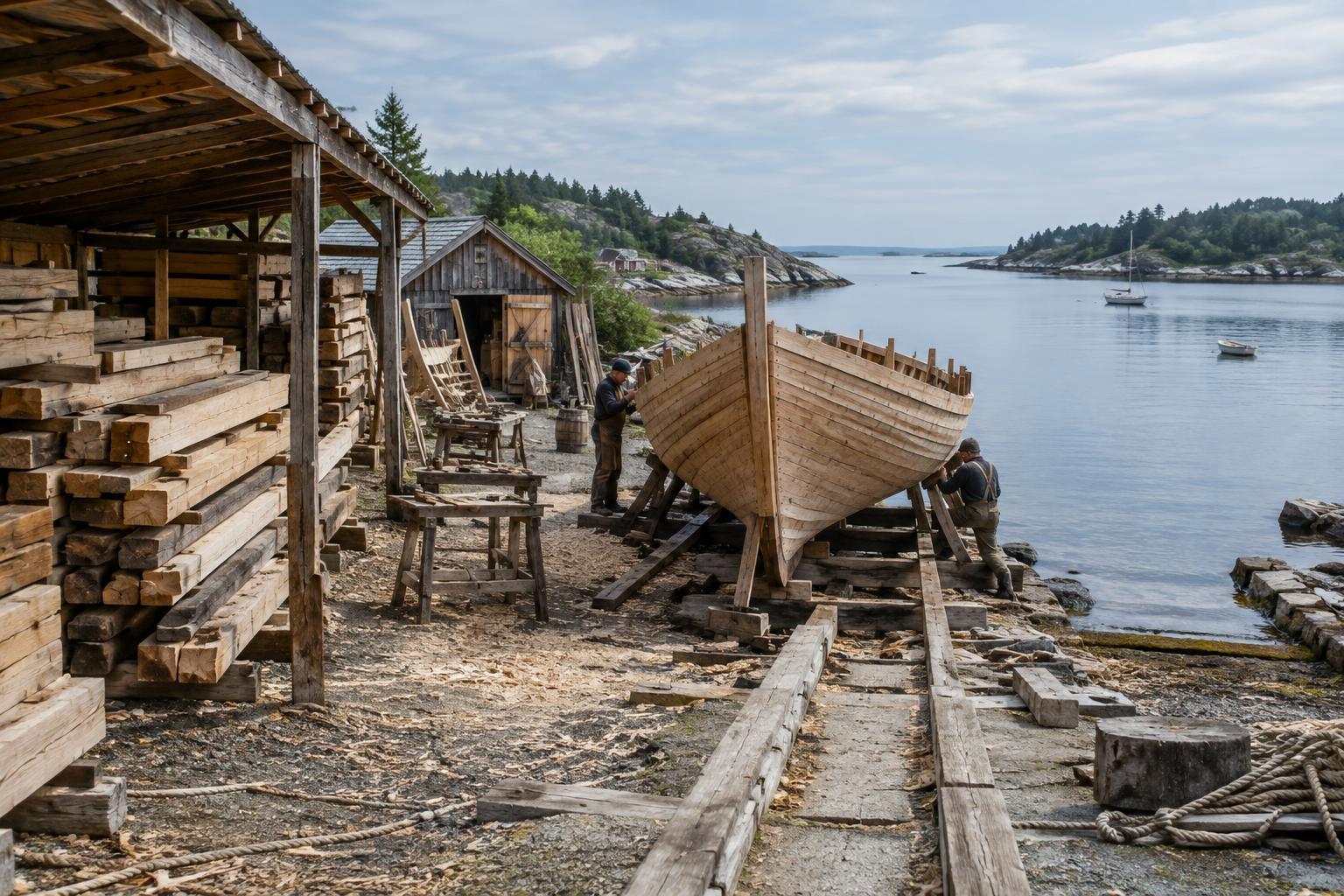
Before a suitable dry dock was available, workers could sometimes bring a vessel onto a beach or tidal flat, or careen it so that one side of the hull was exposed. Such methods depended heavily on the shore, the tides and the vessel’s size. They remained useful in some circumstances, but they offered limited working time and could put strain on a ship. A dry dock provided a more controlled place to carry out substantial work.
How a dry dock creates a workable space
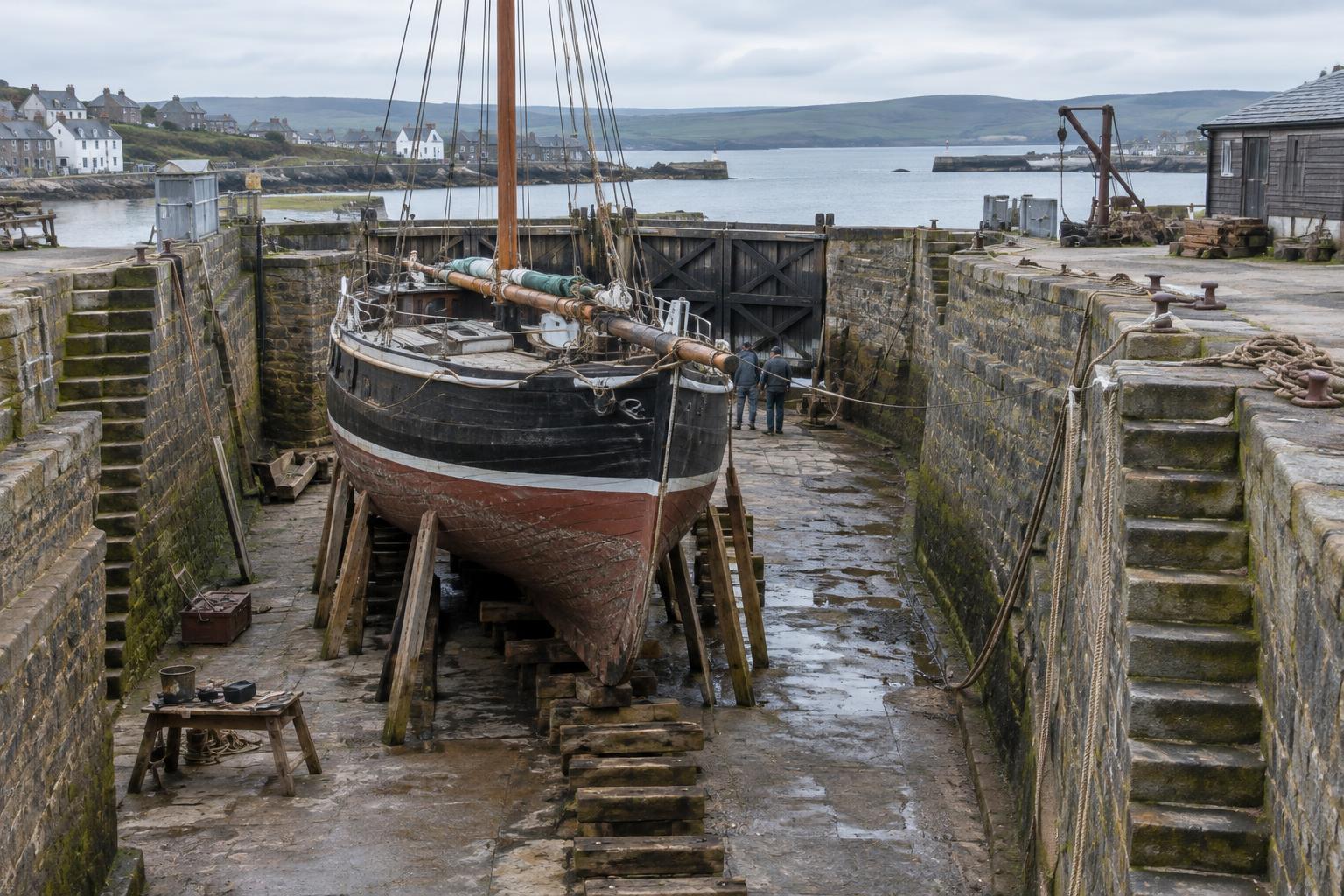
A dry dock is a facility that allows a vessel to enter while afloat and then exposes its underwater hull. In a graving dock, the ship moves into a basin and a gate or caisson closes behind it. Water is removed, and the vessel settles onto carefully placed supports. Workers can then reach the bottom and sides of the hull from the dock floor. Setting those supports correctly matters: a ship’s weight must be carried in the right places while it is out of the water.
A floating dry dock takes a different approach. It is a buoyant structure that submerges enough for a ship to enter, then rises as water is pumped from its tanks. Both forms make underwater repairs possible without relying on a convenient low tide. A wet dock, by contrast, keeps vessels afloat; it may be valuable for shelter or loading, but it does not provide the same access beneath a hull.
Why reliable access changed repair work
The historical importance of dry docks lies partly in predictability. Once a ship was secured and the dock emptied, workers had a stable space in which to inspect damage, plan a repair and use tools and materials at close range. That did not make repairs quick or simple. It did make it easier to organize work that would be awkward or impossible while a vessel was afloat.
As ships grew larger and their equipment changed, docks and dockyards had to adapt. Timber hulls called for skilled carpentry and attention to seams; metal hulls brought different inspection and repair tasks. Propellers, shafts and other underwater fittings also needed room to be reached or removed. The available dock could therefore influence which ships a port could maintain. Building and operating one required suitable ground or sheltered water, as well as people who could manage pumps, gates, supports and the repairs themselves.
The dockyard as a working community
A dry dock was rarely an isolated piece of engineering. Around it might be workshops, stores, cranes, slipways and places to prepare timber or metal components. A vessel entering for repair created work for shipwrights, engineers, painters, riggers and others whose tasks had to fit together. The dockyard connected seafaring to skilled labor on land.
This is one reason dry docks matter beyond naval or commercial ship histories. They help explain how a coastal town supported the vessels that passed through it and how knowledge was passed between workers. A surviving dock may show changes in construction methods, machinery and the size of ships a harbor once served. Equally, its position near streets, warehouses or homes can reveal how closely maritime work was woven into everyday life.
Reading a historic dry dock today
For a visitor, an empty dry dock can be surprisingly revealing. Look at its shape and scale, the entrance where a ship would have passed, and the ledges or steps that gave workers access to different parts of a hull. If blocks, gates, pumps or interpretive displays survive, they can help you picture the sequence: float a vessel in, secure it, remove the water, complete the work and refill the dock before departure.
Not every visible feature will be original, and many docks have been altered for newer vessels or different uses. Rather than treating a historic dock as a single frozen moment, consider the layers of change. Its lasting significance is practical: ships needed regular care, and a dry dock gave coastal workers a way to reach the parts of a vessel the sea usually hides.