Why the distinction matters
A ship beside a museum quay can look convincingly old, yet its appearance alone tells you little about its history. It might be a surviving vessel repaired over many years, a reconstruction built around a few original pieces, or a modern replica made to show how an earlier craft worked. All three can offer a valuable encounter with maritime heritage. They simply answer different questions.
A surviving ship gives visitors contact with material that has passed through earlier hands, though not every visible board will be original. A replica can make a vanished design tangible and, if it sails, reveal practical aspects of handling a vessel that a stationary exhibit cannot. Knowing which you are aboard helps you appreciate the work involved without mistaking a new feature for an old one.
Restoration is rarely a return to one perfect moment
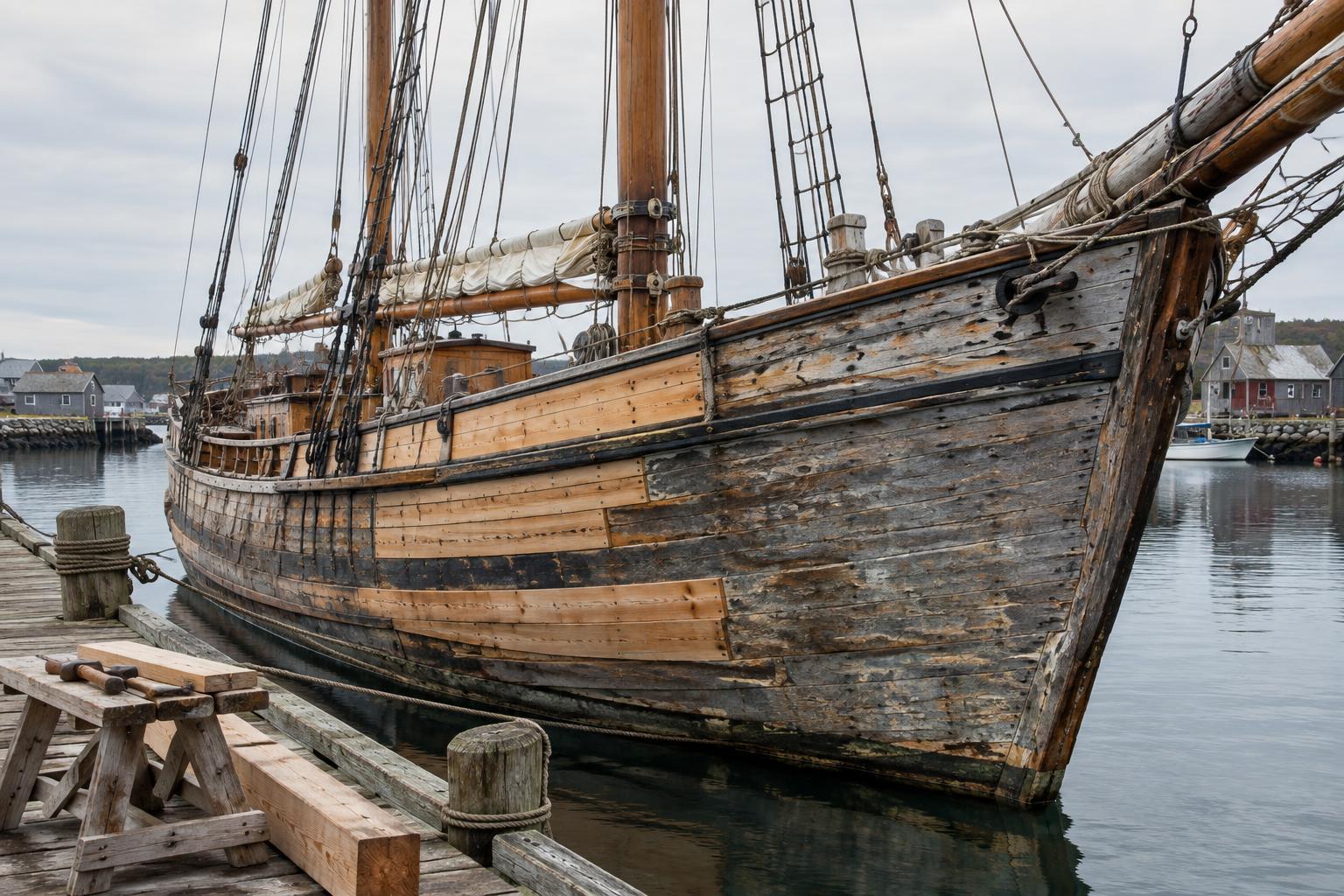
A restored ship is generally a historic vessel that has undergone work to stabilize, repair or present it. Ships were often altered during their working lives: equipment changed, damaged parts were replaced, and interiors adapted to new uses. A restoration must decide which of those layers to keep and which period, if any, to emphasize. The result may represent a particular stage of the ship’s life rather than its appearance on launch day.
Replacement material is not necessarily a flaw. Salt water, weather and heavy use are hard on timber, metal, rope and canvas. Keeping a vessel safe for visitors may require new decking, fittings or structural support. The useful question is not simply, “Is it original?” but “Which parts survive, which have been replaced, and why?” A good interpretation panel may explain those choices; if it does not, a guide may be able to help.
What a replica can—and cannot—show
A replica is newly built to represent an earlier vessel or type of vessel. Its builders may work from plans, surviving craft, written descriptions or other evidence. Where the record is incomplete, they have to make informed choices. Some replicas aim closely at a known ship; others represent a broader tradition of boatbuilding. Neither approach makes the vessel a surviving artifact, but both can illuminate the skill behind its design.
A sailing replica can be especially engaging because its crew must solve practical problems: moving through narrow spaces, working with the rig and maintaining the hull. At the same time, modern safety requirements and materials may affect what visitors see and how the vessel operates. A replica’s strength is often its ability to demonstrate possibilities, not to prove that every detail of an earlier voyage happened exactly as shown.
Look for the evidence behind the presentation
Before boarding, read the vessel description closely. Words such as “restored,” “reconstructed,” “replica” and “inspired by” point to different relationships with the past, although museums and operators may use them in slightly different ways. Look for a timeline of the vessel’s life or build, photographs of conservation work, and labels identifying original and replacement components. A cutaway drawing can also explain features that are difficult to see on board.
As you walk through, notice where interpretation separates evidence from educated guesswork. Is a cabin furnished from an inventory, from comparable vessels, or to help visitors imagine daily life? Was a painted color found beneath later layers, or chosen to illustrate a period style? These questions need not spoil the atmosphere. They make the decisions behind the display part of the story.
Make the most of your visit
If a guide is available, try asking one focused question: “What is the oldest part of this vessel?” On a replica, ask what evidence shaped the build and where the builders had to make choices. On a restored ship, ask how it changed during its working life. The answers may lead you from an impressive silhouette to less obvious stories about repair, labor and the people who kept vessels afloat.
Allow time to view the ship from shore as well as from the deck. Its hull shape, relationship to the harbor and scale beside modern boats may be clearer at a distance. Then pay attention to the spaces designed for work rather than display. Whether you are seeing original fabric, careful repairs or a new vessel built from historical evidence, the most rewarding visit comes from understanding both what the ship shows and what remains uncertain.