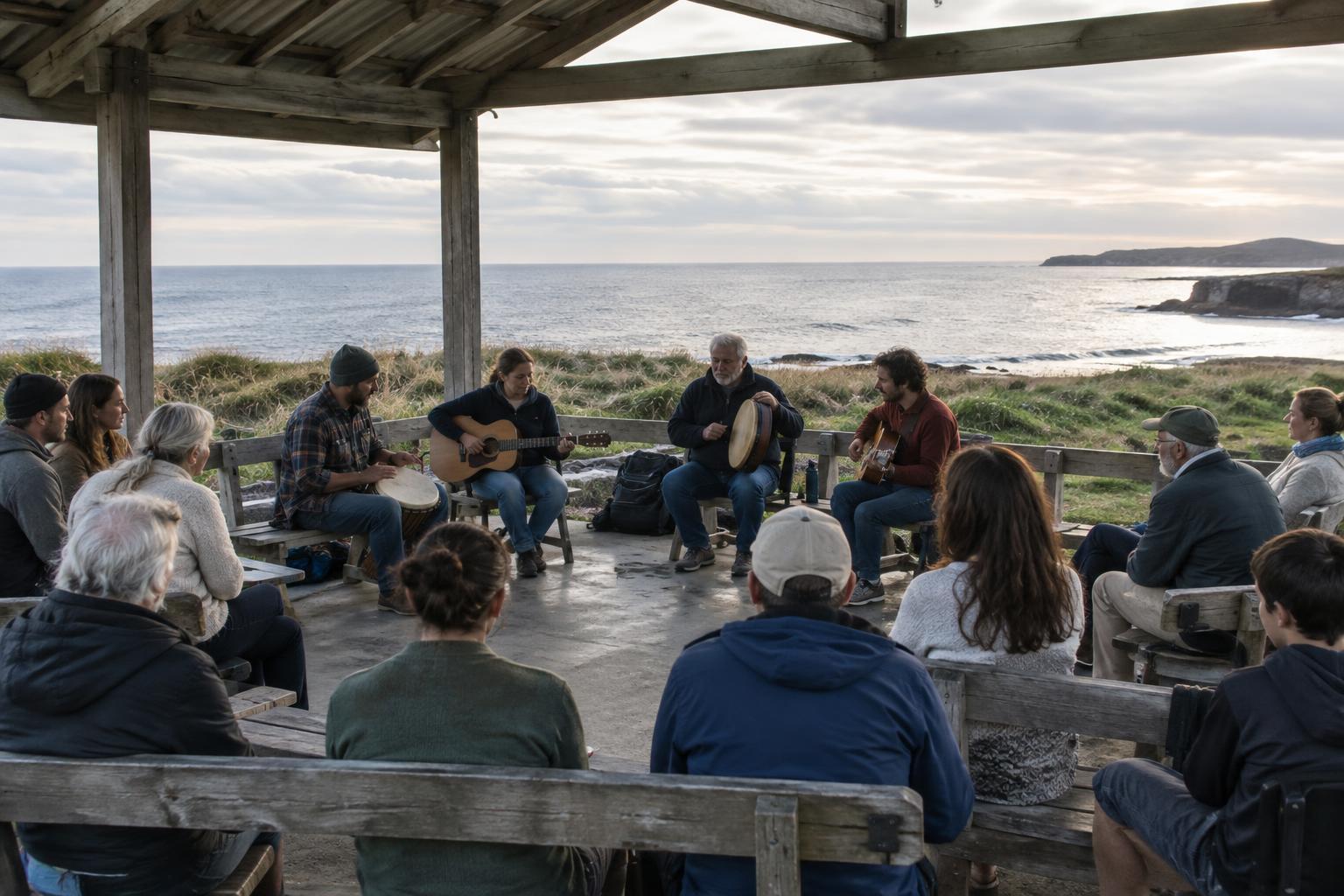
Start with the occasion, not the spectacle
Along a coast, a performance might belong to a festival, a family celebration, a community fundraiser, a place of worship or a ticketed stage. The same song or style of dance can have a different meaning in each setting. Before deciding to attend, ask what the occasion is and who it is for. A public concert welcomes an audience; a gathering visible from a promenade is not necessarily an invitation to come closer.
It helps to set aside the hope of finding an “authentic” moment on demand. That expectation can turn other people’s ordinary lives into a backdrop for a trip. Instead, look for events that organizers have chosen to share publicly. Community noticeboards, venue programmes and visitor information desks may help you identify them. If you are unsure whether an event is open, ask an organizer or host rather than relying on where you see other travelers standing.
Choose invitations that respect the people performing
A visitor-facing performance is not automatically less meaningful than one held for a local audience. Paid shows can give artists control over the setting, schedule and presentation of their work. What matters is whether the invitation is clear and whether you approach the performers as skilled people, not as representatives expected to explain an entire culture.
Read the event description before booking. It may tell you whether the evening is a concert, a workshop, a meal with music or a ceremonial occasion with particular expectations. Pay the stated admission price, and follow the venue’s guidance on seating, participation and recording. If you would like to learn more, look for a hosted introduction or a workshop where questions are welcome. A performer taking a break is not necessarily available to give an impromptu lesson.
Let the setting guide your behavior
Arrive with enough time to settle in without crossing the performance space or interrupting an introduction. Notice where people sit or stand, and keep pathways clear. If the audience becomes quiet, follow suit; if people sing along, you can still choose to listen until you understand the invitation. Applause, dancing and call-and-response vary by event, so observing is often more useful than assuming familiar concert etiquette applies.
Be especially careful with cameras. A public event does not mean every person there has agreed to be photographed, and a permitted photo is not necessarily suitable for posting online. Check signs or ask an organizer about recording rules. Avoid flash and filming through an entire performance, even where short clips are allowed. If someone asks you to stop, put the camera away without debate. Listening without documenting anything can be a rewarding way to stay present.
Accept boundaries without making them awkward
Some performances are connected to mourning, worship, initiation or family life. Others are public only for part of the occasion. A rope, closed door, request not to record or simple indication that visitors should leave is enough information to act on. You do not need an explanation before respecting a boundary, and you should not ask another spectator to grant permission on an organizer’s behalf.
Language can create uncertainty, especially when an event is announced locally rather than for visitors. Learn a polite way to ask whether attendance is welcome, and be ready to accept a brief answer. If you realize you have entered at the wrong moment, step away calmly. Making a scene out of apologizing can draw more attention to you than the original mistake. There will be other ways to spend the evening.
Take the experience home thoughtfully
After a performance, consider what you actually learned and what remains unfamiliar. One evening cannot stand for every tradition in a town, island or coastal region. Rather than describing a community as timeless or unchanged, you might remember the particular artists, venue and occasion you encountered. If performers share their names or a way to find their work, use those details when recommending the event to others.
Your support can be straightforward: buy a ticket, purchase a recording or craft item if one is offered, and thank people when the moment is appropriate. Do not assume a tip is expected where none is requested. The aim is not to prove that you found something hidden from other travelers. It is to meet a clear invitation with attention, pay for creative work when asked, and leave room for coastal communities to decide what they share.