Start with the journey back
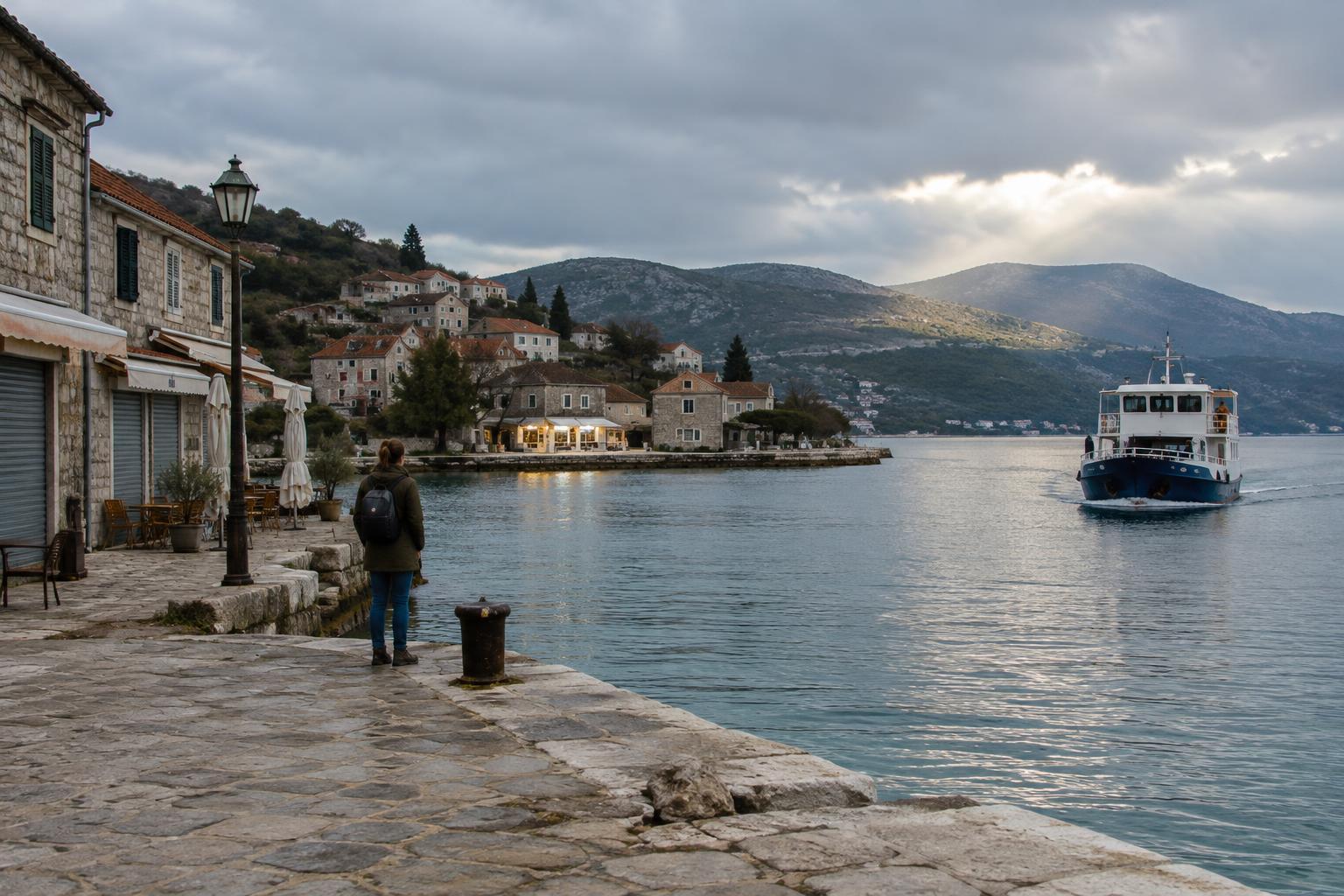
On an island, the end of a walk can require as much planning as the beginning. A route may finish far from your accommodation, while a bus stop or ferry landing that looks close on a map may still be a substantial walk away. Before choosing a trail, identify where you will finish, how you will get back and what you will do if the return service is unavailable.
Check the timetable for the day you intend to travel rather than assuming a service runs every day. Note the last practical departure, not just the last listed one: arriving with minutes to spare leaves little room for a slow final stretch or a missed turn. If transport is limited, an out-and-back walk from a reliable starting point can be more enjoyable than a one-way route governed by a tight connection.
Read the terrain, not just the distance
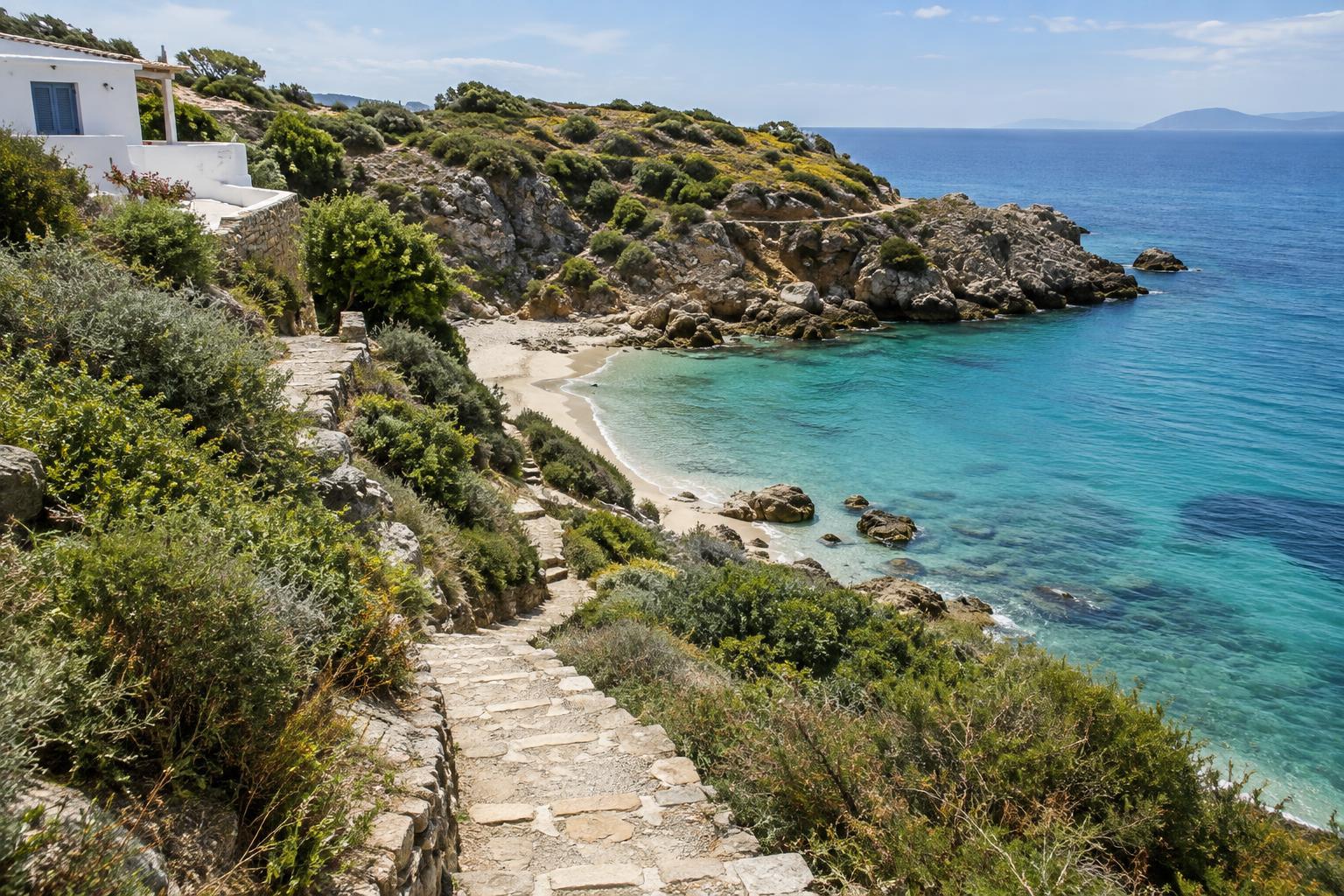
A short island walk can take longer than expected. Steep climbs, uneven stone, sand and narrow paths all change your pace. A coastal route may also dip into several coves, turning what appears to be a level walk along the shore into repeated descents and climbs. Look at elevation as well as distance, and consider whether the path surface suits everyone in your group.
Treat estimated walking times as a starting point rather than a promise. Add time for breaks, navigation and places you may want to linger. If a route crosses a beach, headland or tidal area, find out whether access changes with the tide and choose an alternative if you cannot confirm safe passage. A map can help you plan, but it may not show every obstacle you meet on the ground.
Give daylight a generous margin
Daylight sets a useful boundary for a walk, particularly when paths are rough or poorly marked. Check when the sun will set locally, then aim to finish well before that point. The usable light may fade earlier in a shaded valley or beneath cloud, and the final stretch is often when tired walkers most need a clear view of the path.
Work backward from your intended finish. Allow for the time needed to reach the trailhead, complete the walk at a comfortable pace and make your return connection. If the plan depends on everyone walking quickly, skip a stop or take a shortcut, it is probably too tight. A shorter route with an unhurried lunch or viewpoint pause may make better use of the day.
Account for exposure and changing conditions
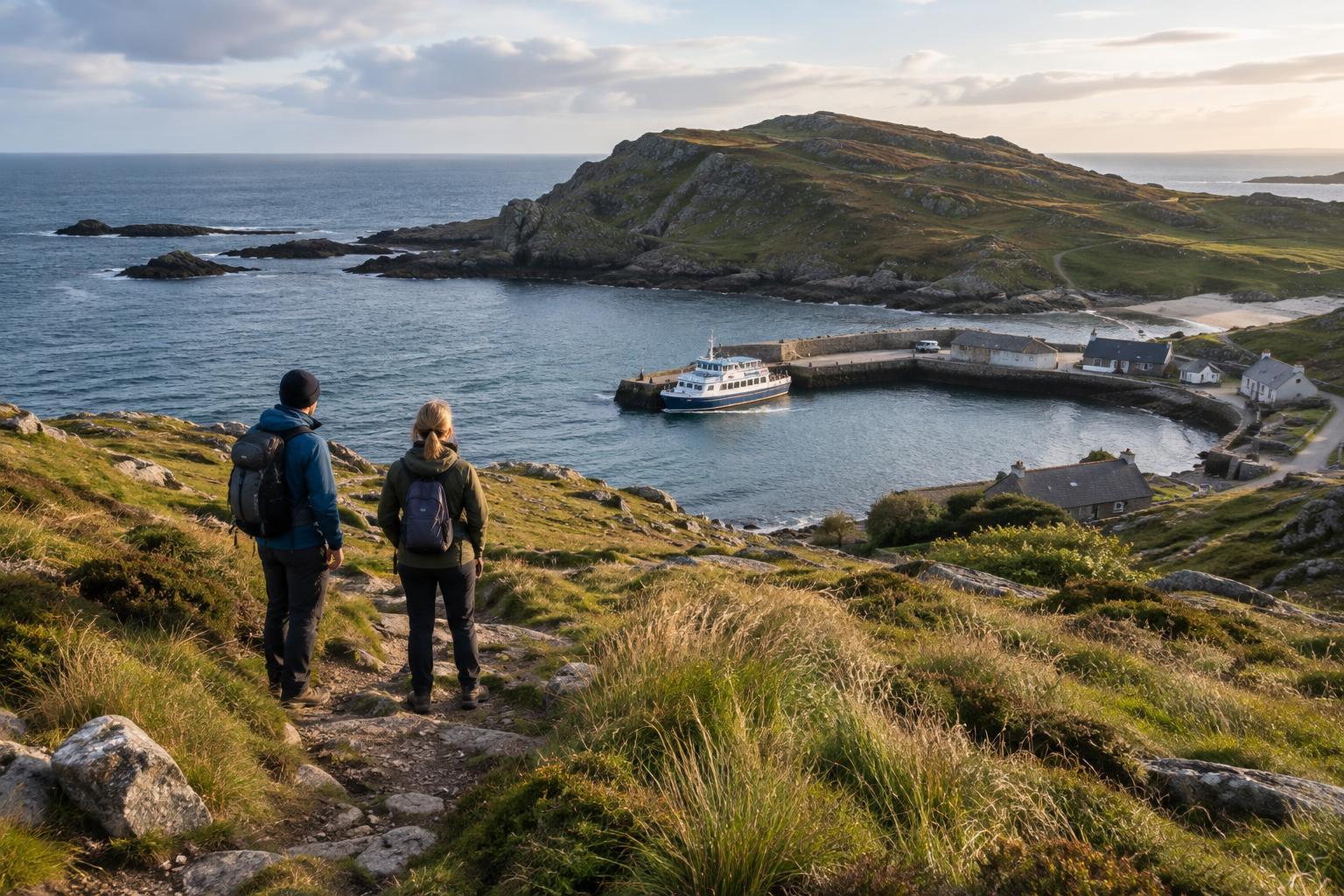
Coastal paths can feel very different from sheltered streets. Wind may be stronger on open headlands, while sun and glare can be tiring where shade is scarce. Conditions can also change between the harbor and the far side of an island. Check a local forecast before setting out, carry water and a suitable extra layer, and be willing to turn back if the route becomes uncomfortable.
Plan pauses where they will actually be useful. A village, sheltered bay or inland junction may offer a better place to rest than an exposed clifftop. Carry what you need between reliable stops rather than counting on a café or tap being open. If you are walking near cliffs, keep to established paths and give unstable edges plenty of space.
Build a flexible route
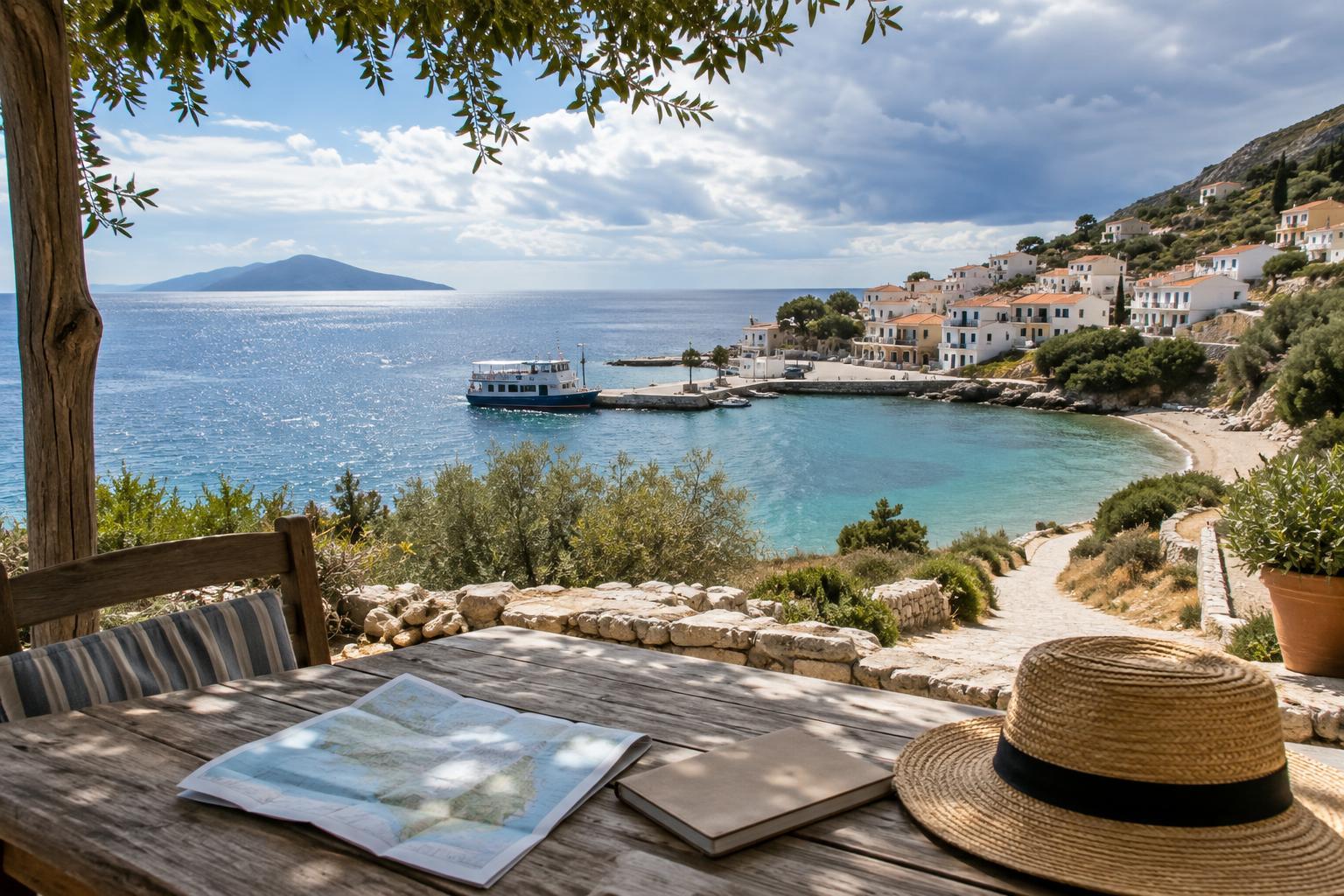
A good island walking plan has a main route and at least one simpler option. Mark places where you can turn back, shorten a loop or return to a transport stop. Let someone know your intended route if you will be walking in a quiet area, and keep a map available in a form you can use without a signal. Route signs are helpful, but they are not a substitute for knowing where you are headed.
Leave room for the island itself to shape the day. A longer stop to watch the shore, a conversation in a village or an unexpected change in weather may be reason enough to walk less. By settling the practical questions of terrain, daylight and transport first, you give yourself more freedom to travel slowly once you arrive.