Why the distinction is not simple
Along a coast, culture is woven into ordinary routines: preparing a family recipe, repairing a boat, gathering for a seasonal celebration or passing on a craft. Travelers may also encounter these practices through tours, performances and demonstrations. It is tempting to call the first kind “real” and the second “staged,” but that divide can be misleading. A tradition does not become meaningless because visitors are present, and a paid demonstration can still be led by a skilled practitioner who cares deeply about the work.
A more useful question is who shapes the experience and for whom. Is the activity part of local life that happens to welcome guests? Has it been adapted to make it accessible to visitors? Or has a familiar image of coastal life been assembled mainly to meet tourist expectations? These possibilities can overlap. Recognizing the difference is less about passing judgment on a single event than about understanding what you are seeing.
Notice the context, not just the performance
Begin with how an experience is described. A clear introduction might explain that a song is performed for visitors, that a fishing method is demonstrated rather than used on that outing, or that a dish is a contemporary version of an older recipe. Such framing gives you a better understanding than a promise of an “untouched” or “timeless” culture. Living traditions change as people change their tools, livelihoods and tastes.
Pay attention, too, to whether the people involved can speak for themselves. A boatbuilder who explains why certain materials suit local waters may offer more insight than a display that treats the boat only as a picturesque object. At a food event, a cook’s account of when a dish is prepared can be as revealing as the ingredients. You need not seek a private conversation with every participant; simply notice whether the experience makes room for their knowledge, choices and present-day lives.
Consider the setting without assuming that an ordinary-looking place is automatically more meaningful. A community hall may host a cherished celebration, while a waterfront stage may be the best available space for a local group. Conversely, a bustling market can be arranged largely around visitors. Look for specific information about purpose and participation rather than using scenery as proof of authenticity.
Ask questions that invite useful answers
Before booking, ask who organizes the activity, who leads it and what the fee includes. If a tour features a craft, find out whether the maker has time to explain the process and whether their work is available to purchase directly. For a festival or public gathering, check whether it welcomes visitors and whether any parts are intended only for participants. Straightforward answers help you decide whether the experience matches what you hope to learn.
Once there, curiosity works best when it is paired with restraint. Ask how a practice is used today, how people learned it or what has changed over time, if conversation is welcome. Avoid pressing someone to represent an entire island or coastline. Do not assume that a ceremony, working harbor or family meal is open to photography because it is visible from a public place. Follow posted guidance and ask permission when the situation calls for it.
Value a well-made introduction for what it is
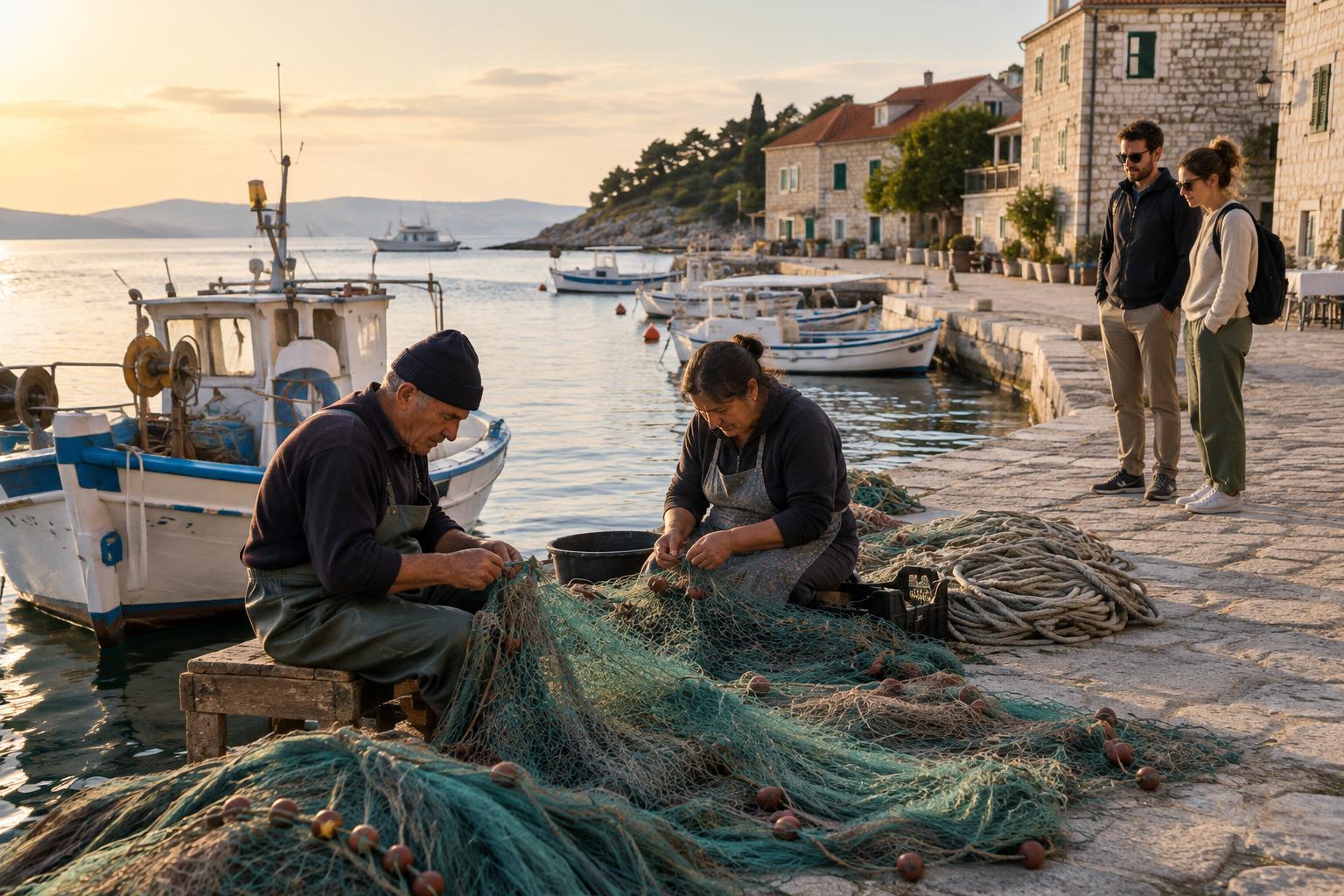
Some of the most informative coastal experiences are intentionally prepared for guests. A short music performance can introduce rhythms you might not otherwise hear. A net-making demonstration can slow a task down enough for you to see the decisions behind it. These encounters are worth appreciating on their own terms, provided the presentation is honest about its format and the people involved have a meaningful role in it.
Be wary of an experience that promises exclusive access to a “secret” way of life or presents residents as if they belong to the past. Such language can flatten a varied community into a single story. Favor organizers who describe particular people, skills and settings, and who allow for the fact that coastal livelihoods include change as well as continuity.
Travel as a guest, not an authenticity judge
A slower visit leaves room for culture beyond a scheduled attraction. You might spend time in a public harbor area, visit a local museum, eat at an everyday café or return to a shop where a maker sells their work. Observe working spaces without obstructing them, and remember that not every meaningful moment is available for purchase or participation.
After an encounter, ask what you learned about life along this particular coast, not whether it matched an image you brought with you. Living traditions belong to the people who practice them; visitors see only a portion. An honest, respectfully staged introduction and a quiet glimpse of daily life can both deepen a journey when you understand their limits.