Start with the ground, not the forecast
A coastal trip rarely involves just one kind of walking. A day might begin on paved streets, continue along a dusty path and end at a pebbly cove. Before choosing shoes, picture the surfaces on your actual route: firm paths, loose stones, wet steps, sand, rock or shallow water. The footwear that feels best on a beach may be a poor choice for a long approach to it.
Also consider how far you expect to walk and what you will carry. A short wander from a guesthouse to the shore asks less of your shoes than a full day on uneven ground with a loaded bag. If an outing depends on a specific path, check its description locally rather than assuming every coastal trail is an easy seaside stroll.
Walking sandals: airy, but not all-purpose
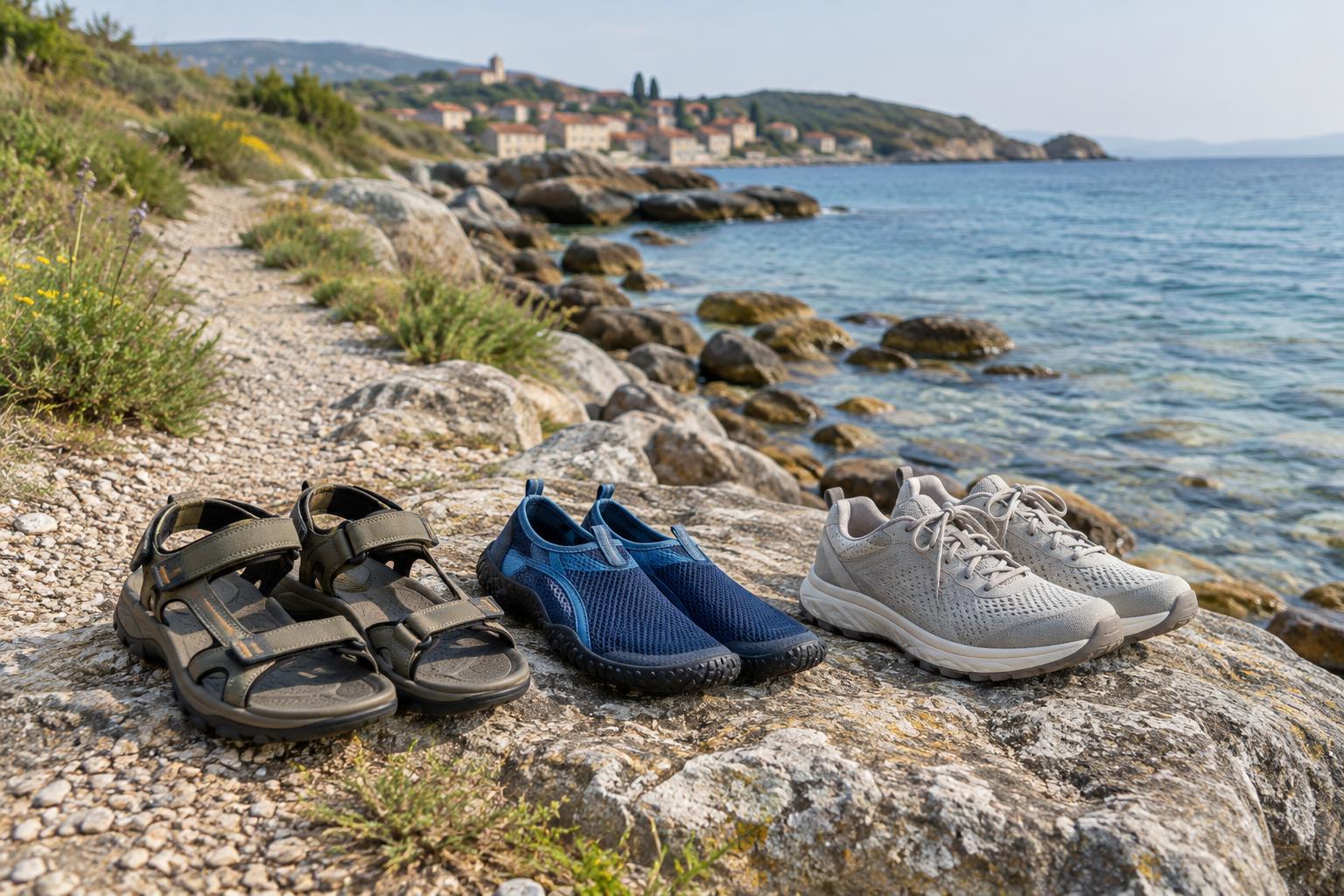
Walking sandals suit warm days, town-to-beach outings and relatively even paths. Adjustable straps can make them easier to fit than simple slip-ons, while a secure heel helps keep the foot in place on slopes. Try them on with the straps set as you would wear them: your toes should not hang over the front, and nothing should rub when you walk downhill or climb a few steps.
Open sandals leave feet exposed to sharp stones, scrub and grit. Sand caught between a strap and skin can become uncomfortable on a longer walk, so pause to clear it rather than pushing on. Sandals that tolerate splashes can be convenient around the shore, but wet straps and footbeds may feel different from dry ones. If you plan to wear them for miles, test that combination before the trip.
Water shoes: useful where feet meet the shore
Water shoes are designed for brief movement in and around water, especially where pebbles, rough surfaces or submerged objects make bare feet uncomfortable. A close fit matters: a loose shoe can shift as you step through water or pull off in soft sand. Look at the sole as well as the upper, since thin soles offer a different feel and level of protection from sturdier ones.
They are not a substitute for caution. Algae-covered rock, wet steps and changing water conditions can be slippery regardless of footwear. Avoid treating a grippy-looking sole as permission to cross an unsafe surface. After use, rinse away sand and salt when practical, then give the shoes time to dry; a pair packed damp in a closed bag can be unpleasant to wear the next day.
Trainers: a dependable choice for longer walks
Comfortable trainers are often the most versatile single pair for travel days, sightseeing and walks on firm coastal paths. A secure fit, enough room for your toes and a sole that feels stable on uneven ground matter more than a shoe’s sporty appearance. If your itinerary includes steep or rough trails, choose footwear suited to those routes rather than assuming any everyday trainer will do.
The trade-off is water. Trainers can feel heavy and take time to dry after a soaking, especially if you need to wear them again soon. For a trip with frequent shore entries, keeping them dry and changing into water shoes may be more comfortable than asking one pair to handle everything. If you expect rain or spray, consider how you will protect dry socks and where damp shoes can air out.
Build a small footwear plan
For a mostly urban coastal break with occasional beach time, comfortable trainers and lightweight sandals may cover your needs. For regular paddling or pebble beaches, trainers and water shoes can make more sense. If you have room for three pairs, give each a clear job rather than packing extras you are unlikely to use. The best combination depends on your route, your feet and the space in your bag.
Wear your main walking pair before departure instead of saving it for the first long day. Pack a spare pair of socks if you will spend hours on foot, and keep wet footwear separate from clothes until it can dry. Choosing well is less about finding a perfect coastal shoe than about knowing when to change shoes, slow down or turn back.