Start with the beach, not the bag
Before packing, picture the day you’re actually taking. A short visit to a sheltered beach with nearby cafés calls for less than a full afternoon on an exposed stretch of coast. Consider how you’ll get there, whether you’ll need to carry everything on foot, and what facilities are available. Check the forecast, access information and any local rules before you leave; they can help you decide whether to bring shade, food or extra layers.
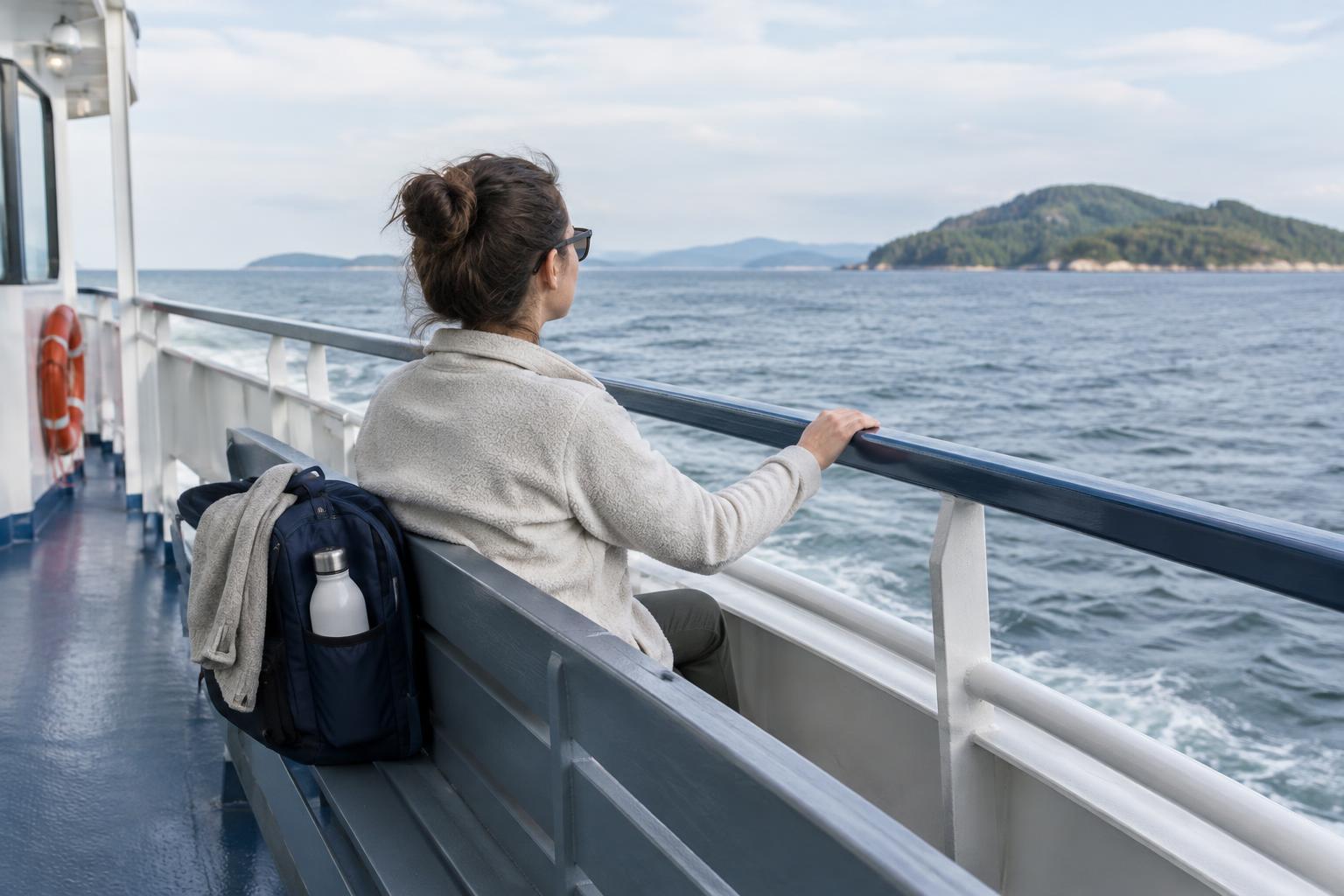
Choose a bag you can carry comfortably for the whole journey, rather than the largest one in the cupboard. A small backpack leaves your hands free on paths and stairs, while a tote may be enough for a short walk from your accommodation. Packing to fit a modest bag gives every item a reason to be there. If you’re traveling with someone, share supplies such as sunscreen instead of bringing duplicates.
Keep the essentials easy to reach
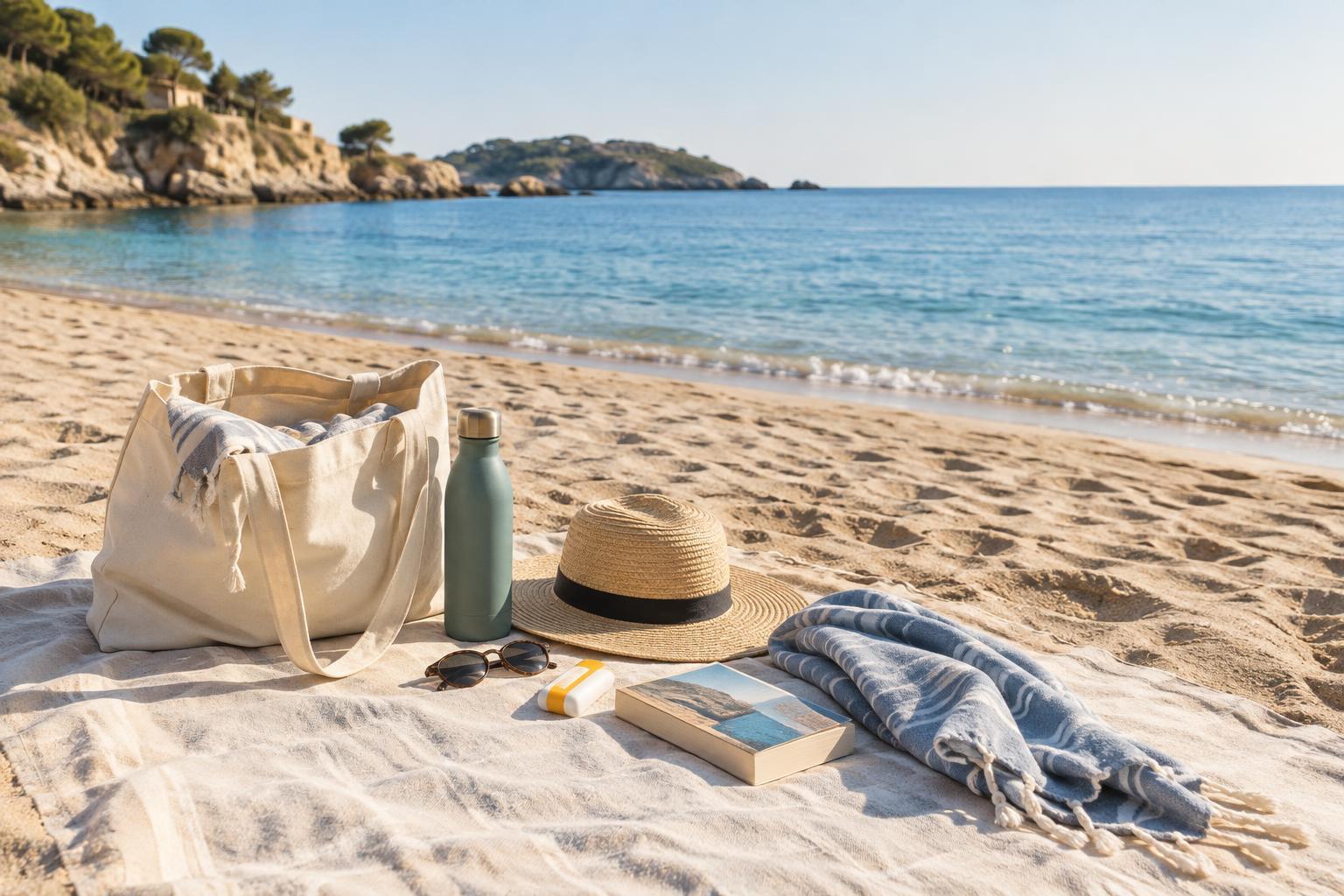
Put the things you’ll use most often near the top: water, sun protection, a towel and something to wear when you leave the sand. A refillable water bottle is easier to manage than several small containers, provided you know where you can refill it. Bring enough for the time you expect to spend out, especially if drinking water may not be close by. A simple snack can be useful when shops are distant or opening hours are uncertain.
For sun protection, pack sunscreen you’re willing to reapply, along with a hat and sunglasses. A lightweight shirt or cover-up adds protection without taking much space and can also make a breezy trip home more comfortable. If the beach has little shade and you expect to stay for hours, plan for it rather than hoping to find a sheltered spot. On a shorter visit, arriving outside the strongest sun may be simpler than carrying a large umbrella.
Choose things that do more than one job
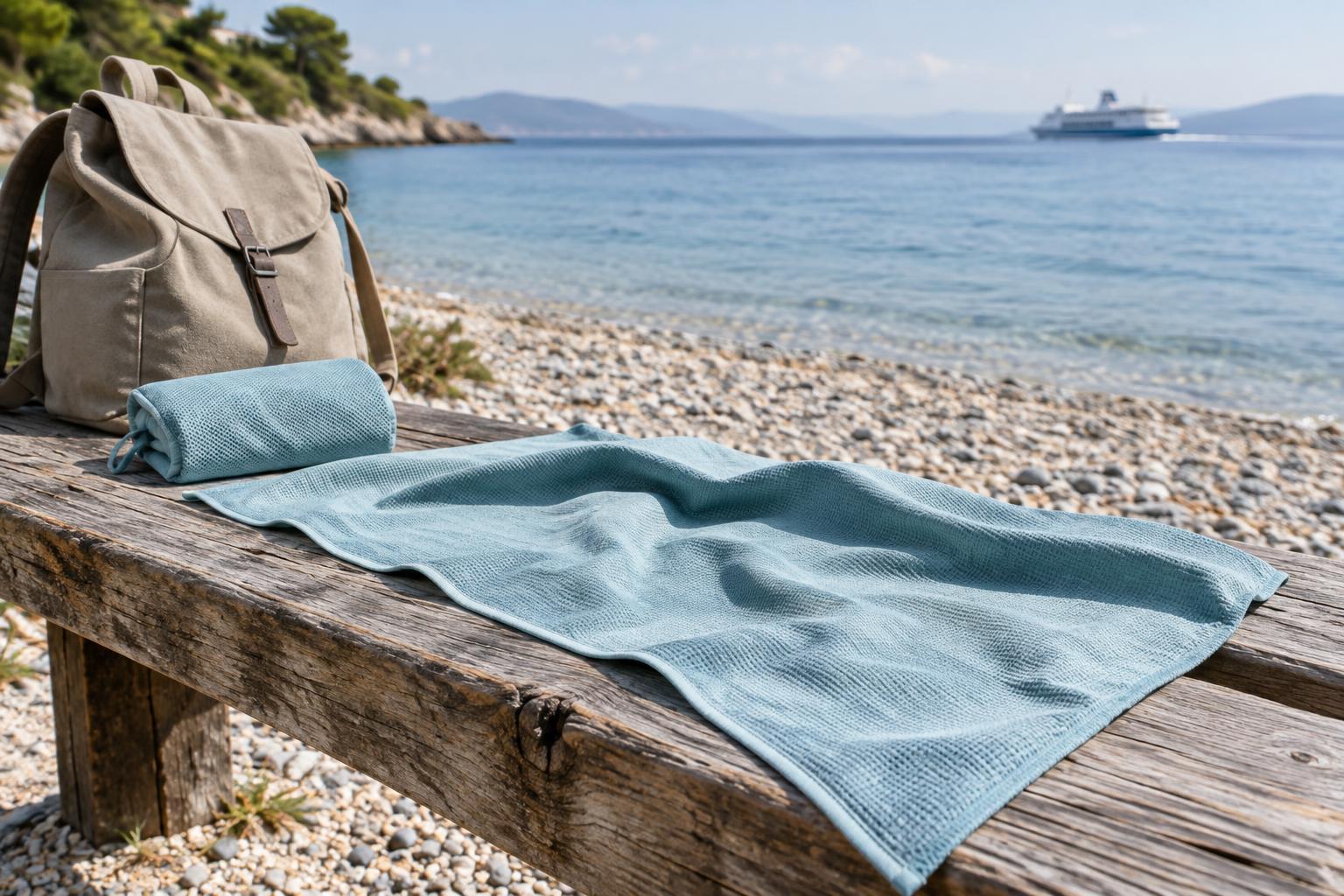
A quick-drying towel can serve as a seat, a wrap and a way to dry off. A roomy scarf or light shirt can be worn on the journey and used as an extra layer later. Wear comfortable footwear suited to the route rather than packing multiple pairs; if the approach crosses rough ground, shoes that protect your feet may matter more than sandals that look right on the sand.
Keep valuables and small necessities together in a compact pouch. It makes keys, tickets and lip balm easier to find without emptying the bag into the wind. A reusable bag weighs little and can hold a wet swimsuit or carry rubbish away from a beach without bins. For electronics, bring only what you expect to use. A phone in a suitable protective case may make a separate camera unnecessary for a casual day out.
Leave room for the beach itself
The quickest way to overpack is to add an item for every possible activity. One book is usually enough; several games, spare outfits and a full picnic can turn a relaxed outing into a hauling job. If you want to swim, wear your swimsuit under your clothes when practical, and pack dry underwear for the return. If you’re not sure you’ll enter the water, decide whether carrying a change of clothes is worth it.
Food is another place to keep things simple. Choose something that travels well and needs little packaging or preparation. If you’re buying food nearby, bring a small backup snack rather than a second meal. Avoid taking more than you can carry back comfortably: empty containers and wrappers still need a place in your bag.
Make the final check before you go
Lay everything out once, then remove anything included only because it might be nice to have. Keep what supports your plans, the expected weather and the journey home. Check that your bag closes easily and that your water bottle is accessible. If it already feels heavy indoors, it will not feel lighter after a walk over sand.
A well-packed beach bag should let you pay attention to the coast instead of your belongings. Take care around dunes and other sensitive areas, follow local guidance, and carry out what you brought in. The goal is not to pack the absolute minimum; it is to bring enough to be comfortable while keeping the day pleasantly uncomplicated.