Give wet clothes their own place
A coastal day can leave you with more damp fabric than expected: a swimsuit after a swim, socks from a rainy walk, a towel that never quite dries. The first step is to keep those items out of your suitcase and away from clean clothes. Empty pockets, shake off sand outdoors where appropriate, and hang each item as soon as you return. Even a short period spread out is better than leaving everything compressed in a bag.
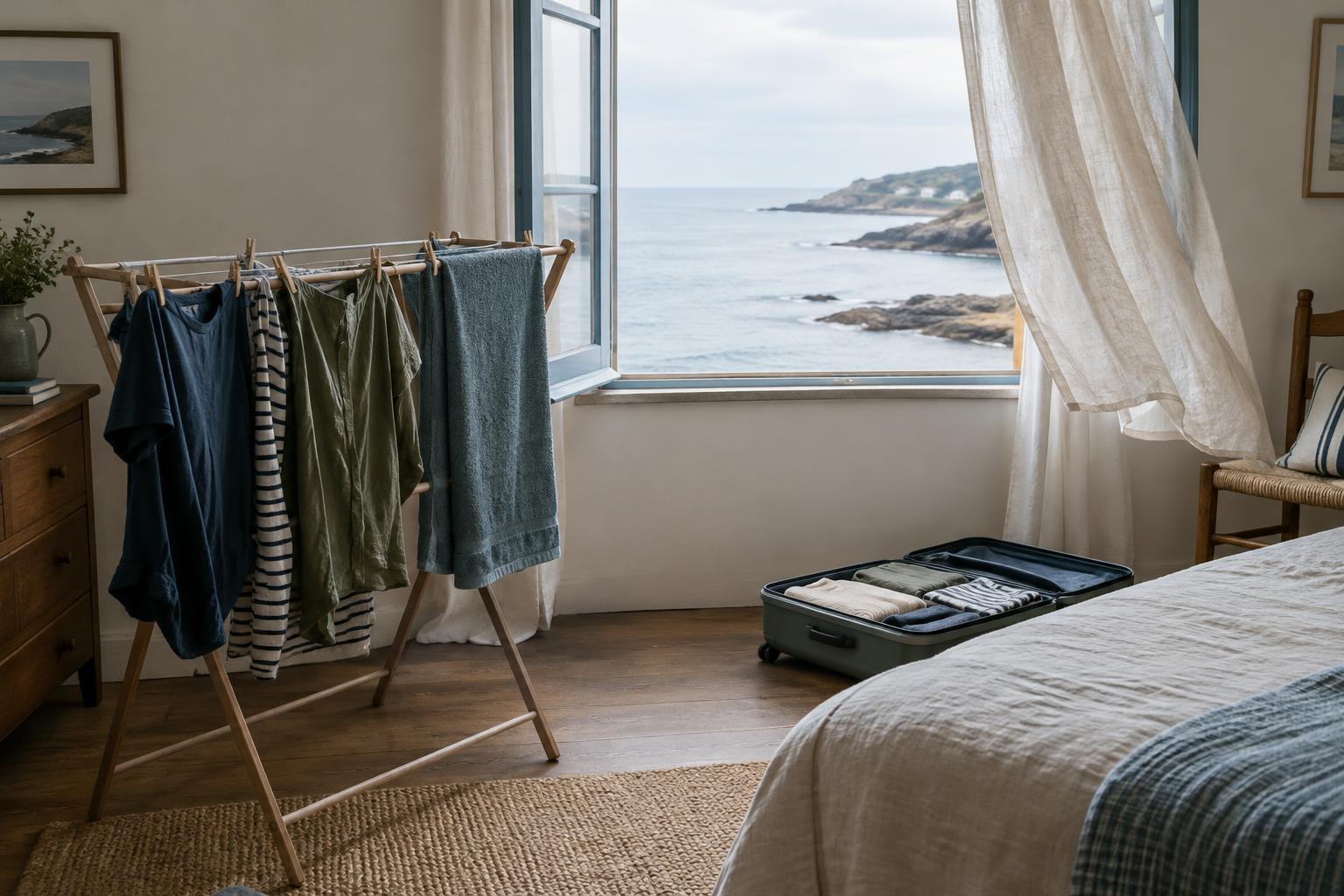
Choose a drying spot that respects the room. A bathroom rail or a provided rack is usually more suitable than wooden furniture, lampshades or painted doors. Place dripping items over a shower or tub until they stop shedding water, and check that nothing can drip onto a floor where someone might slip. If the accommodation has rules about balconies or laundry, follow them; a strong coastal breeze can also carry an unsecured shirt away.
Use airflow rather than wishful thinking
Clothes dry when moisture can move away from the fabric. Spread garments out instead of layering them, leave space between hangers, and open up cuffs, waistbands and pockets. Turn thick items partway through drying so the side facing a wall or rail gets some air. If a room has a fan, aim for gentle circulation rather than placing fabric against the appliance.
Opening a window may help on a breezy day, but sea air is not always drier than the room. If everything feels clammy, use available ventilation or a dehumidifier according to the accommodation’s instructions. Take care with heating: direct heat may damage delicate fabrics, and clothes should never cover a heater. A sheltered outdoor line can work well when permitted, though it is worth checking for rain and bringing laundry in before nightfall.
Remove excess water before hanging
If you rinse a swimsuit or hand-wash a light garment, gently squeeze out water without twisting anything prone to stretching. Then lay the item flat on a clean, dry towel, roll the towel around it and press along the roll. This transfers some water into the towel and can shorten the time the garment needs on a rack. Hang the towel separately afterward so it does not become another damp bundle.
For repeated wet-weather outings, prioritize the pieces you need next. Thin socks and base layers often deserve the best-ventilated spots, while a heavy sweatshirt may need more time. Check care labels before washing or drying unfamiliar fabrics. Shoes benefit from being opened wide and allowed to air out; removable insoles can dry separately if the shoe design allows it. Avoid stuffing wet shoes into a closed cupboard.
Keep dampness from spreading through your luggage
A small, water-resistant pouch is useful for carrying a wet swimsuit back from the beach, but it is temporary storage, not a drying method. Empty it when you return and leave the pouch open to dry too. For a ferry transfer or checkout day, separate damp items from dry ones, and unpack them at the next stop. If you cannot dry something promptly, be realistic about whether it is worth carrying onward.
Before repacking, feel seams, waistbands and other thick areas rather than judging only the surface. Fabric that feels cool or clammy may still hold moisture. Keep toiletries and food away from damp laundry, and avoid pressing wet items against books, electronics or clothing you cannot easily wash. A spare lightweight bag makes it easier to maintain that separation without reorganizing your entire suitcase.
Build a routine that suits a slower trip
A few minutes each evening can prevent a growing pile of half-dry clothes. Hang what got wet, move yesterday’s items to a better spot if needed, and check what you will wear tomorrow. On longer stays, an accommodation laundry service or nearby laundromat may be more practical than washing several pieces in a small sink. Ask before using shared facilities or hanging laundry in common spaces.
Pack with drying time in mind, particularly when changing rooms often. A second pair of socks or a spare swimwear item gives the first one time to dry, while lighter, easy-care layers can be simpler to manage than one bulky outfit. Coastal travel does not require a complicated laundry system. Keeping wet fabric separate, giving it air and checking it before packing will handle most everyday dampness.