Why island trails need particular care
A short island walk can cross several kinds of land: a village path, grazing ground, a beach, a wildlife reserve and a stretch of privately managed coast. Each may have different expectations for visitors. A line on a map shows where a route goes, but it does not necessarily show who manages it or whether access changes at particular times.
Islands can also concentrate foot traffic. When a path is one of only a few ways to reach a viewpoint or cove, repeated shortcuts may wear away vegetation and widen bare ground. Nesting sites, dunes and fragile coastal plants may sit close to places people naturally want to explore. Knowing the rules before setting out helps protect those places without turning a walk into a guessing game.
Check what is protected and who manages it
“Protected area” is a broad description, not a single set of rules. One site may allow walking on marked paths but restrict dogs; another may limit entry to a beach or require visitors to use a designated landing point. Rules can differ between neighboring sites. Look for the managing authority’s visitor information, then check signs at the trailhead or landing place. If guidance conflicts, do not assume an old route description overrides a current notice on the ground.
Before choosing a walk, note the route’s start and finish, any access points, and whether you need to return by the same path. Check for seasonal restrictions and whether a guide, permit or booking is required. If you are arriving by boat, include landing rules in that check: permission to travel along a coast does not necessarily mean permission to land wherever you wish.
Treat the marked route as part of the protection
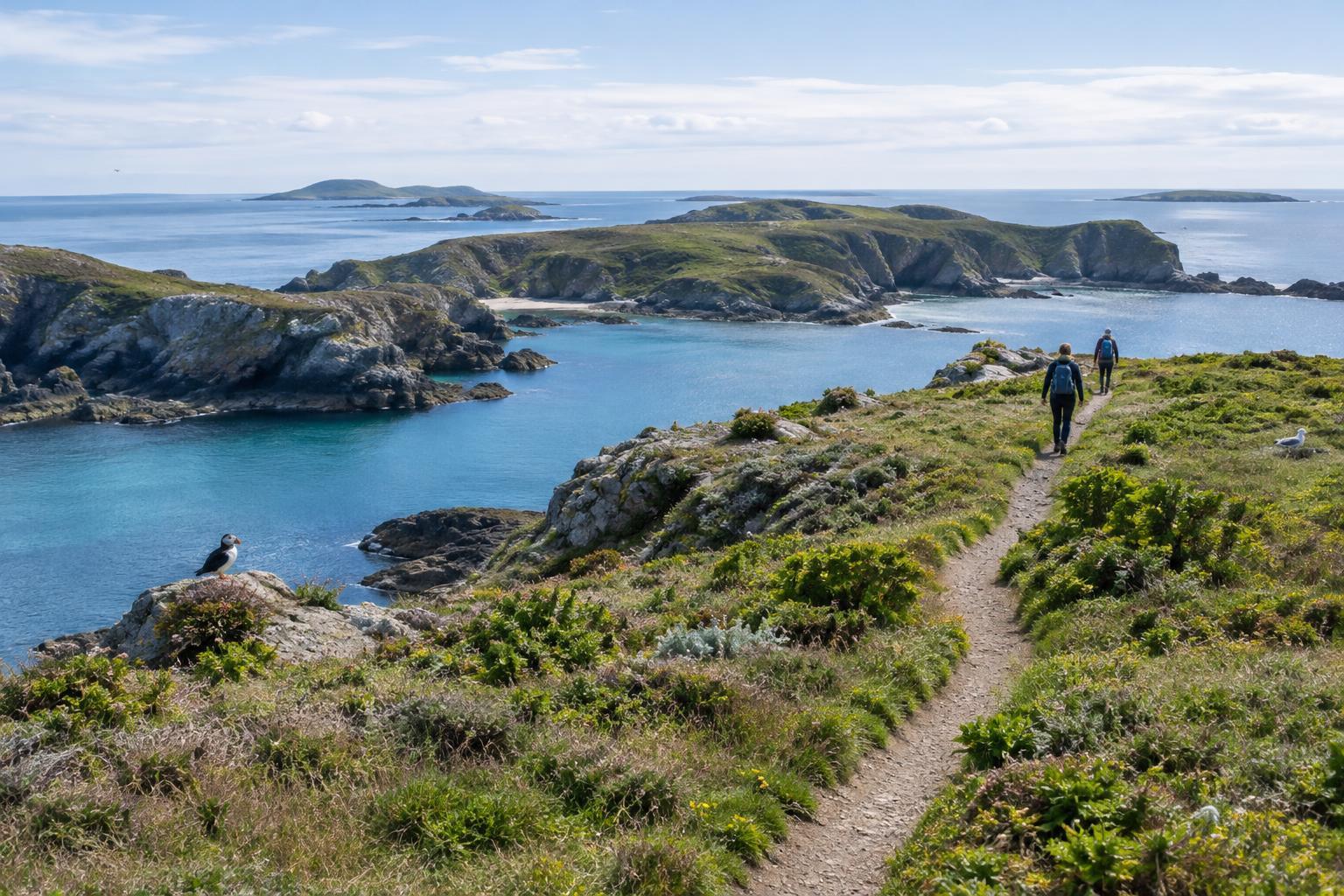
On a protected trail, waymarkers, boardwalks and barriers often indicate where visitors can pass with less disturbance. Stay on the permitted route even when another track looks shorter or offers a better photograph. A faint path may be an animal track, a maintenance route or the result of earlier visitors crossing a sensitive area. Walking around a muddy patch can gradually create a second path; where it is safe, step through the middle instead.
Coastal routes deserve an extra pause. Tides can cover shore sections, while wind, rain and erosion can change the condition of a cliff path. Check the route and expected conditions before leaving, and give yourself enough time to turn back. A closed path is not an invitation to find a way around the barrier. If the planned route is unavailable, choose another walk rather than crossing unstable or restricted ground.
Give wildlife and working landscapes room
A quiet beach may be habitat, not empty space. Watch for signs marking nesting or resting areas, and keep your distance from birds and other wildlife. If animals change their behavior as you approach, move back. Keep dogs under the control required locally; even a dog that does not chase wildlife can disturb animals simply by entering their space. Carry food scraps away as well as packaging, rather than assuming biodegradable waste belongs in the landscape.
Island paths may also run beside homes, farms, fishing areas or places of cultural importance. Close gates as you find them unless a sign says otherwise, avoid blocking tracks and access points, and respect notices about photography or entry. A path that passes through a working place is not permission to wander through adjacent buildings, fields or equipment.
Make a flexible plan, not just a route
Save the relevant visitor guidance before travel, since reception may be limited on parts of an island. Carry a map you can use without a signal, water, weather-appropriate layers and a way to take your rubbish back. Tell someone your intended route if you are heading into a remote area. These preparations make it easier to follow a permitted path rather than improvising when you are tired, short on time or faced with an unexpected closure.
When a rule or boundary is unclear, pause and look for a sign, an official route marker or a clearly permitted alternative. Ask a ranger or local information point when one is available. If you cannot establish that access is allowed, turning back is a sound choice. The aim is not to see every corner of an island on one visit; it is to travel in a way that leaves its paths, habitats and communities ready to welcome the next walker.