Preservation becomes a cooking tradition
A fishing boat’s return and a household’s next meal do not always happen on the same schedule. Before reliable refrigeration, coastal communities used salt, moving air and smoke to keep part of a catch for later. These methods remain important in many kitchens because they create flavors and textures that fresh fish cannot simply replace. A piece of dried fish may season a pot of beans; smoked fish may turn a simple bowl of rice into a meal.
There is no single coastal approach. The fish available, the weather, access to salt and the shape of a local kitchen all affect what people preserve and how they cook it. For a traveler, that variety is worth noticing. Rather than treating preserved fish as an unfamiliar version of fresh fish, look at what it does within the dish: Does it provide the main bite, deepen a broth or add a small, savory accent?
Salted fish: a strong ingredient used with care
Salting draws moisture from fish and gives it a concentrated, savory character. Some salted fish is firm enough to flake into a sauce; other preparations are softened before cooking. Depending on the product and recipe, a cook might rinse or soak it to moderate the saltiness. That step is part of preparing an ingredient, not a sign that its flavor is being washed away.
Salted fish often works well beside foods that can absorb and balance its intensity. Potatoes, rice, pulses and vegetables provide a gentle base, while herbs, onions or a squeeze of citrus can add contrast. In a stew, a modest amount can season the whole pot. In a fritter or filling, its firmer texture helps it hold its place among softer ingredients.
When ordering, it can help to ask whether the fish is the centerpiece or a seasoning. That distinction sets expectations: a dish described as containing salted fish may offer a few flavorful flakes rather than a fillet. If you are cooking with it yourself, follow the preparation directions for the particular product; salt levels and soaking needs vary.
Dried fish: texture and depth
Drying removes moisture, sometimes with salt and sometimes without it. The result can range from thin, crisp pieces to dense fish that needs rehydrating or longer cooking. Dried fish may be broken into a broth, simmered with vegetables or added in small pieces where its chew is welcome. Its appeal is not only convenience: drying concentrates flavor and gives cooks another way to build depth.
Texture is especially revealing in dried-fish dishes. A piece briefly warmed in a pan may stay crisp, while one left to simmer can become tender enough to pull apart. Neither result is more authentic in the abstract; each suits a different meal. If you encounter dried fish in a market, ask how the seller would prepare it locally. The answer may tell you more than a label can about whether it belongs in a snack, a soup or a long-cooked pot.
Smoked fish: more than a smoky taste
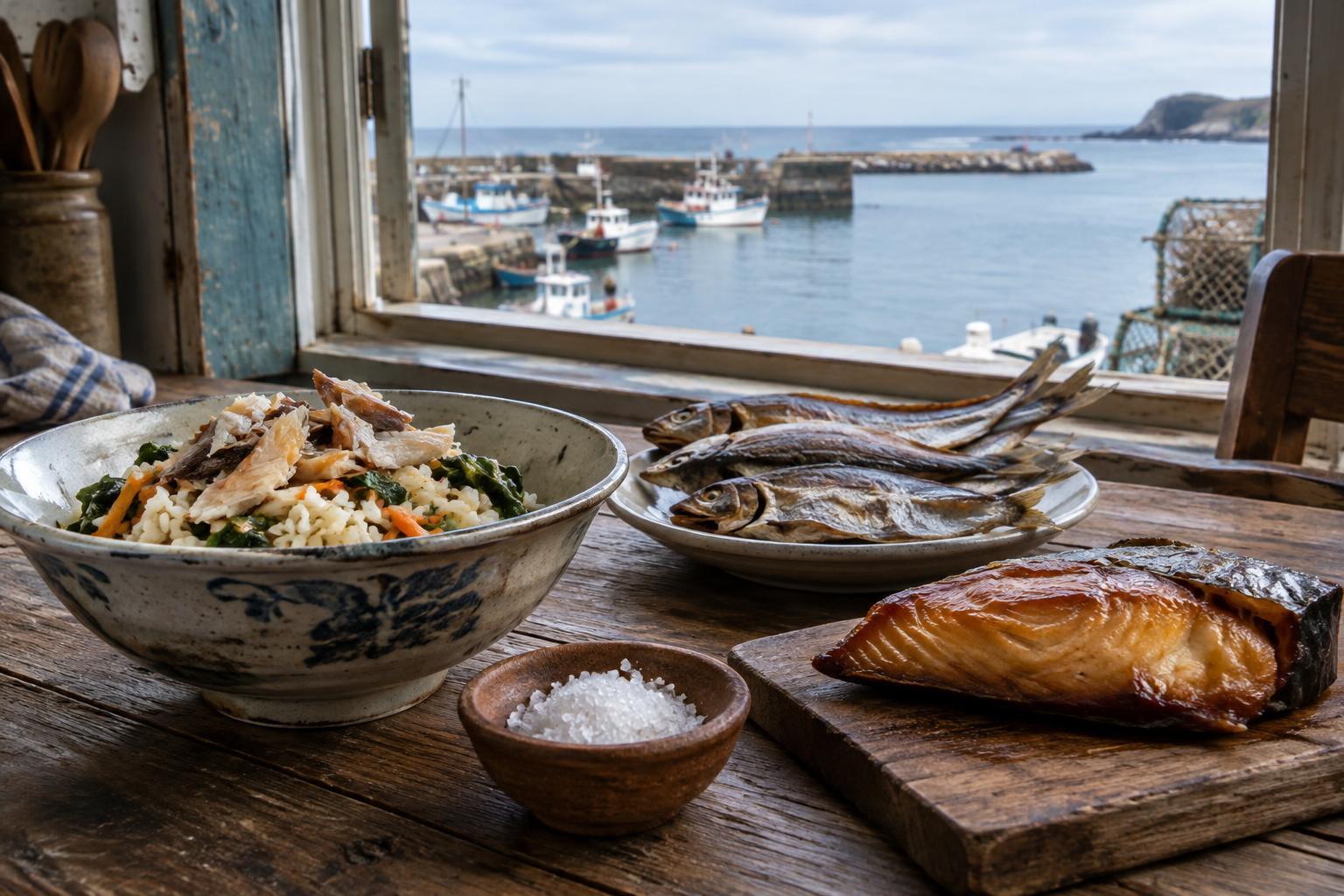
Smoking exposes fish to smoke while controlling heat and time. Methods differ, and a smoked product may be ready to eat or may require cooking. Smoke gives fish an aroma that can stand on its own, but it can also bring richness to otherwise mild ingredients. Flaked smoked fish can be folded into a warm grain dish, paired with vegetables or served in a small portion alongside bread.
The choice of fish matters as much as the smoke. An oily fish may remain particularly rich, while a leaner one can feel firmer and more delicate. Seasoning and smoking intensity also vary between producers. Taste a small piece before adding extra salt or strong spices; the fish may already provide much of what the dish needs. When buying it, check the seller’s storage and preparation advice rather than assuming every smoked fish should be handled the same way.
Eating with curiosity and respect
Preserved fish can be an accessible way into a place’s food culture because it often appears in ordinary meals, not only on special menus. At a market or café, ask what accompanies it and how locals usually eat the dish. A starchy side, fresh herbs or pickled vegetables may be there to balance its salt, richness or chew. Trying the complete plate offers a better sense of the cook’s choices than tasting the fish alone.
If you hope to take some home, choose a product with clear packaging and handling guidance, and check the rules that apply to your journey before purchasing. For eating on the road, keep to the storage instructions given by the seller. The pleasure of preserved fish lies partly in its practicality, but also in the care behind it: a familiar catch transformed into an ingredient that can lend character to meals long after the boat has come ashore.