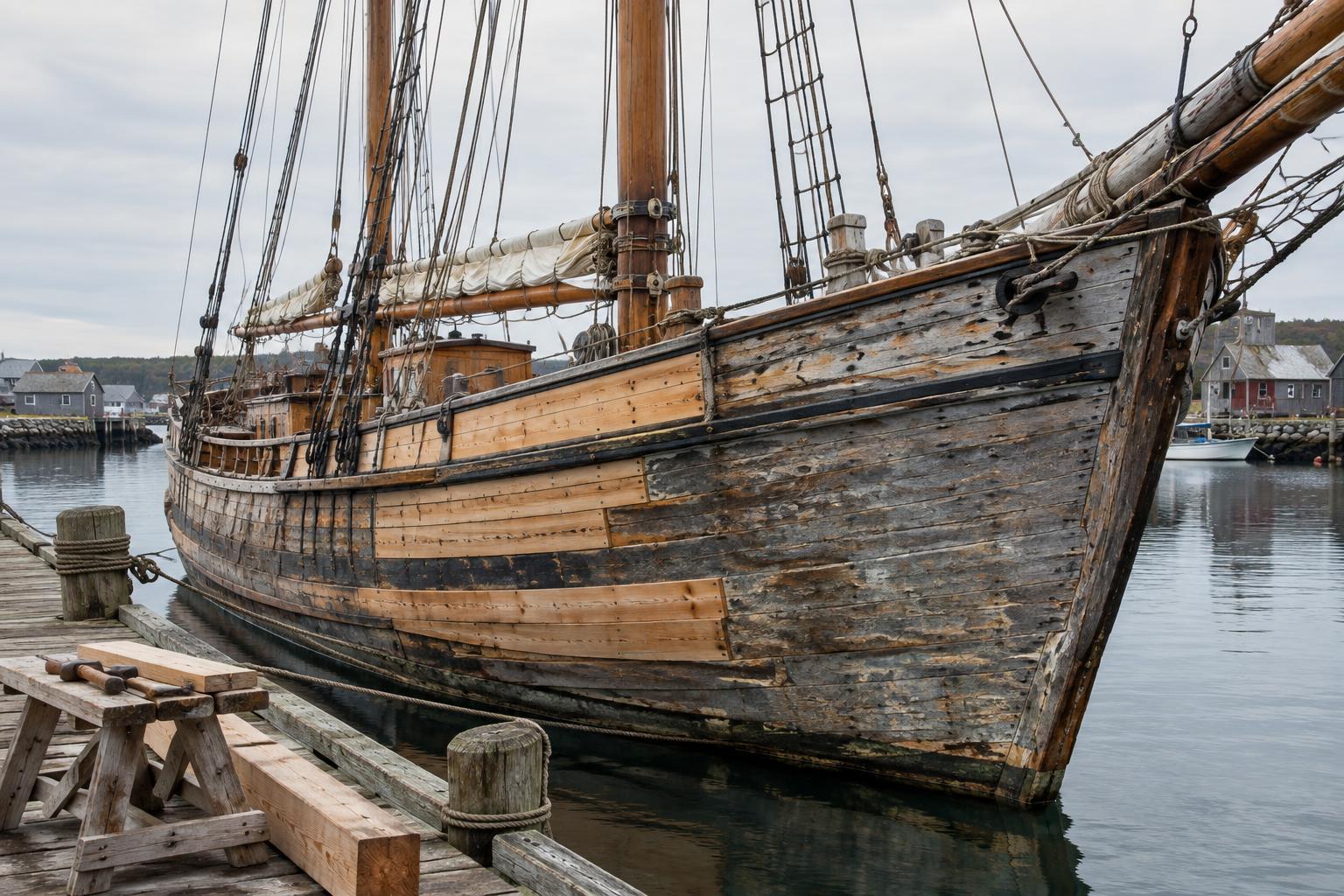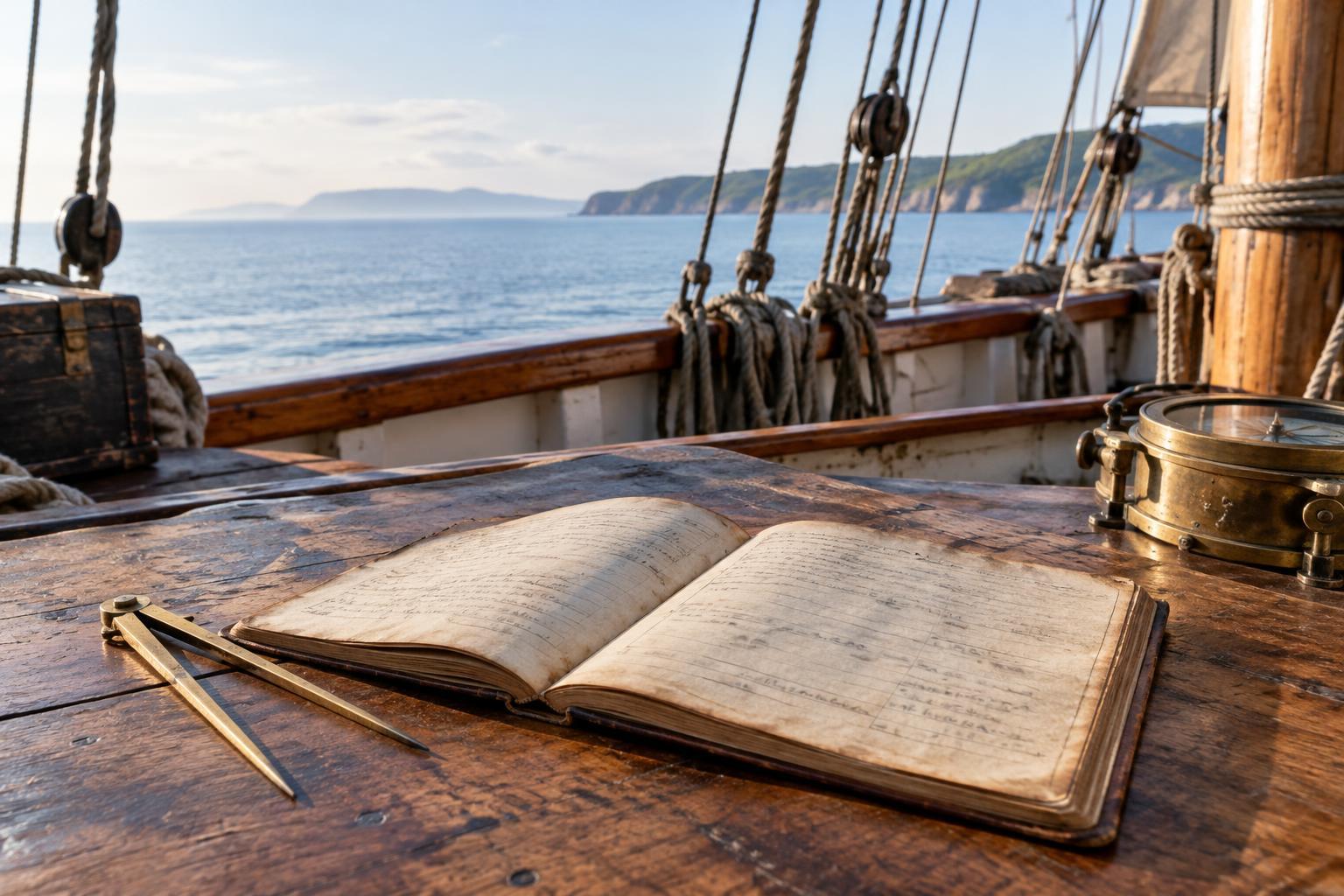
A voyage written one entry at a time
A logbook is a working record of a vessel’s journey. Depending on the ship, its purpose and the person keeping it, entries might note the course steered, estimated position, weather, sails set, repairs made or land sighted. Some logs are spare columns of figures; others include brief remarks about people and events. That practical purpose makes them different from travel memoirs. A log was usually written to help account for a voyage, not to give later readers a complete picture of life aboard.
Even so, the sequence of entries can make a journey feel tangible. A single note about rough seas says little on its own. Several days of changing wind, reduced progress and work on damaged gear begin to show how conditions shaped the crew’s time. Reading a log is often less about finding a dramatic story than about noticing what had to be recorded, repeated or dealt with before the ship could move on.
Routine is part of the story
Logbooks can show the rhythm of shipboard work: watches kept, sails adjusted, equipment maintained and courses reconsidered. Repeated notes about pumping, cleaning or repairing may point to demands that occupied far more time than memorable arrivals and departures. Weather entries also give context to decisions. A change of course might reflect wind or sea conditions rather than a change of destination.
The brevity of an entry matters, too. “At anchor” may look uneventful, but a vessel could be waiting for safe conditions, supplies, permission to enter a harbor or a chance to make repairs. The log may not explain which. Instead of treating silence as evidence that nothing happened, a reader can ask what the record was designed to capture—and what ordinary work it had no reason to describe.
Landfalls and coastal encounters
For a traveler interested in islands and coastlines, logs offer a view from the water. Mentions of headlands, soundings, currents and anchorages show how a coast appeared to someone approaching it by sea. A place familiar today as a destination might enter a log first as a navigation mark, a sheltered bay or a difficult passage. Reading those details alongside a map can clarify why a particular harbor mattered to a voyage.
Ports also brought ships into contact with people ashore. A log might mention taking on water, loading cargo, exchanging messages or hiring local help. Such notes can suggest connections between a vessel and a coastal community, but they rarely tell the whole story of the encounter. The people providing goods, knowledge and labor may be unnamed, while their perspectives are absent. A ship’s account is a useful view of arrival, not a complete account of the place arrived at.
Whose life does the log record?
Before drawing conclusions from a logbook, it helps to ask who wrote it and why. An official ship’s log, a captain’s private journal and a crew member’s notebook may describe the same passage differently. One may prioritize navigation and incidents; another may dwell on discomfort, relationships or the sight of land. The intended audience could affect what the writer included, and entries made from memory may differ from notes written during a watch.
The record can also reflect the writer’s authority and assumptions. Crew members, passengers and people met in port may appear only when their actions mattered to the person keeping the log. A brief description of a disagreement, illness or exchange should not be taken as everyone’s account of it. Comparing the log with letters, port records, charts or other surviving accounts can add context, though those sources have limits of their own.
How to read a logbook with curiosity and care
Start with the basics: identify the vessel, the writer if known, the route and the span of entries. Notice whether the pages use a consistent format and whether unfamiliar terms refer to weather, navigation or shipboard work. Then follow a short stretch of days rather than searching only for striking passages. Mark changes in course, delays, repairs and land sightings, and look for connections between them without assuming every cause is stated.
Keep separate notes for what the log says and what you infer from it. If an entry records a late arrival after several days of contrary wind, the conditions may help explain the delay; they do not prove that wind was the only factor. Read with equal attention to people who are mentioned briefly or not at all. Used this way, a logbook becomes more than a trail of positions: it is evidence of the decisions, labor and uncertainty involved in crossing the sea, with room left for stories the pages cannot tell.