Start with the journey, not the gear
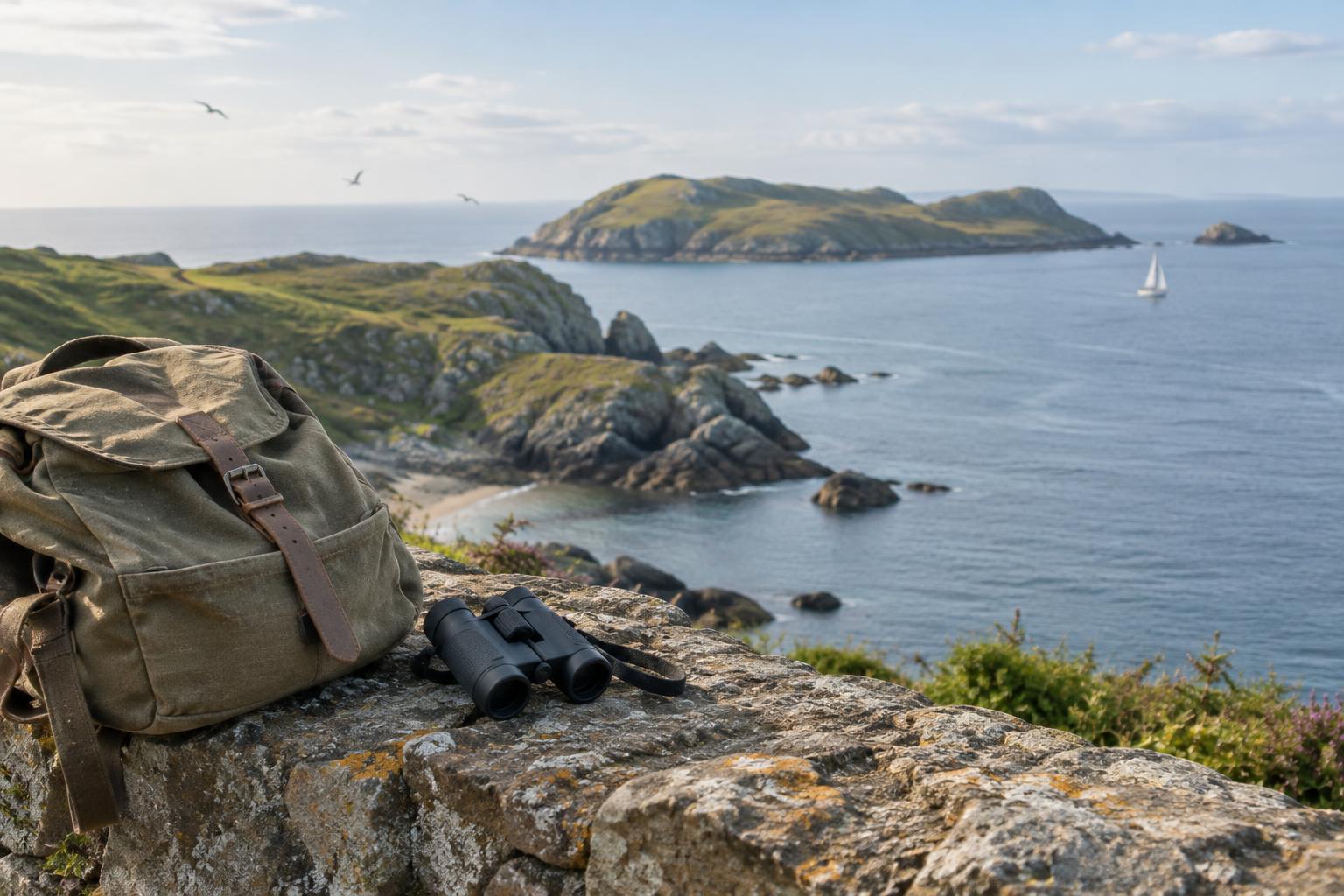
On a coast, the interesting thing is often just beyond comfortable viewing distance: a bird working the tideline, a lighthouse across a bay, or the shape of a headland seen from a ferry deck. Binoculars can turn those distant details into part of the journey. They are most useful when you expect to spend unhurried time looking, rather than moving quickly between stops.
Think through your itinerary before making room in your bag. A trip with shore walks, boat crossings, viewpoint stops or long afternoons beside an estuary offers plenty of chances to use binoculars. On a short city break with only one brief visit to the waterfront, they may spend the whole trip packed away. If you already own a pair, try carrying them on a local walk: how often you reach for them is a better guide than an ambitious packing list.
What binoculars add to a coastal day
Binoculars help you observe without needing to get closer. You can follow a seabird over the water, examine details on a distant vessel or take in the layers of an island landscape from a fixed viewpoint. They can also make waiting feel worthwhile. A ferry crossing or a quiet hour on a beach becomes an opportunity to notice changes in light, movement and weather.
They are particularly useful where approaching would be impractical or unwelcome. Birds feeding or resting along a shore may be disturbed by people moving toward them, and fragile coastal ground is not always a place to wander. A closer view from an existing path lets you stay curious while giving wildlife space. Binoculars are less valuable if poor visibility is likely to dominate your plans, though mist and rain can change quickly and should not be treated as a certainty.
Choose a size you will actually carry
Binoculars are commonly labeled with two numbers, such as 8x32 or 8x42. The first describes magnification; the second is the diameter of the front lenses in millimeters. Higher magnification is not automatically better for travel. An 8x view is often easier to hold steady on a windy lookout or moving boat than a 10x view. Larger front lenses can be useful in dimmer light, but they usually add bulk and weight.
For many travelers, a comfortable compact or mid-size pair is more useful than a larger pair left in the room. Before buying, check how naturally the binoculars sit in your hands, whether you can focus without strain and whether the view feels comfortable through glasses if you wear them. A neck strap or cross-body harness can make frequent stops easier. If you seldom plan to watch distant details, a small pair you already own may be enough; you need not buy specialist equipment for an occasional crossing.
Prepare for salt, spray and shared space
Coastal air and boat spray are good reasons to look for a water-resistant or waterproof model, especially if the binoculars will be used regularly outdoors. Fog-resistant construction may also help when moving between warm interiors and cool, damp air. Check the maker’s description rather than assuming all binoculars offer the same protection. Even with a weather-protected pair, a simple case and lens covers help keep grit away during travel.
Carry a clean lens cloth and remove loose sand or grit gently before wiping a lens. After exposure to salt spray, follow the manufacturer’s cleaning guidance; rubbing dried salt across glass can damage a coating. On a boat, keep the binoculars secured when not in use and take care when viewing from a moving deck. Never use them while walking an uneven cliff path or crossing a road: stop somewhere stable first.
Know when to leave them behind
Binoculars earn their space when they fit the pace of your trip. If you have time to pause at a harbor, watch a shoreline from a public path or scan the water during a crossing, they can add a quiet, memorable layer to the experience. If every ounce matters and most of your days will be spent indoors or in close-up surroundings, leave them behind without regret.
You can also decide one day at a time. Keep a pair in your accommodation for planned walks and boat journeys rather than carrying them everywhere. The aim is not to see everything at a distance. It is to have a useful tool for the moments when slowing down and looking carefully is exactly why you came to the coast.