Start with the setting, not the façade
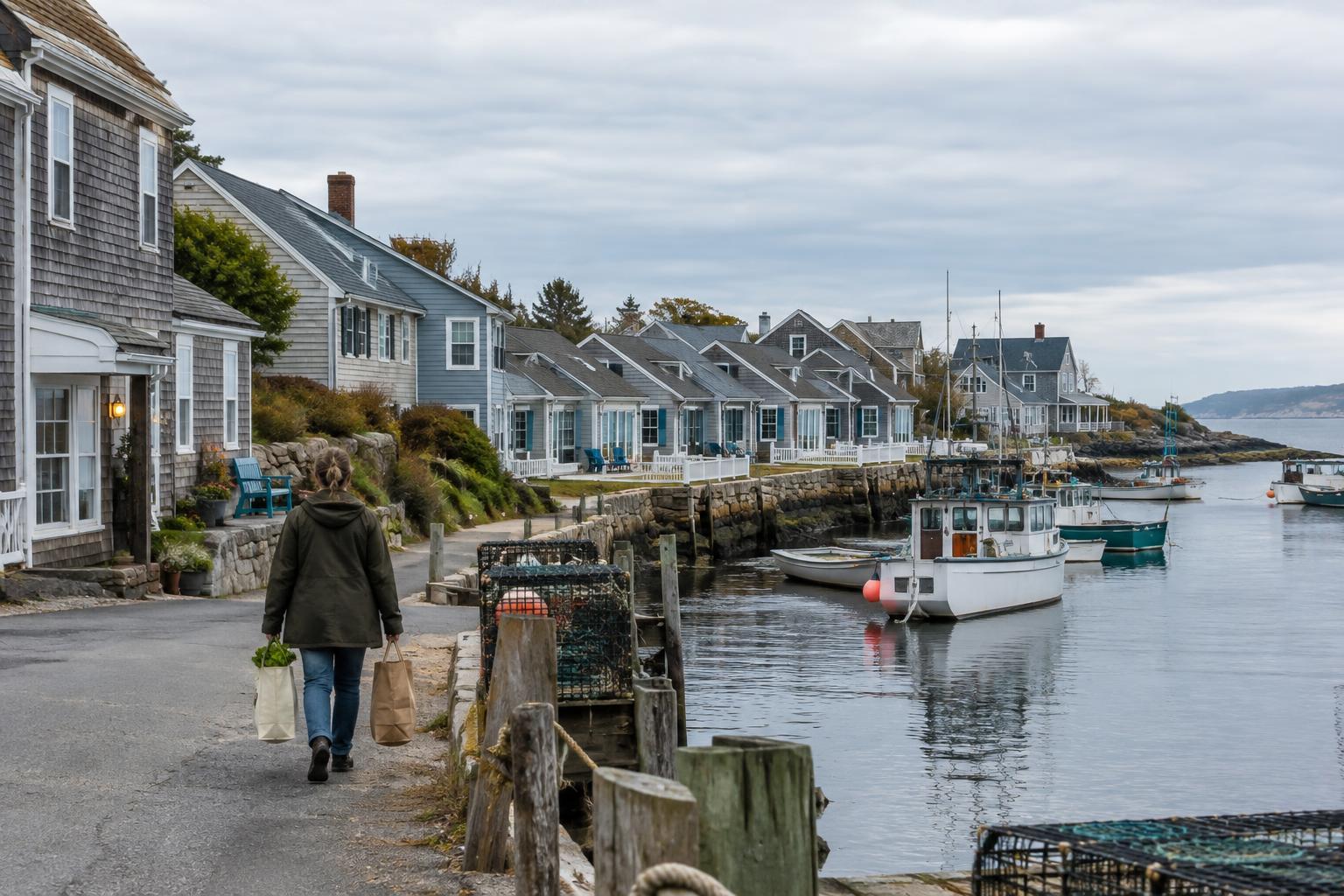
The first clue to a coastal building’s character is often the land around it. Look at where houses stand in relation to the shore, which way their doors face, and how streets meet the water. A settlement on a sheltered harbor may be arranged around a quay, while one exposed to wind and spray may place its most protected spaces behind walls or within narrow lanes. Elevation matters too: buildings set above a beach or inlet may reflect practical concerns as well as a desire for a view.
Notice what a building appears to do before trying to name its style. Is the ground floor suited to storage or trade? Does an upper balcony offer shade, a view, or both? Are buildings close together because usable land is scarce? These questions help distinguish a feature shaped by everyday life from one added mainly for appearance. They also keep you from treating a whole coastline as though it had one way of building.
Read the materials the coast makes practical
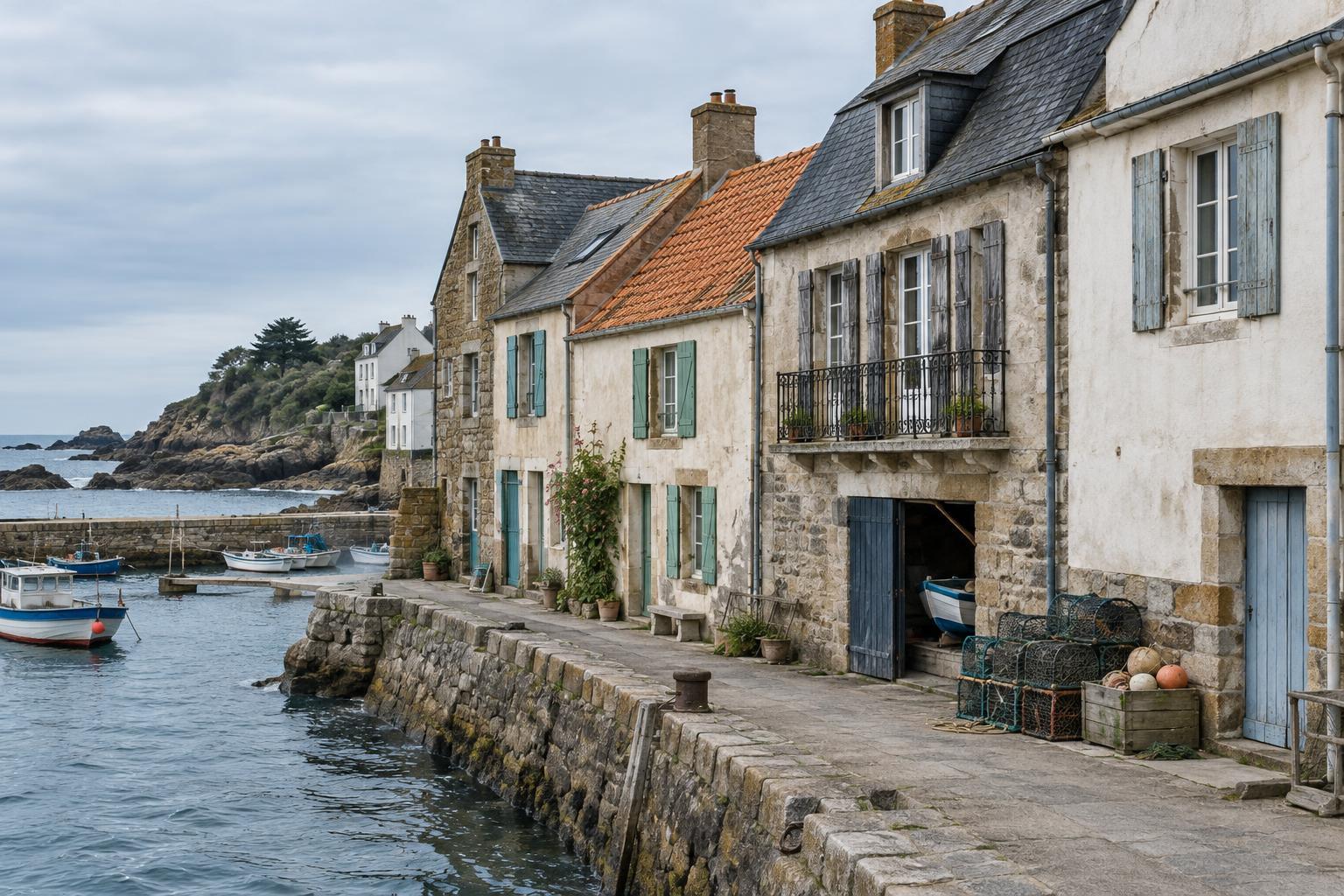
Walls and roofs can reveal useful patterns, though rarely a simple origin story. Stone, brick, timber, earth-based finishes and plaster all behave differently around salt air and damp. Where building materials were historically gathered or made nearby, their color and texture may give a streetscape a recognizable rhythm. Later repairs, imported supplies and changing tastes can complicate that picture, so look for repeated combinations across ordinary buildings rather than relying on one striking house.
Pay attention to surfaces as well as structure. A rendered wall may protect the material beneath it; shutters and deep openings can help manage light, rain or heat. Roof shapes and coverings vary with available materials, construction skills and weather, but the same solution can appear in more than one region. Even a vivid paint scheme is best read in context: it might be a longstanding local preference, a recent renovation or a choice made for visitors.
Look for traces of work along the waterfront
Seaside architecture is not only about homes and hotels. Warehouses, fish-handling spaces, workshops, market buildings and small sheds can explain why a waterfront looks the way it does. Broad openings may have allowed goods or equipment to move through a building. A sturdy quay-side frontage may reflect repeated loading and unloading. Slipways, steps and paths can show how people once moved between streets and boats, even where the original use has changed.
Compare the working edge of town with its residential streets. A port may have substantial buildings near the quay and modest structures tucked into lanes behind it. Elsewhere, homes and workspaces may sit side by side. If a former storehouse is now a café or guesthouse, try to separate its surviving form from its new fittings. Adaptation is part of a place’s architectural story, not a reason to dismiss what you see as inauthentic.
Separate regional patterns from holiday fashion
Many coastlines have layers of development. Older streets may sit beside a promenade, resort villas, apartment blocks or newer homes designed to evoke a traditional look. Verandas, decorative trim, large windows and sea-facing terraces can express changing expectations of a seaside stay as much as local building customs. A building can therefore be characteristic of a coastal town without being typical of the area’s earlier architecture.
To spot a regional pattern, compare several buildings of similar purpose and apparent age. Which details recur on everyday houses, not just landmarks? Which forms continue beyond the waterfront into nearby villages? A feature seen only on a row of visitor-facing properties may belong to a particular period of tourism rather than to the whole region. This approach is more useful than sorting buildings into rigid categories by a single roofline or color.
Build a careful habit of observation
On a walk, choose a short route from the shore inland. Note changes in street width, building height, entrances, roof forms and materials. Then look back toward the sea: the same streetscape may make more sense when you can see its slope and exposure. Sketching a few shapes or taking respectful photographs can help you compare details later. Avoid photographing through windows or blocking a doorway for the sake of a closer view.
When you want to learn a local name for a style or understand a building’s former use, seek out place-specific context such as an interpretive sign, a local museum or a conversation with someone familiar with the area. Treat broad labels as starting points, not final answers. The reward is a richer view of the coast: buildings become evidence of how people have sheltered, worked, traveled and welcomed others beside the water.