Two ways seafood reaches the table
A harbor menu may list “wild-caught” beside one fish and “farmed” beside another, as though those words were a simple ranking. They describe different ways of producing food, not a reliable shortcut to quality. Wild seafood is caught from natural populations in seas, rivers or lakes. Farmed seafood is raised under human management, whether in coastal waters, ponds or tanks. Both routes include a wide range of practices.
For a traveler, the useful question is not just which route sounds more traditional. It is what species you are eating, where it came from and how it was produced or caught. A farmed mussel and a farmed finfish may have very different needs and effects. Likewise, a wild fish caught with selective gear is not the same proposition as one taken in a fishery with substantial unwanted catch. The details matter more than the label alone.
Flavor, texture and freshness
Farmed and wild examples of the same species can taste different. Diet, activity, water conditions, size and handling all influence flavor and texture. Farming can offer a more consistent product, while wild catch may reflect seasonal changes in what the animal has eaten. Neither is guaranteed to taste better. A carefully handled farmed fish can be excellent; a poorly stored wild one can disappoint.
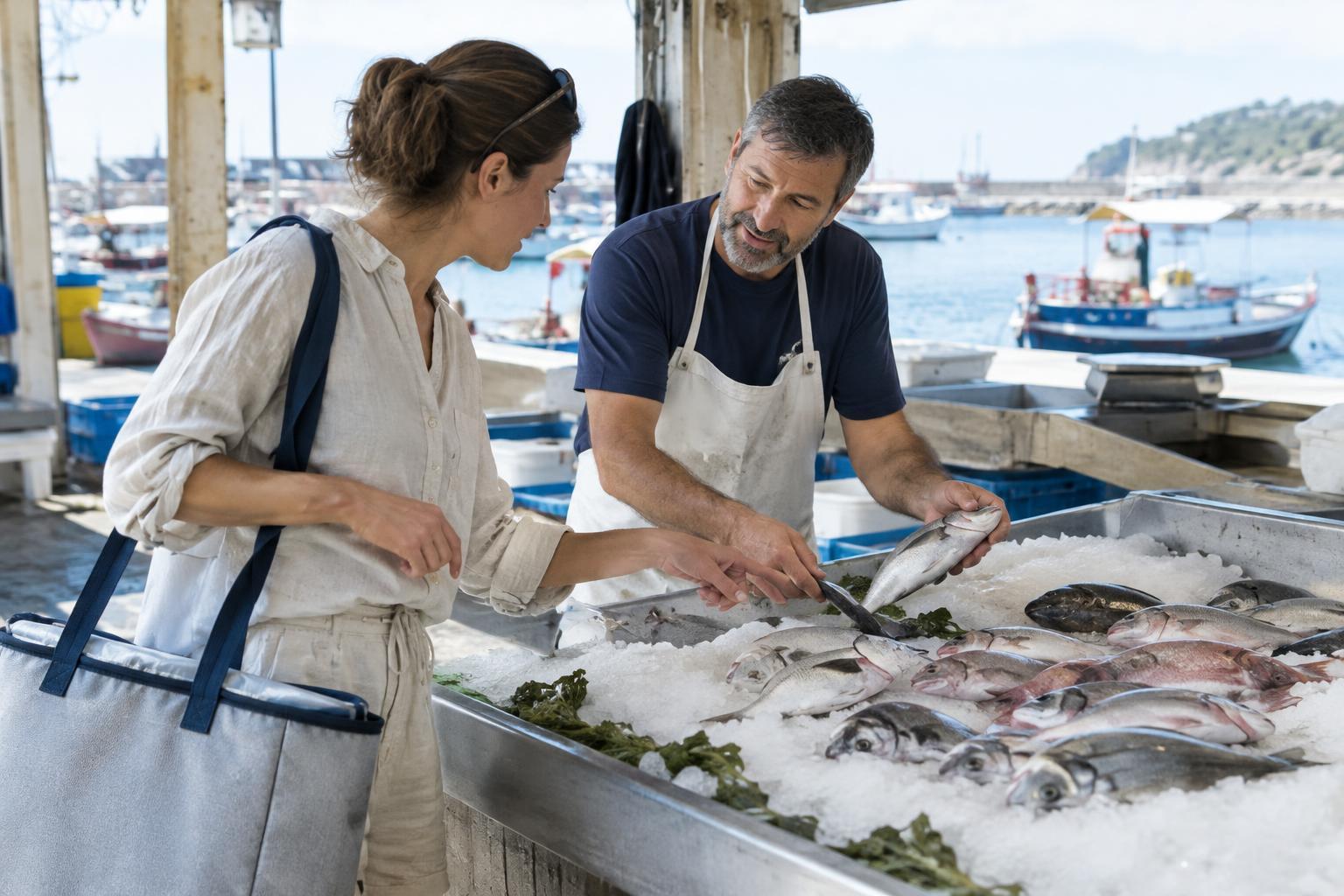
Freshness deserves its own question. Fish landed nearby may be appealing, but “local” does not automatically mean it has been handled well. Equally, seafood brought from farther away can arrive in good condition if it was chilled and transported carefully. When choosing at a market or restaurant, look for clear information about the species and origin. At a fish counter, clean, mild aromas and attentive cold storage are more useful clues than a romantic story about the boat.
Different environmental pressures
Wild fisheries depend on healthy populations and habitats. The impact of a catch can vary with the condition of the stock, the amount taken, the fishing gear and what else that gear catches or disturbs. A method that works well in one place may cause problems in another. Asking about the fishing area and method can be more revealing than asking only whether a fish is wild.
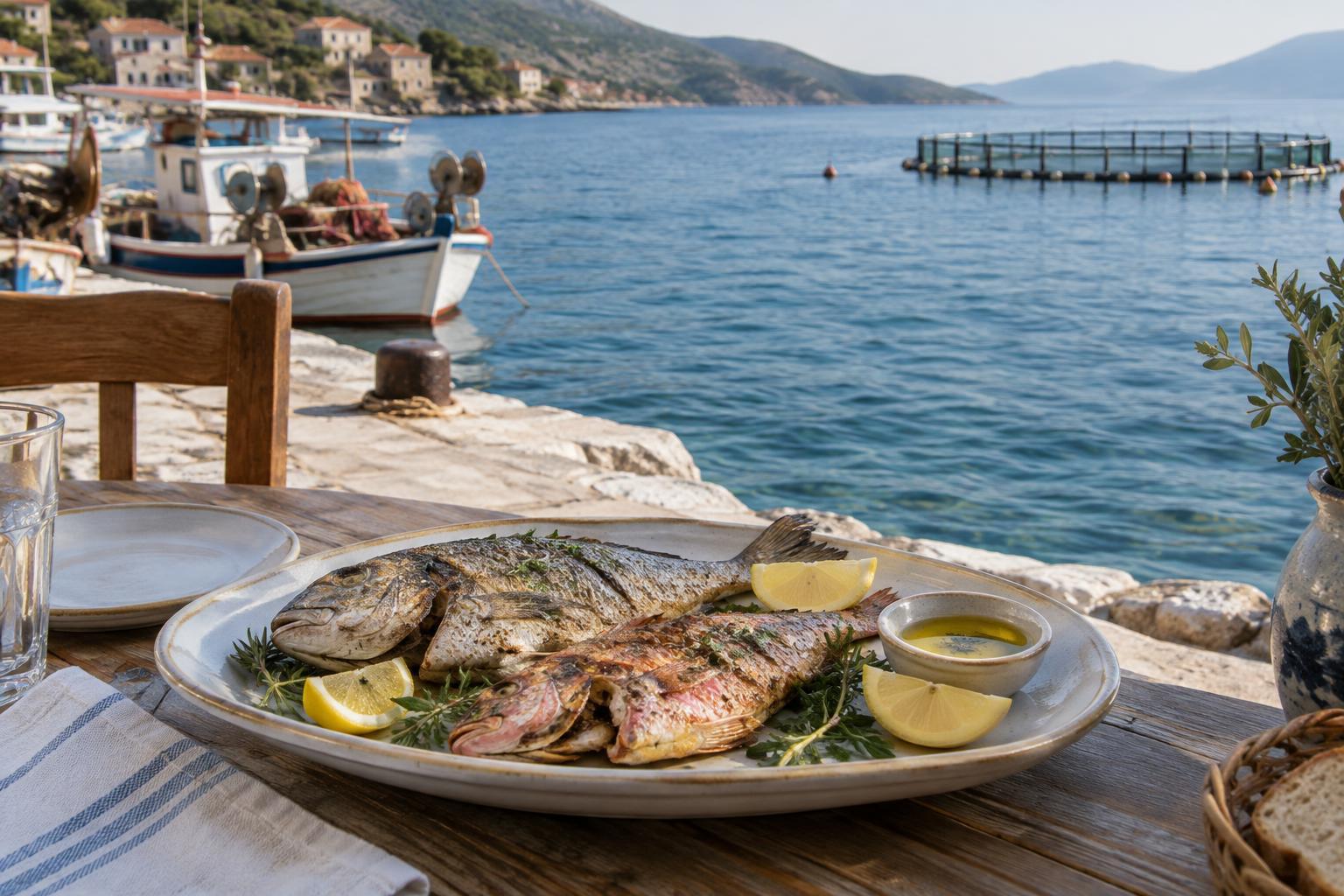
Aquaculture can ease pressure on some wild populations, but it creates its own demands. Depending on the species and system, concerns may include feed ingredients, waste, disease, escapes and the effects of coastal facilities on nearby habitats. Some farmed shellfish feed on particles already present in the water and do not require prepared feed; that does not mean every shellfish farm is suitable for every shoreline. Site, scale and management all count. Simple claims that all farming is harmful, or that all wild catch is sustainable, miss this variation.
What the menu may not tell you
Seafood names can be broad. A familiar menu term may cover several species with different origins, and the place where a dish is served may not be where its main ingredient was caught or raised. This is especially worth remembering in busy coastal destinations, where demand can exceed what nearby waters provide. Imported seafood is not inherently a poor choice, but a diner should not have to assume that “by the sea” means “from this sea.”
If the menu is vague, keep the conversation simple. Ask, “What fish is this?” followed by “Is it farmed or wild, and where is it from?” Staff may not know every detail, particularly about fishing gear or farming methods. An honest partial answer is more useful than a confident-sounding guess. If origin matters to your choice and no one can clarify it, consider a dish with a more clearly identified ingredient.
Choosing with curiosity, not a fixed rule
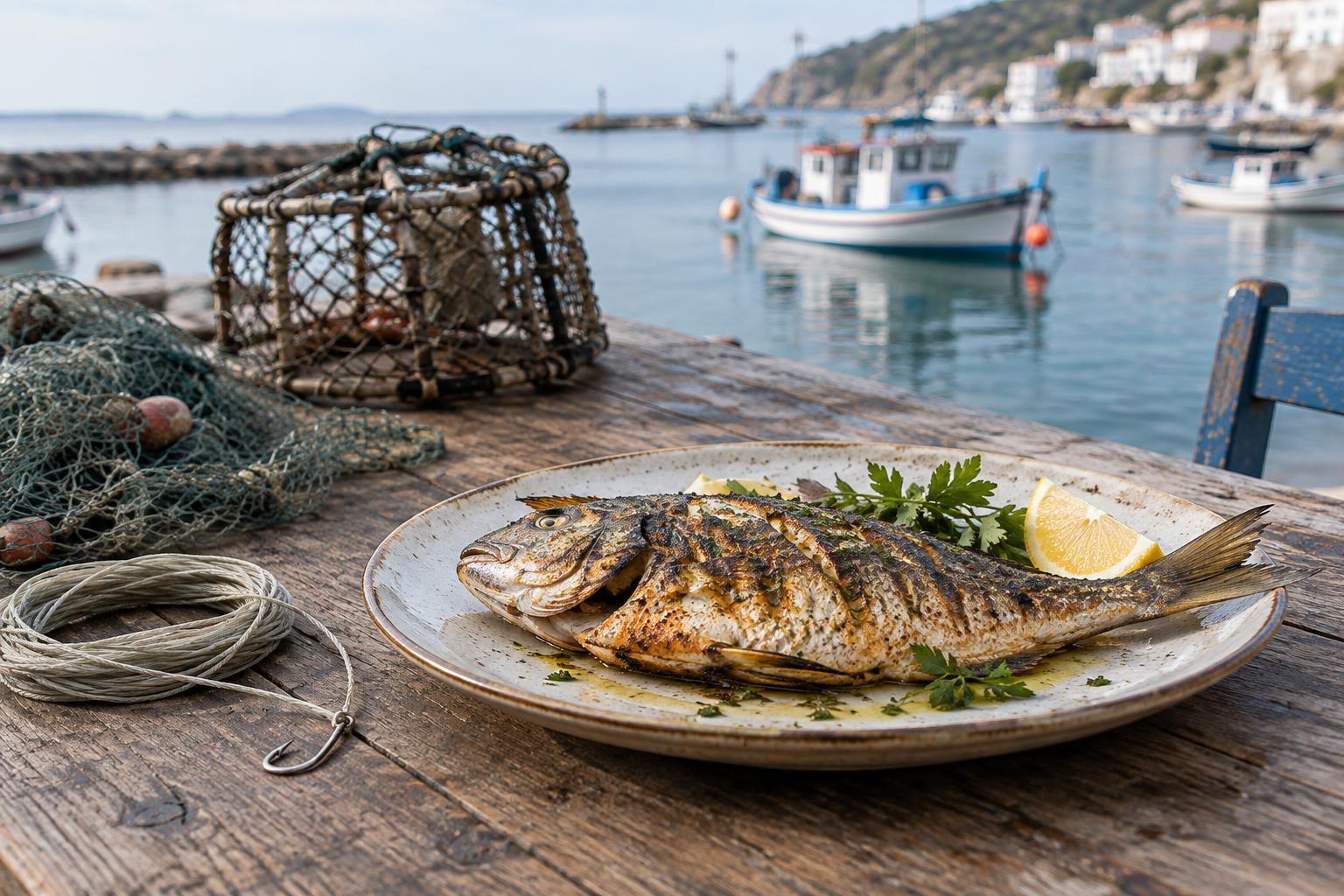
A good coastal meal need not become an investigation. Start with what is identifiable, ask a couple of courteous questions and stay open to alternatives. A kitchen that names its species and explains its suppliers gives you more to work with than one relying on words such as “fresh,” “local” or “wild” without context. Preparation matters, too: a simply cooked, well-handled fish can be more satisfying than a prestigious species chosen for its reputation.
Farmed versus wild is a useful starting point, not a verdict. On one journey, a responsibly managed farmed product may be the appealing choice; on another, a well-described local catch may connect dinner to the working waterfront. Paying attention to species, origin and production method helps you choose with greater care while leaving room for the pleasure of eating by the sea.