Two barriers, two different jobs
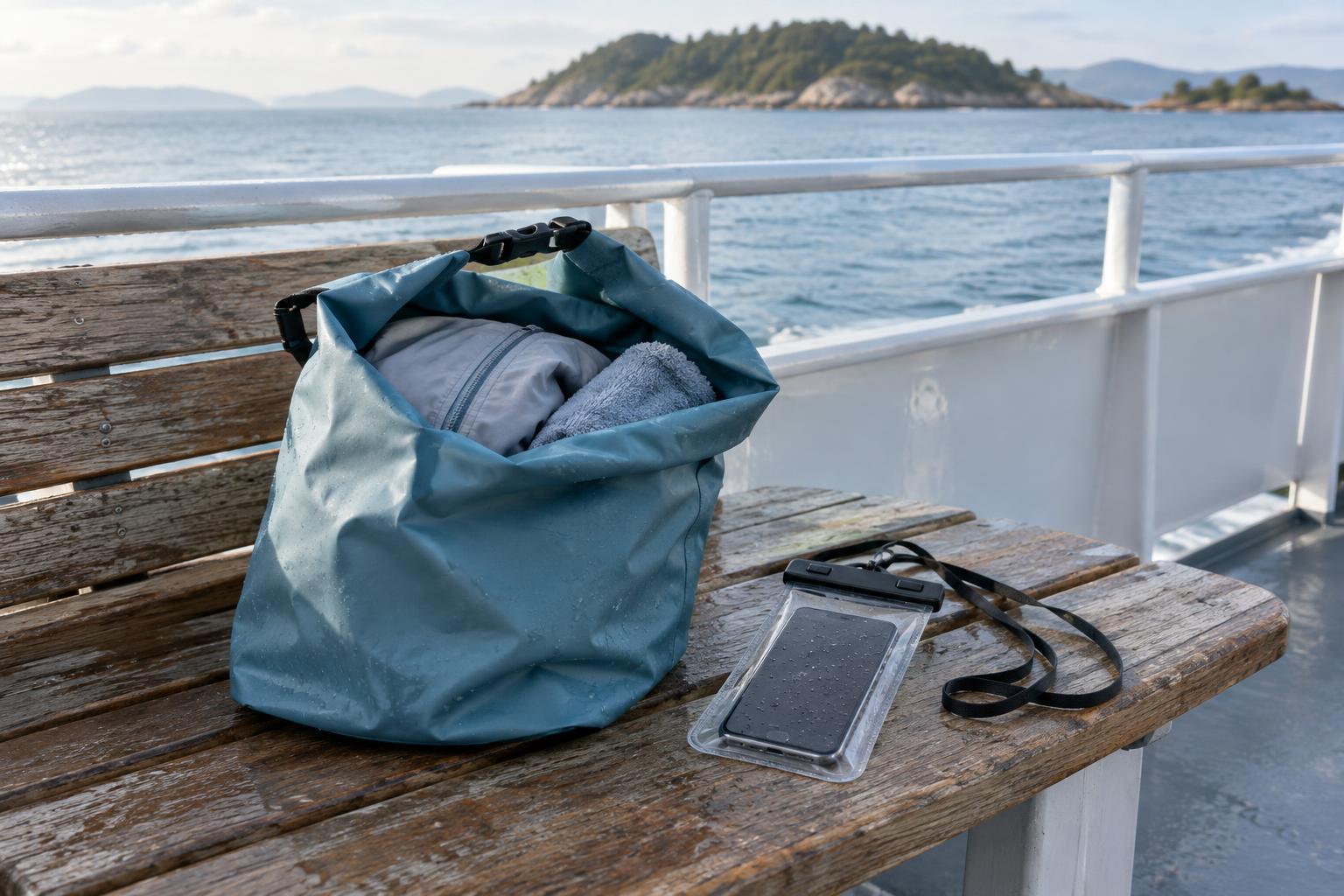
A dry bag protects a group of belongings from splashes, spray and wet surfaces. It is useful when a ferry deck is damp, a small boat takes on spray, or your beach bag may sit near the tide. A waterproof phone pouch protects one device while keeping it accessible. It lets you carry a phone where you can see the screen and, depending on the pouch, use the camera without taking it out.
Neither item makes its contents safe in every kind of water exposure. Protection depends on the product, its condition and whether it is closed correctly. A bag that handles rain or spray may not be designed to stay submerged. A phone pouch may have a stated depth or time limit, but that limit does not excuse a damaged seal. Think first about what you need to keep dry, then about whether you need to reach it during the journey.
What belongs in a dry bag
A dry bag is the better choice for a spare layer, a small towel, paper tickets, a notebook or other things you can leave packed until you reach shore. It can also keep wet gear separate from dry clothing on the return trip, provided you do not expect the same bag to do both jobs at once. Choose a size that leaves enough room to close it as the maker directs; an overfilled roll-top is harder to seal.
Many roll-top dry bags close by folding the top several times and fastening the ends, but follow the instructions for your particular bag. Check that fabric, seams and buckles are sound, and avoid trapping grit or a strap in the opening. For especially important papers or electronics, an inner protective sleeve offers an additional barrier. Keep the bag secured aboard: a dry bag is not necessarily buoyant, easy to spot in the water or designed as a flotation device.
What a phone pouch does better
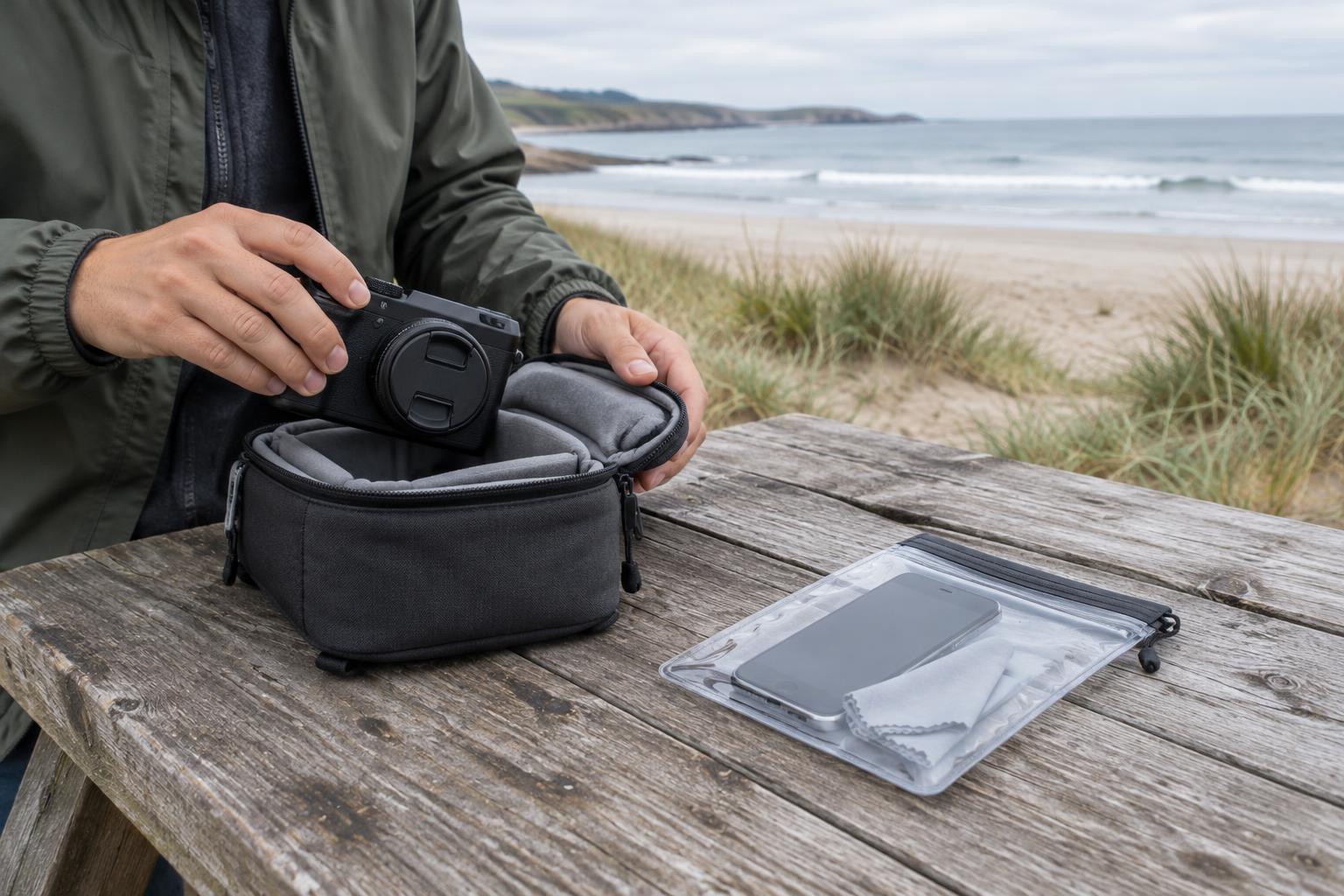
A phone pouch earns its place when you want your phone close at hand for a ticket, a map or a photograph. Its clear window makes the device more usable than it would be buried in a dry bag. Some pouches have space for a card or folded note, though adding items can make the closure harder to manage. Check the pouch’s stated phone-size compatibility before relying on it, especially if your phone has a thick case.
Usability has limits. Touchscreens can be awkward through plastic, particularly with wet fingers, and a pouch may soften photos or obstruct a camera lens. A lanyard keeps the pouch nearby but can snag; secure it in a way that suits the activity rather than letting it dangle freely. Even if the pouch is designed for immersion, it is wiser to treat underwater use as a specific product feature to verify, not an automatic benefit of every pouch labeled waterproof.
Test the seal before the crossing
Inspect both items before packing. Look for holes, worn folds, cracked plastic and debris along closures. If the maker’s instructions allow it, test a phone pouch with a dry piece of paper inside before trusting it with your device. Close it fully, expose it to water in a controlled setting, then dry the outside before opening it to check the paper. Repeat the check if the pouch has been stored for a long time or its closure has been handled on a sandy beach.
Salt, sand and hurried packing are common reasons to pause and check a closure again. After a coastal outing, rinse the closed exterior with fresh water if appropriate for the product, then dry it before opening. Let the item dry thoroughly before storage. Avoid assuming that a phone’s own water-resistance claim replaces a pouch: that claim may have limits, and wear or damage can change how well the device resists water.
Choose a simple packing arrangement
For a ferry ride or a walk between beaches, a small dry bag inside your daypack may be enough to protect items you will not need en route. Add a phone pouch if you expect spray and still want the phone available. On a small-boat excursion, using both can be sensible: the dry bag holds spare clothing and papers, while the pouch keeps the phone separate and reachable. Place anything you cannot afford to lose where it will not slide or blow away.
Before setting off, ask three questions: What must stay dry? What must remain accessible? What happens if this item fails? Those answers will do more for your packing than choosing by the word “waterproof” alone. Check product instructions, close each item carefully, and keep an alternative to a phone for essential trip details when practical. The aim is not to carry more gear, but to give each vulnerable belonging the right kind of protection.