Dress for the changes, not just the forecast
A calm harbor can feel warm while an exposed headland feels chilly, even on the same walk. Wind carries warmth away, sun can be strong where there is little shade, and a brief shower may arrive before you reach shelter. Rather than trying to find one garment that handles everything, wear pieces you can add, remove and carry easily.
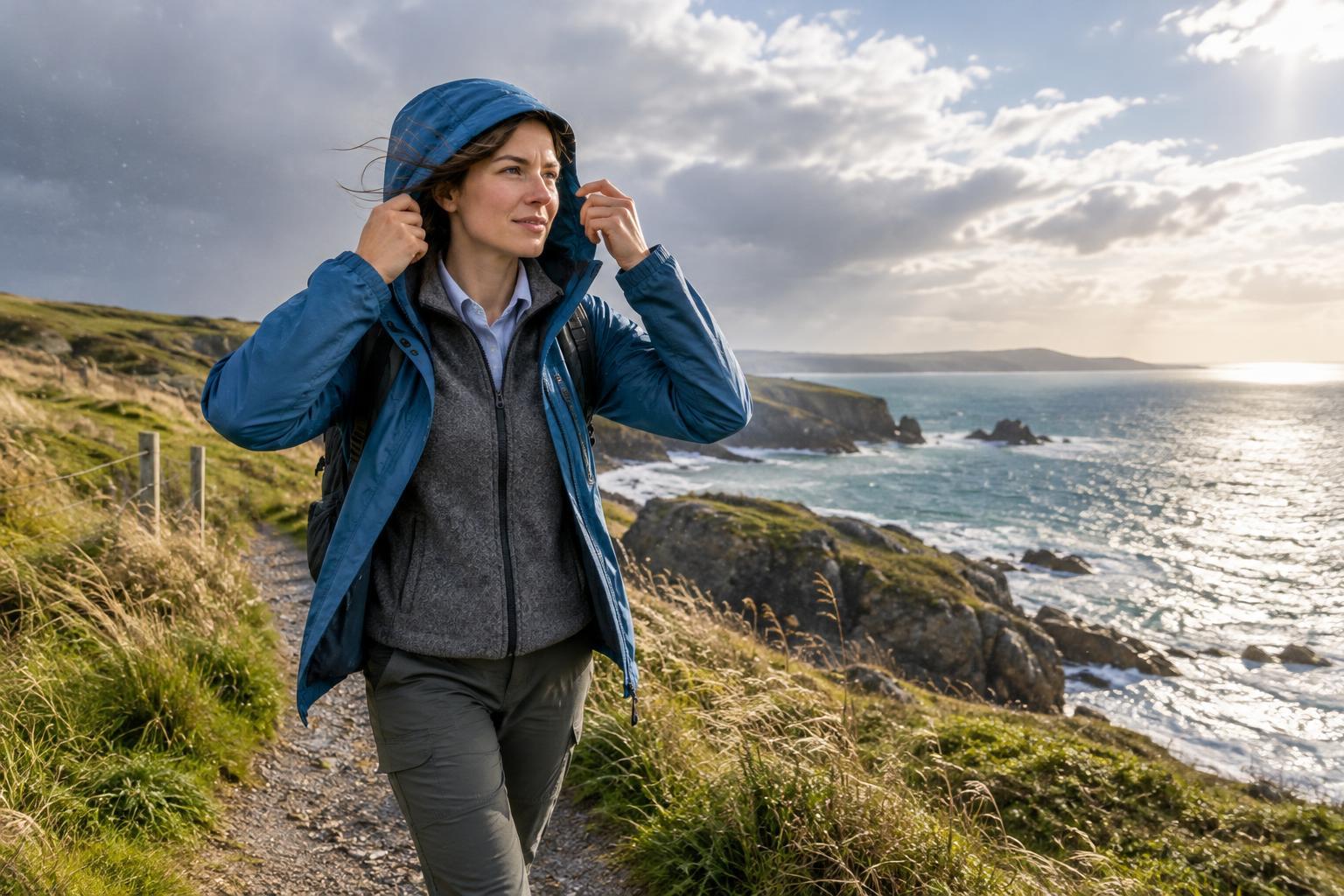
Think of your outfit as three working layers: one next to your skin, one that adds warmth, and one that blocks wind or rain. You may not need all three at once. The point is to have a small set of options that lets you adjust when you leave a café, board a boat or climb a coastal path.
Start with a comfortable base layer
Choose a base layer that feels good against your skin and suits your level of activity. For an easy day around town, a breathable T-shirt or long-sleeved top may be enough. For a brisk walk, a fabric that dries readily can be more comfortable if you become damp from exertion or light rain. Cotton is pleasant in dry, mild conditions, but it can feel clammy when wet and may take longer to dry.
Sleeves are useful beyond warmth: they offer an easy way to cover your arms when the sun is bright or the breeze picks up. A light shirt worn open over a top can serve as a flexible extra layer. Pick a fit that lets air circulate without being so loose that it flaps constantly in the wind.
Add warmth you can take off
A light fleece, thin sweater or compact insulated layer gives you warmth when you stop moving or spend time on an open deck. Choose one that fits under your outer layer without restricting your shoulders. A zip or button front makes small adjustments easier than repeatedly pulling a garment over your head.
Pack this layer even if you expect to spend most of the day in sunshine. Sitting still on a ferry or lingering for a view can feel different from walking uphill. If you are carrying a day bag, keep the warm layer near the top so adding it is a quick decision rather than a search through your belongings.
Use an outer layer as your weather shield
For changeable coastal days, a lightweight jacket that blocks wind is often the most useful outer layer. If showers are likely, choose one designed to keep rain out, with a hood you can adjust so it does not obscure your view. Check that you can zip it over your warm layer and still move comfortably. Pockets that close are helpful when gusts make loose items easy to lose.
A rain-resistant jacket and a fully waterproof one are not necessarily interchangeable. The first may be adequate for a short, light shower; the second is a better choice when you expect to be exposed for longer. Even with a good jacket, rain can run down onto trousers and shoes, so consider the whole outfit rather than relying on one piece to keep you dry.
Finish with small, useful details
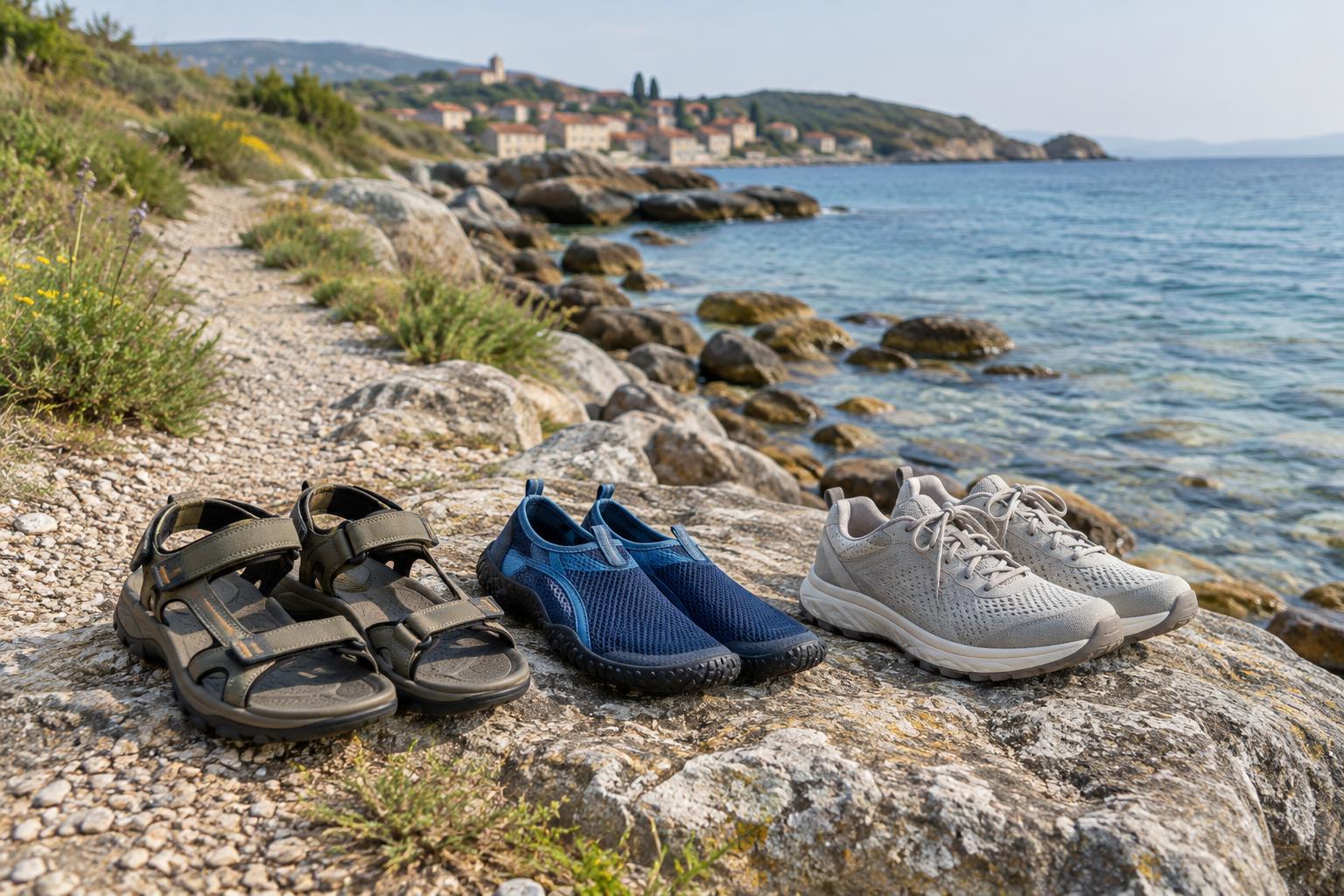
For your lower half, choose trousers or shorts that let you walk, sit and step aboard comfortably. Quick-drying trousers are useful when paths are damp or spray reaches the deck. Shoes with dependable grip matter on wet paving, boat steps and uneven paths; save smooth-soled footwear for less demanding days. Comfortable socks and a spare dry pair take little room in a bag.
A brimmed hat helps with sun, but a windy crossing may call for a snug cap instead. Sunglasses, a compact scarf and a small bag for stowing removed layers can also earn their place. Before leaving, check the expected conditions and your route, then wear the lightest combination that feels comfortable. Carry the layers you might need when you are far from shelter, and adjust early rather than waiting until you are cold or overheated.