Start with the gear, not the tap
A swim, paddle or boat crossing can leave salt on almost everything you carried. Once the water evaporates, salt remains in fabric folds, zipper teeth and the gaps around buckles. It can make clothing feel stiff and cause moving parts to stick. A short cleaning routine at the end of the day is easier than dealing with a bag of salty gear several days later.
Before rinsing, separate your things into groups: washable clothing, sturdy accessories, items with metal fittings and anything electronic or delicate. Shake sand out of shoes, bags and towels while they are still outside. Check care labels and manufacturer guidance for wetsuits, masks, waterproof bags and other specialist equipment. A case that protected a phone in the sea, for example, should not be treated as permission to rinse the phone itself.
Use fresh water where it matters most
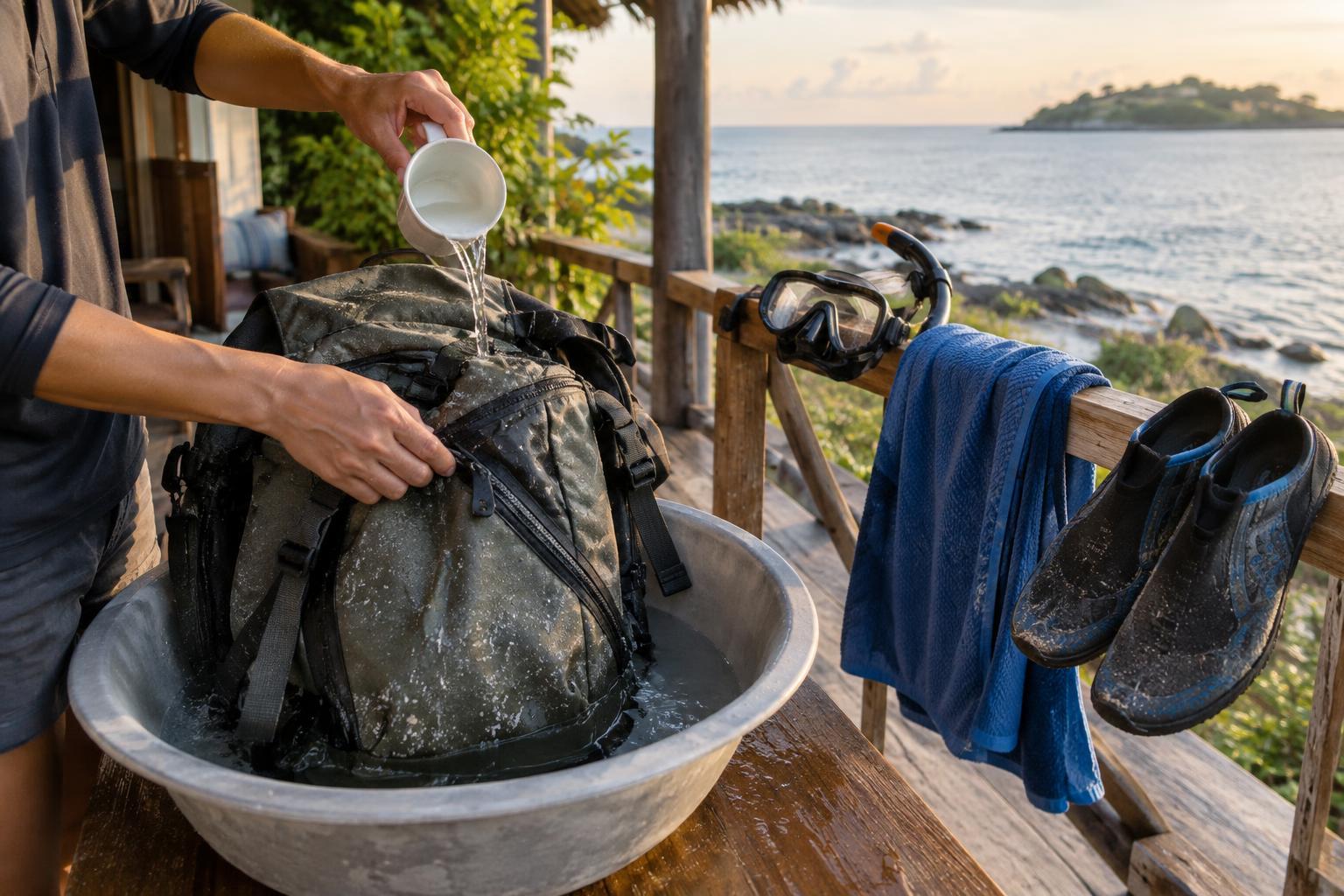
For most washable gear, a thorough fresh-water rinse is the useful first step. Work water through swimsuit waistbands, rash-guard seams and sandal straps rather than wetting only the surface. Open zippers and release buckles so water reaches places where salt collects. If you have a basin, rinse one item at a time and change the water when it becomes sandy or noticeably salty; otherwise, a controlled pour from a bottle can be enough for small accessories.
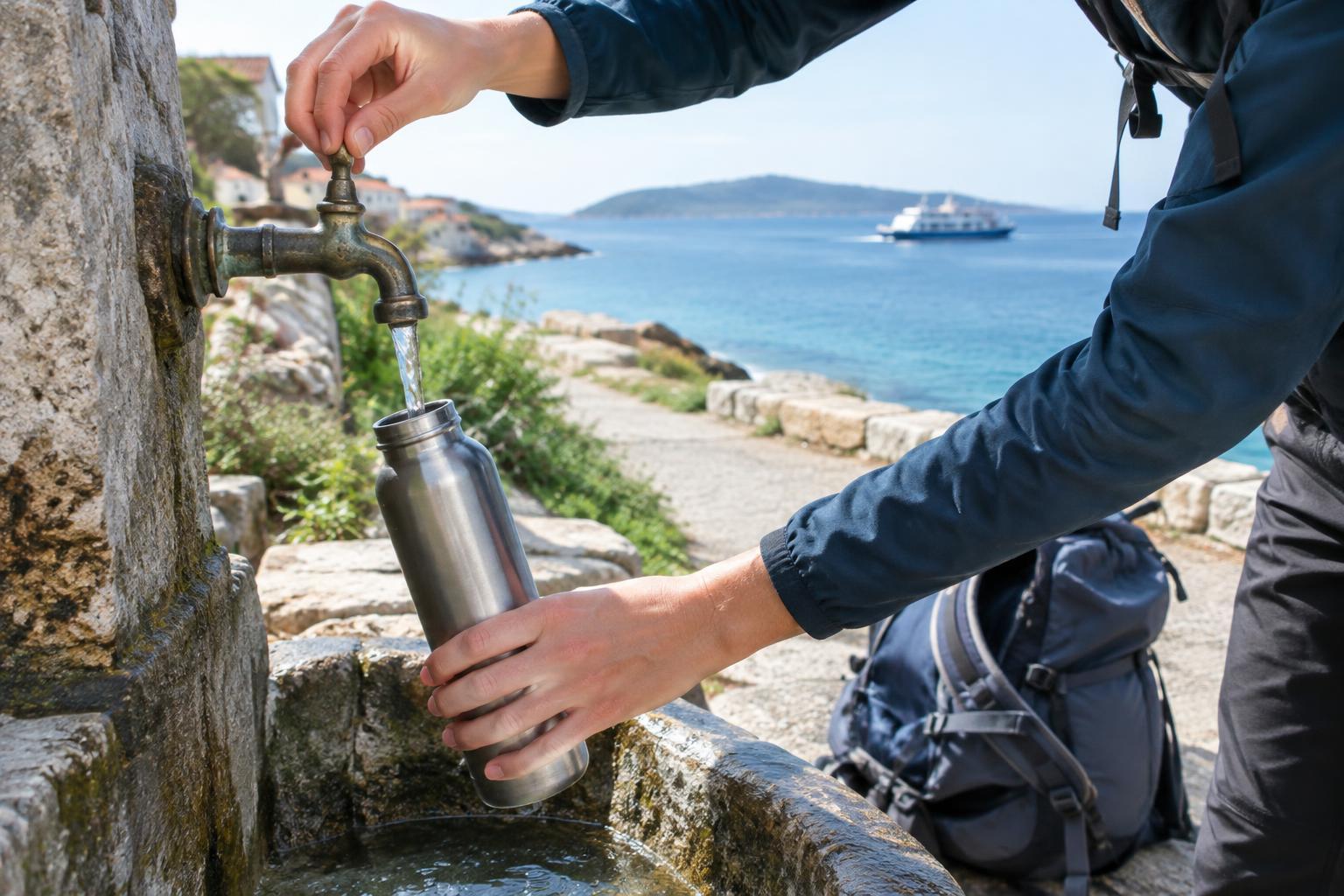
Fresh water may be limited on an island, aboard a boat or at a beach without facilities. Prioritize items that sit against skin, moving parts and equipment you need again soon. You can brush dry sand from sturdy gear before using water, and save a full wash for a place with suitable facilities. Use taps only where visitors are permitted to do so, and keep soap out of beaches, streams and the sea. A rinse need not become a long shower for every piece of equipment.
Match the method to the material
Swimwear and other soft fabrics usually need a gentle rinse followed by a light squeeze. Twisting can strain elastic or distort a garment, so press it between your hands instead. A clean towel can absorb more moisture: lay the item flat, roll the towel around it and press along the roll. If a garment needs laundering rather than rinsing, follow its care label and use an appropriate washing facility.
For sandals, dry bags and similar accessories, pay attention to seams, soles, closures and handles. Let water drain from pockets and crevices before setting the item out to dry. Rinse salt from metal fittings, then dry them with a cloth if you can reach them. Snorkel masks and other specialized gear may have coatings or seals that require particular care, so avoid abrasive scrubbing and follow their instructions. Electronics, batteries and charging ports call for their own manufacturer-approved cleaning methods.
Give everything air and time
Drying is part of the routine, not an afterthought. Spread items apart so air can reach both sides, and turn them once if one surface rests against a rack or towel. Hang clothing by sturdy points rather than stretching a thin strap under the weight of water. Shade and airflow are often a gentler combination for elastic fabrics and neoprene than prolonged direct sun, though care guidance should take priority.
A small room may offer little drying space. Use a permitted rack or balcony line, keep dripping gear away from furniture, and avoid blocking walkways or shared facilities. Open the top of a bag and any safe-to-open pockets so trapped moisture can escape. Before packing, feel inside seams, shoe toes and folded corners; an item can seem dry on the outside while remaining damp where air has not reached.
Pack damp gear as a temporary measure
Sometimes a ferry departure or early checkout arrives before everything is dry. Keep damp pieces separate from clean clothes in a washable wet bag or another suitable container, but treat that as short-term storage. Open the bag and spread its contents out at the next opportunity. Leaving wet fabric sealed for a long stretch can lead to unpleasant smells and another round of washing.
A compact kit can make the habit easy: a small towel, a bag for damp items and a soft cloth for fittings. None replaces time in moving air, but each helps when facilities are basic. The goal is not to make every item spotless after each swim. It is to remove salt where it matters, dry gear as fully as circumstances allow and carry it onward without making a mess of the next stop.