Start with the place, not a checklist
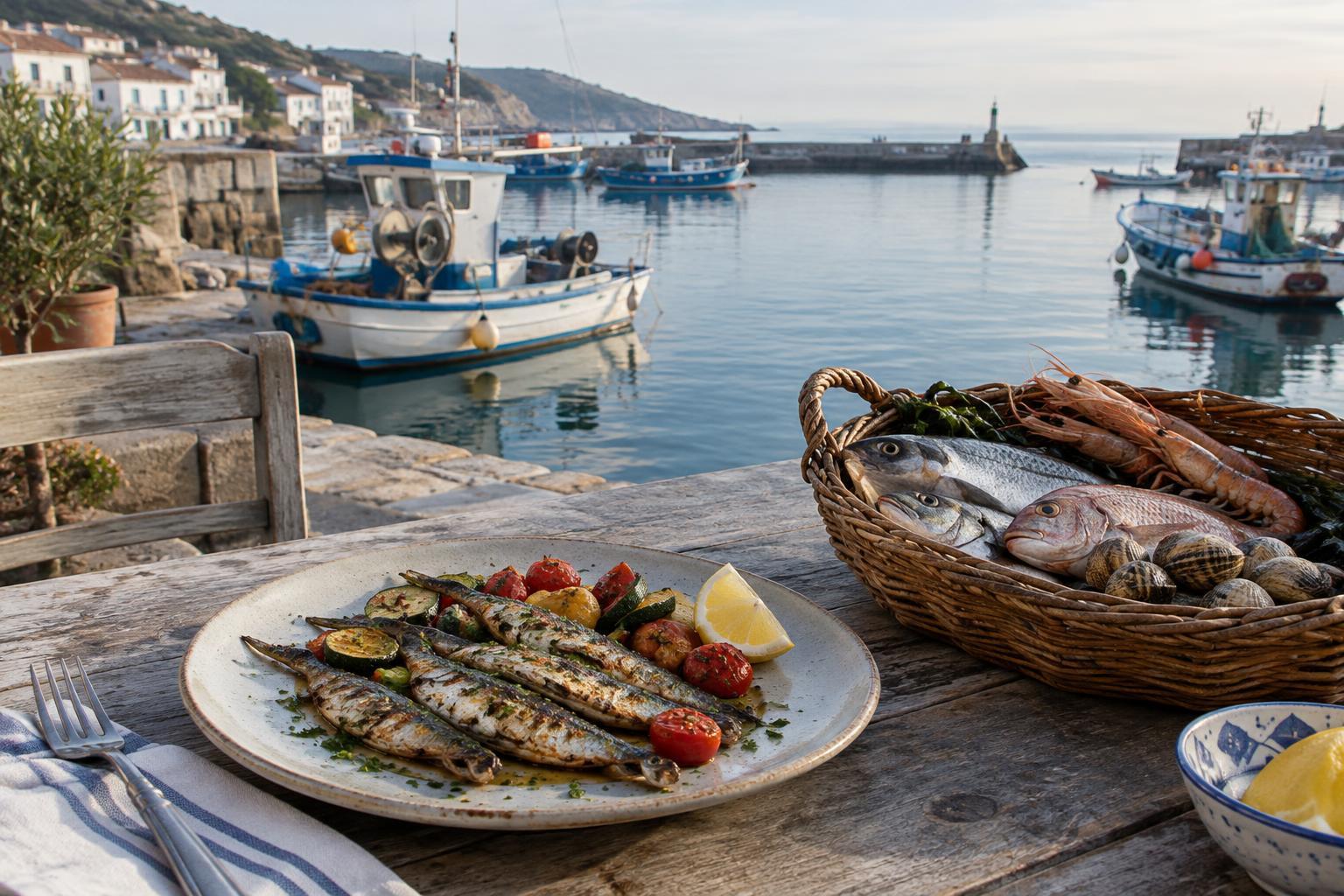
Food sold beside a harbor, beach or ferry landing is shaped by the people who use that waterfront every day. A stall might serve a quick breakfast for boat crews, a grilled snack for families out walking or a portable meal for passengers waiting to board. You do not need to identify a destination’s “must-try” dish before you arrive. Begin by looking at what is being cooked, who is eating it and how people order.
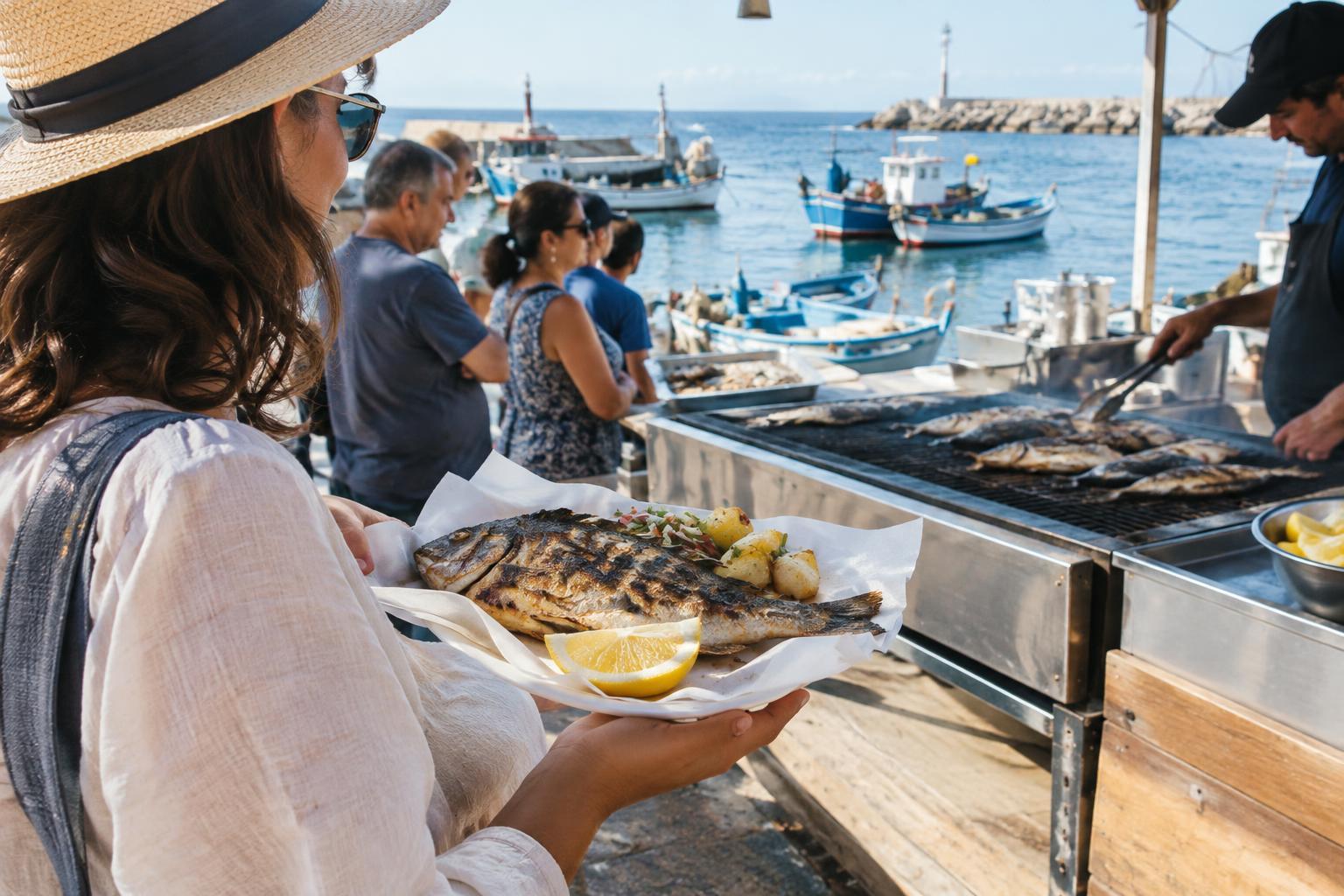
Take one slow circuit before choosing a stall. Read any posted menu, watch a few orders being prepared and notice whether customers eat there or carry their food away. A simple dish made repeatedly can be a more satisfying first choice than an elaborate plate you are unsure how to handle. If you are traveling with someone, sharing one snack gives you room to explore without ordering more than you want.
Choose a stall where you can see what happens
A busy counter can be encouraging, but a queue alone does not tell you everything. Look for food that is cooked to order or held as intended, serving tools that are kept separate from payment handling where possible, and a work area that appears cared for. For seafood, notice how raw ingredients are stored and whether ready-to-eat food is protected from sun, insects and splashes. If a dish leaves you uncertain, it is fine to choose something else.
Your own circumstances matter too. If you have a food allergy, ask clearly about ingredients and shared cooking surfaces before ordering; a brief conversation may not be enough to establish that a dish is safe for you. Travelers who prefer to avoid raw seafood can look for thoroughly cooked options, such as food served hot from a grill or pan. Carry drinking water, and take a moment to clean your hands before eating, especially after handling cash or ferry rails.
Ask small questions and order with care
You can learn a great deal without asking a vendor to explain an entire culinary tradition during a rush. Useful questions include “What is in this?”, “Is it spicy?” and “How is it usually eaten?” If there is a sauce or seasoning you do not recognize, ask whether it can be served on the side. A few polite words in the local language can help, but a clear, respectful tone matters more than perfect pronunciation.
Watch the ordering rhythm before stepping forward. Some stalls take payment first; others collect it when the food is ready. Prices may be posted per portion, piece or weight, so check the unit if it is unclear, particularly when choosing fish or shellfish. Order a modest portion at first and make space for other customers once you have been served. Where seating is scarce, find out whether it belongs to a particular stall before settling in.
Taste the setting as well as the food
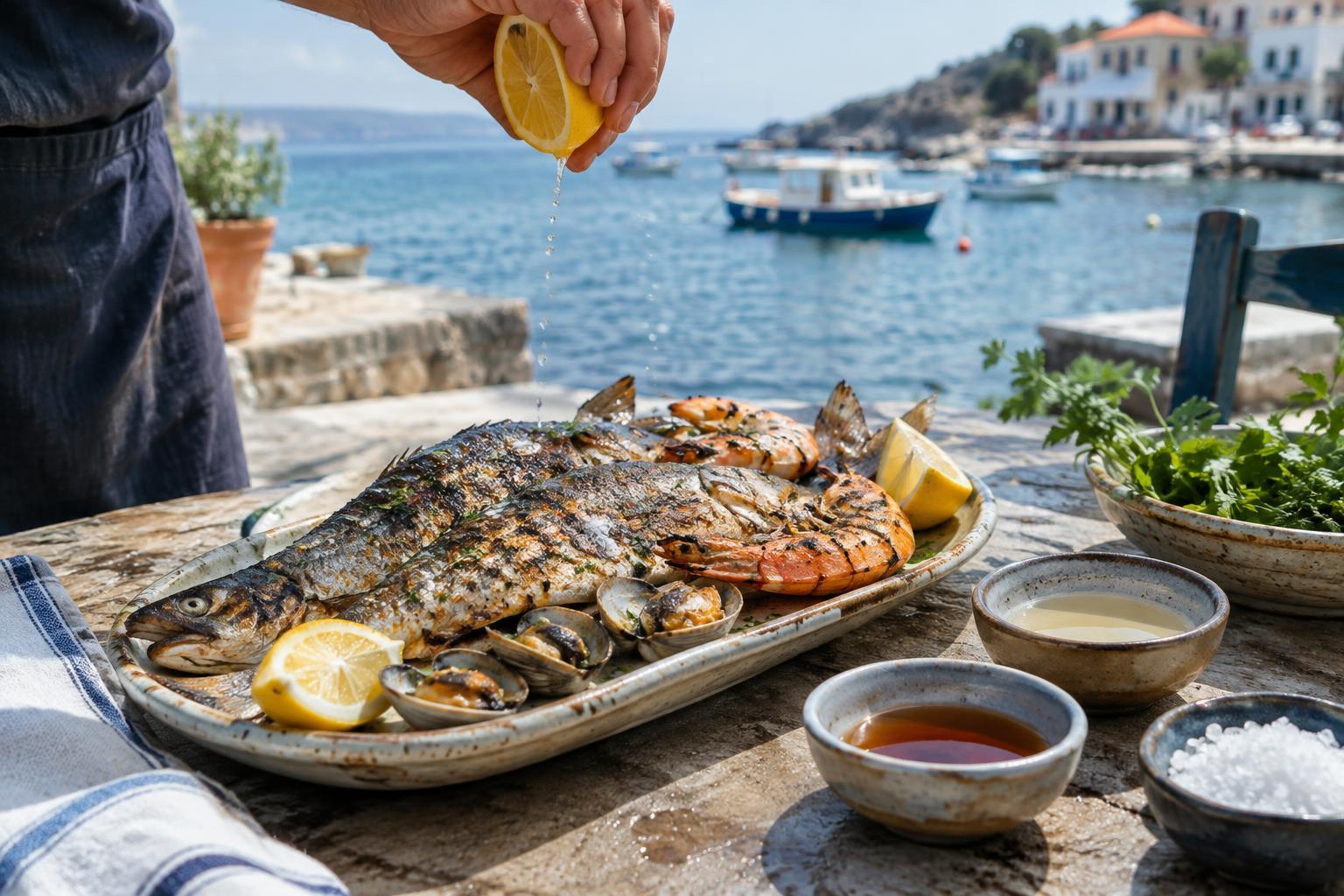
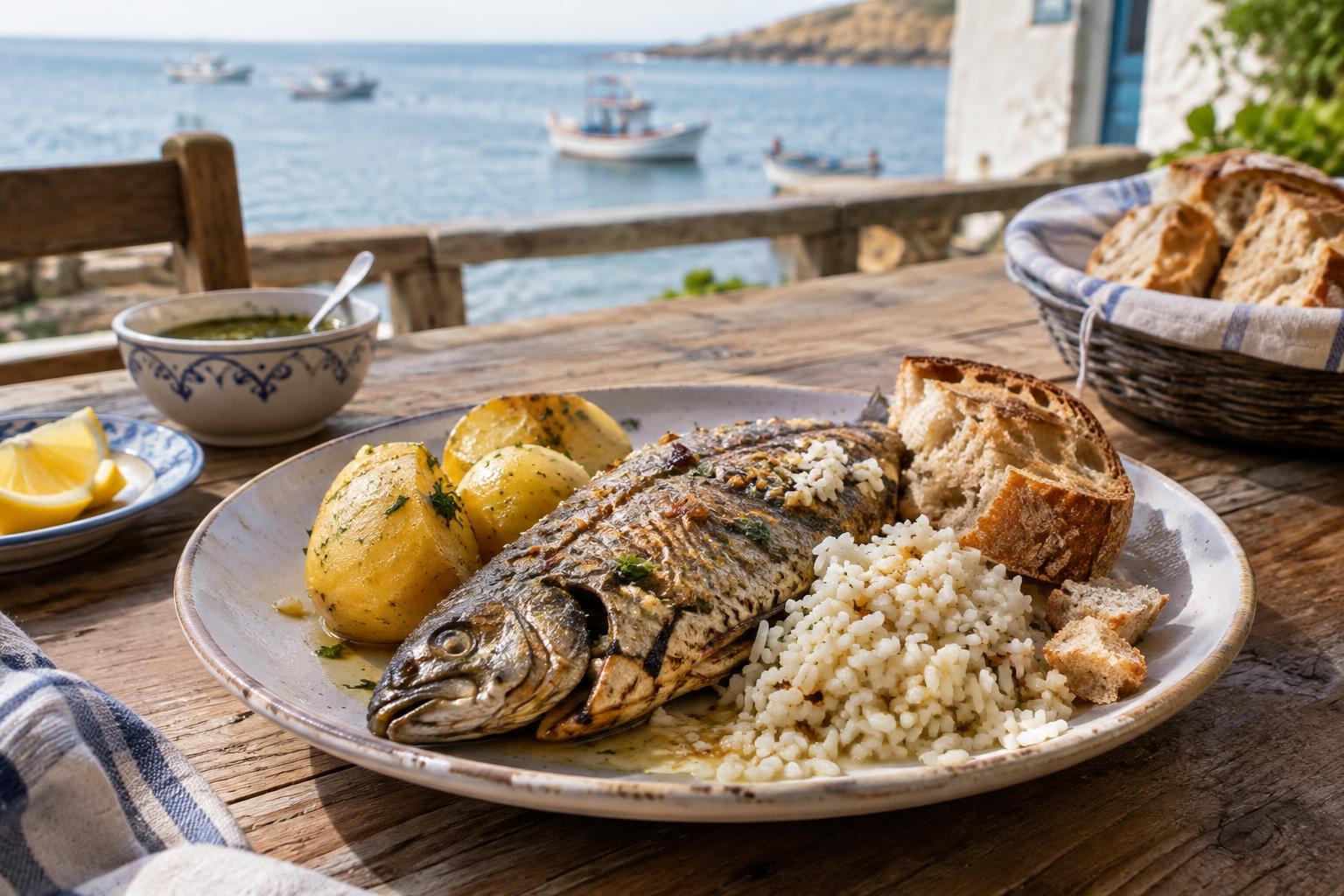
Seaside snacks often make sense in their surroundings. A fried bite may be meant to be eaten immediately while it is crisp; a wrapped parcel may be designed for a short journey. Take your first taste before adding every offered condiment, then adjust it to your liking. Notice the texture, the seasoning and what accompanies the main ingredient. Bread, pickles, herbs or citrus can be as revealing as the catch itself.
Try not to treat a vendor’s work as a performance arranged for visitors. Ask before photographing people or their counter, particularly when they are preparing orders. If you want to know more about a dish, choose a quieter moment and be ready to accept a short answer. One thoughtful exchange can tell you more about local eating habits than a hurried tour of every stall on the promenade.
Leave the waterfront ready for the next visitor
Street food can come with wrappers, napkins, shells and skewers. Use the bins provided, follow any sorting signs and ask where to leave dishes if the stall uses reusable plates. If there is no bin nearby, keep your waste with you until you find one; loose packaging can easily blow toward the water. Bringing a small bag for litter and a reusable bottle can make a long waterfront walk simpler, though individual stalls may have their own rules about containers.
A good first outing does not have to be a feast. Choose one or two things that genuinely appeal to you, pay the stated price, thank the person who served you and linger somewhere appropriate to enjoy the view. You can return for another taste later. That unhurried approach leaves room to notice both the food and the working coast around it.