Start with the beach experience you want
“Near the beach” can describe very different island stays. A room may overlook the water but sit above a steep path, or it may be a short walk from a sheltered swimming cove. Before comparing accommodation, decide what matters most: an easy morning swim, a long walk along the shore, a quiet place to read, or a reliable spot for children to paddle. That gives you a clearer question than simply asking how far the property is from the sea.
Look at the island as a whole, not just the nearest strip of sand. Beaches on different sides of an island may feel quite different depending on wind, waves, shade and the time of day. If beach time is central to your trip, identify two or three possible places to visit. A stay with access to several shorelines may suit you better than one beside a single beach.
Trace the route from your door to the sand
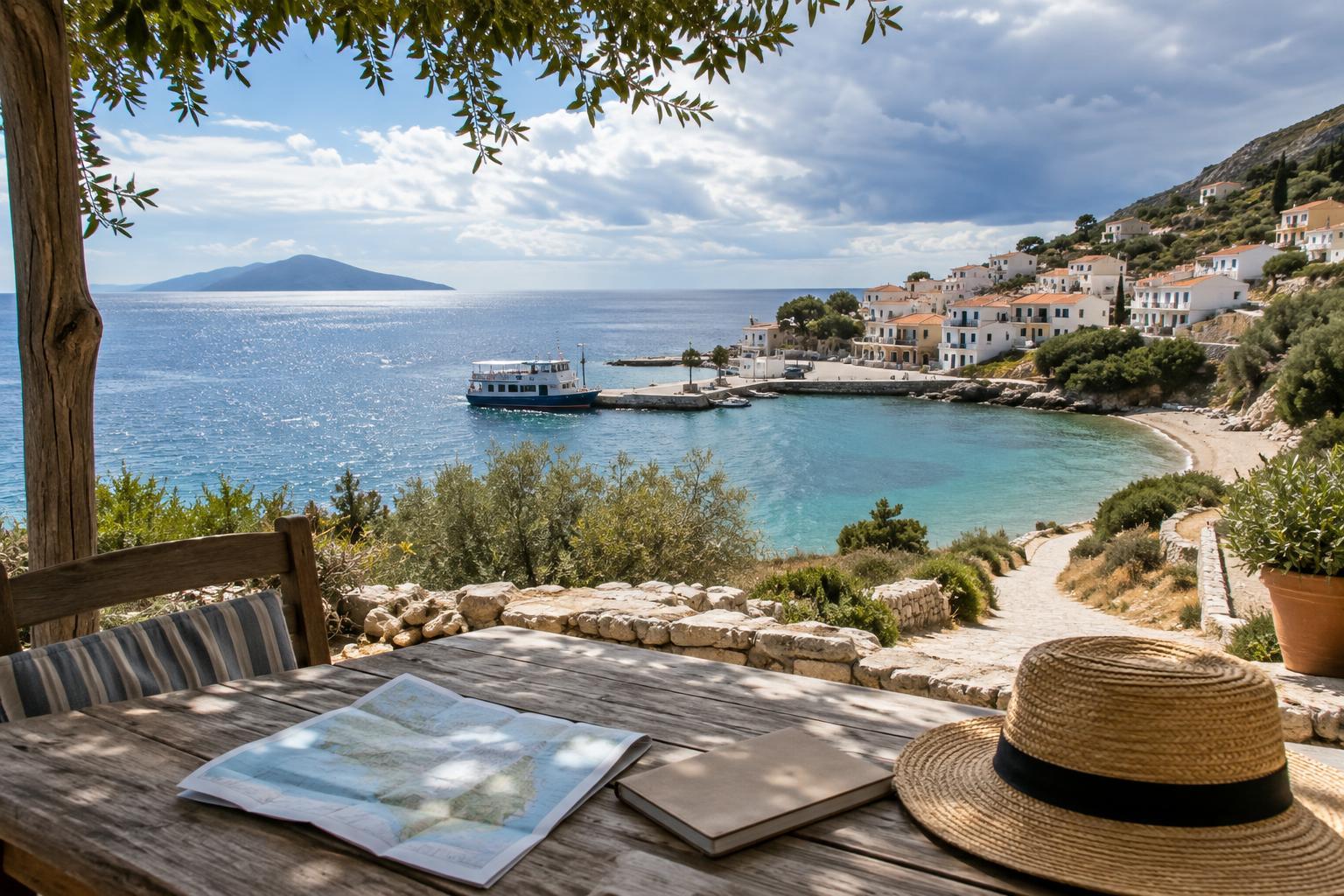
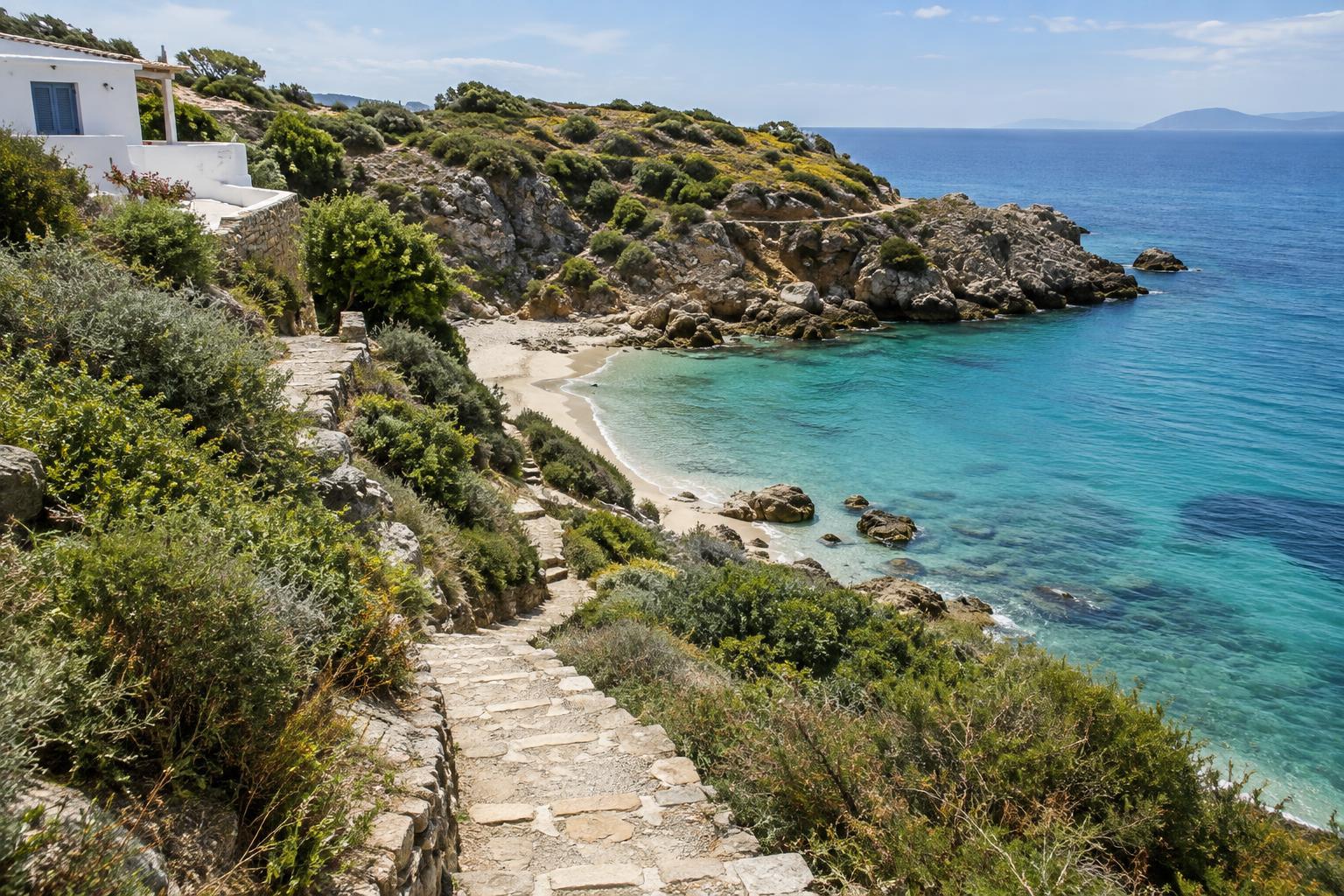
Use a map to locate the accommodation, the beach and the likely entrance to it. Then check a walking map or satellite view for roads, cliffs, walls, streams and changes in elevation. A straight-line distance is not a walking route. On some islands, the nearest safe path winds inland before returning to the coast, while a beach visible from a terrace can only be reached by road or boat.
Read the accommodation description closely, paying attention to words such as “steps,” “trail,” “shuttle” and “beach club.” Ask the host or hotel for the actual route and an approximate walking time at an unhurried pace. If a listing promises direct access, ask whether that means a path from the property, an entrance across the road, or a managed area reached by transport. For a useful answer, request details about stairs, uneven ground and lighting after dark.
Check what access means in practice
Rules around shorelines vary by place, and a publicly accessible beach does not necessarily have a public path across every nearby property. Look for information from a local visitor office, park authority or other relevant local body about entrances, opening hours and protected areas. If the only visible approach crosses private land or passes through a resort, do not assume you can use it without permission.
Accommodation photos can also blur the difference between reaching a beach and using its facilities. Loungers, umbrellas, toilets or boat transfers may be reserved for guests, limited by hours or available for an extra charge. Ask what is included in your booking and whether you can bring your own towel and spend time on the shore without using paid facilities. Clear answers are especially valuable when a listing uses phrases such as “private beach” or “exclusive access.”
Account for tides, conditions and the season
A beach shown at low tide may be much narrower later in the day. Where tides affect the route, find out whether an approach across sand or rocks remains usable throughout your planned visit. Some coves are reached by paths that can become slippery, and a calm-looking swimming spot may be exposed to waves or currents under different conditions. Treat attractive photos as a starting point, not evidence of year-round suitability.
Island services can change with the season. A shuttle, water taxi, lifeguarded area or beach café may operate only during part of the year or on limited days. Before booking around a particular beach, check the relevant operator’s information and ask your accommodation what normally runs during your stay. Closer to departure, check local weather and safety notices again; these are decisions to revisit, not facts to settle months in advance.
Match access to your daily routine
Imagine an ordinary beach day rather than the best possible one. Will you carry water, food, towels and perhaps a child’s gear along the route? Is there shade, a toilet or somewhere to refill a bottle? If walking is difficult for anyone in your group, ask about surfaces, slopes and step-free options in specific terms. A short distance on a map may still be tiring in heat or with bags.
Finally, consider how you will return. Check the last bus or boat if you will not have your own transport, and whether taxis are a dependable option in the area. Save the beach entrance and your accommodation on an offline map, along with an alternative shoreline you can reach easily. Researching access this way does not guarantee perfect conditions, but it helps you book a stay that supports the slower island days you actually want.