See the market before you shop
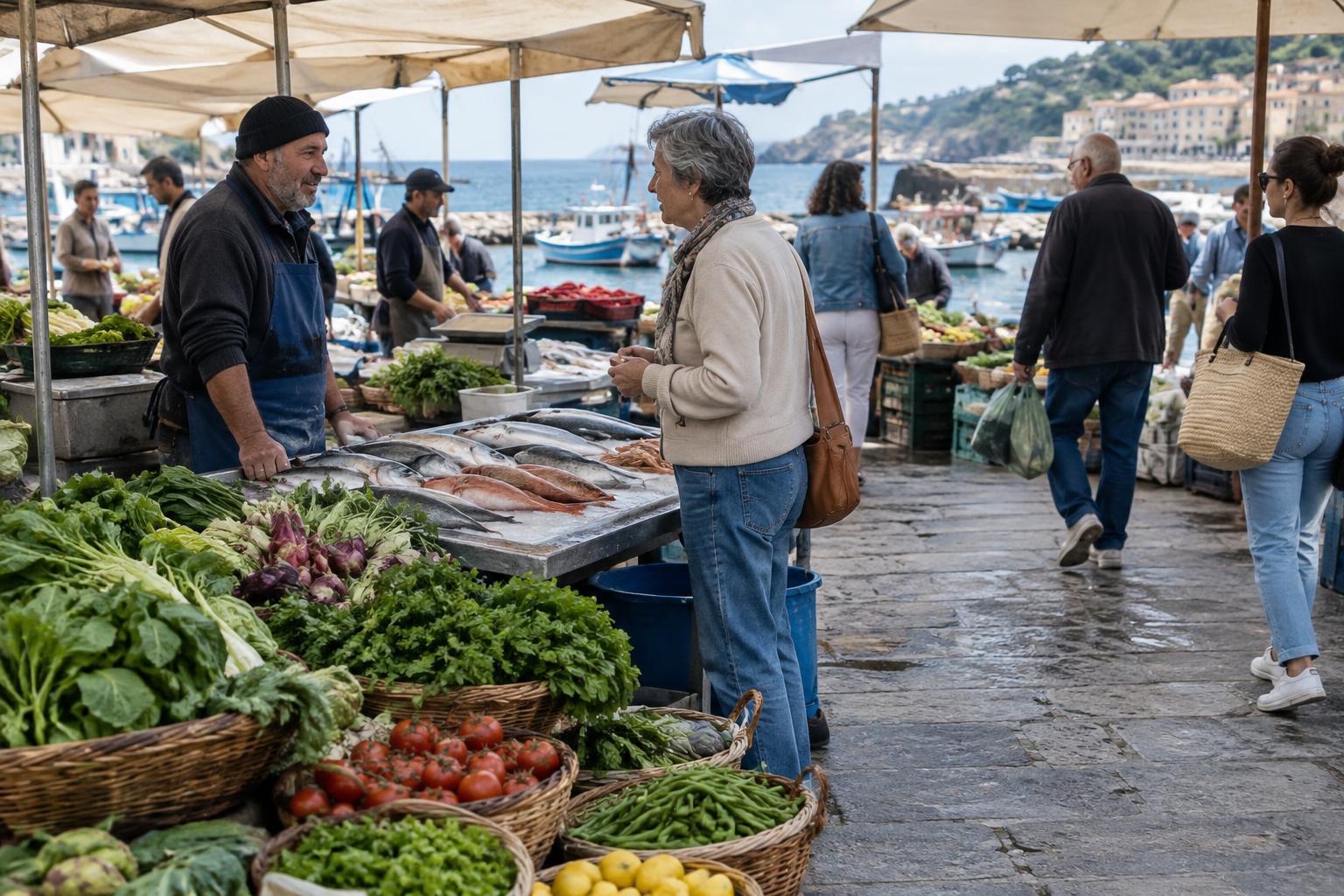
A coastal market can tell you a great deal about a place without needing to serve as a sightseeing attraction. Fish may arrive alongside vegetables, bread, household goods or prepared dishes. Neighbors stop to talk, sellers arrange their displays, and shoppers make decisions shaped by family meals and the day’s work. Some markets welcome visitors readily; others have narrow aisles and little space for anyone who is only looking. Begin by noticing which kind of place you have entered.
Take a slow first circuit without blocking a stall or doorway. Look for signs showing prices, opening hours and rules about photography or handling produce. Notice where people queue and where deliveries move through. If you have flexibility, avoid lingering at a counter when sellers are dealing with a rush of regular customers. A quieter moment can make it easier to ask a question, but remember that a quiet-looking vendor may still be working.
Treat people as people, not part of the display
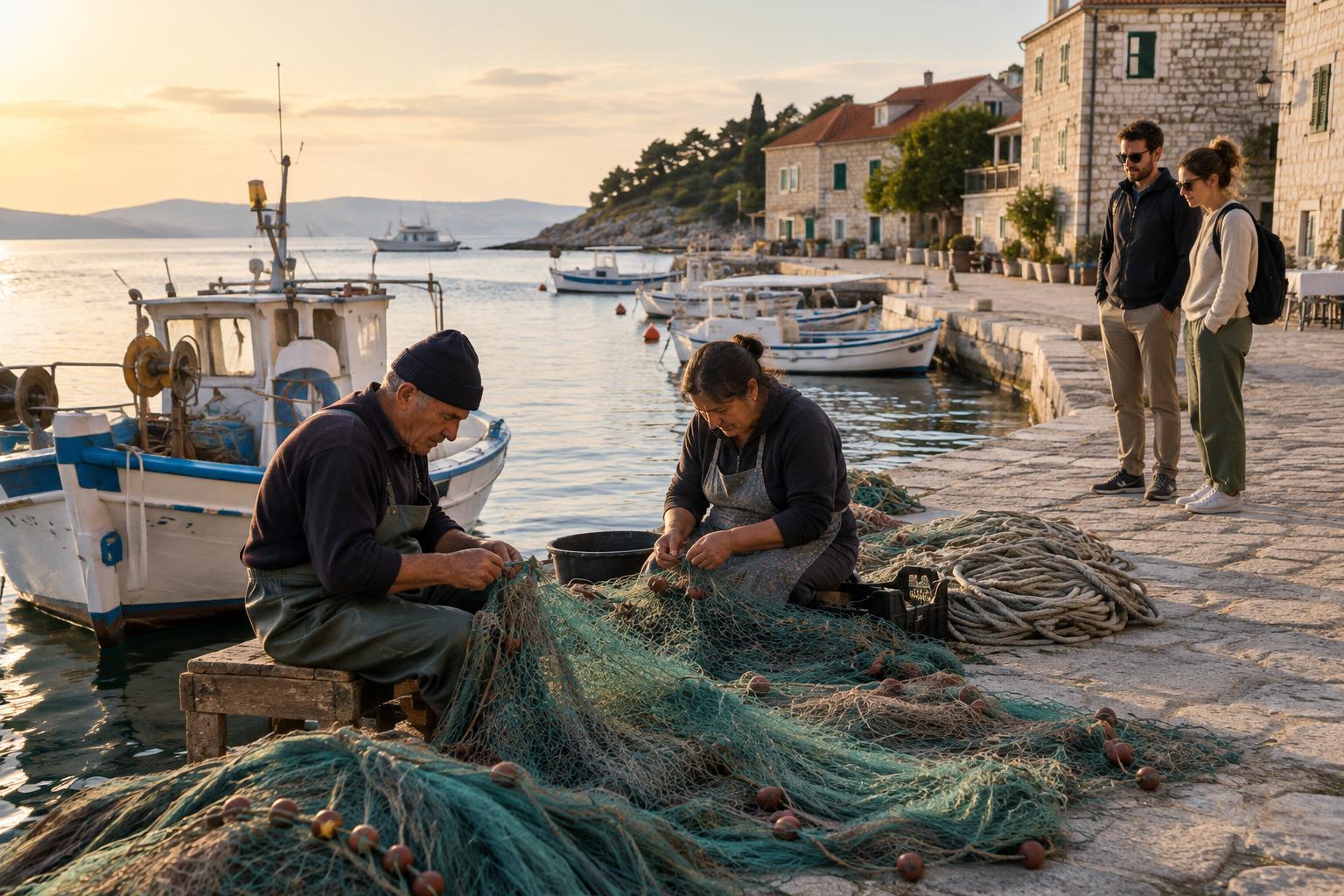
Markets are rich in color and movement, which makes them tempting places to photograph. A person selling fish, carrying crates or eating breakfast is not automatically agreeing to appear in a travel photo. Ask before making someone the subject, and accept a refusal without asking for an explanation. If language is a barrier, a gesture toward your camera and a questioning expression may help, but it is better to put the camera away when the answer is unclear. Be especially careful around children and private conversations.
The same courtesy applies when you want to learn about a product. A brief greeting and a specific question are easier to answer than a long request for the story behind an entire stall. You might ask what an unfamiliar ingredient is called or how a prepared food is usually served. If the seller is busy or does not want to talk, move on warmly. Not every encounter needs to become a conversation for your visit to be worthwhile.
Buy thoughtfully and follow local cues
Buying something small can be a good way to participate, but there is no need to purchase an item you cannot use. Choose food you can eat safely and carry without creating a mess for the seller or the next customer. For seafood or other perishables, think about how soon you will prepare them and whether you can keep them cool. A ready-to-eat snack, fruit or a shelf-stable local product may fit a day of exploring better than a purchase that needs a kitchen.
Approaches to prices vary from market to market. Read posted prices first, watch how transactions work and ask politely if you are unsure. Do not assume bargaining is expected simply because a market is informal. If it is appropriate, keep the exchange good-humored and be prepared to walk away without pressuring anyone. Have a payment method the stall accepts, and give yourself enough time to complete the sale without holding up a queue. Small practical choices can make you an easier customer to serve.
Leave space for the market’s daily life
Coastal markets connect visitors to food traditions, but they also support routines that continue after visitors leave. Keep aisles clear, let workers move carts and boxes, and avoid touching fish or produce unless invited. Follow any signs about where to eat, wash your hands when facilities allow, and put packaging in the appropriate bin. If you bring a reusable bag, make sure it is clean and ready when you pay rather than sorting through it at the counter.
Before leaving, consider what you learned through observation as well as conversation. Which foods seem intended for a meal today, and which are preserved for later? How do the stalls reflect the coast alongside the farms, kitchens and transport links around it? You may not know the full answer from one visit. Browsing with care means remaining curious without demanding access to every story. A market can offer a memorable glimpse of coastal life while still belonging, first, to the people who use it every day.