Plan for the whole journey, not just the swim
Sun protection is easy to treat as a beach task: put on sunscreen, take a swim, then retreat under an umbrella. A day on the water rarely follows that pattern. You may wait on an uncovered pier, sit on a ferry’s open deck, walk between coves or spend hours in a small boat. Reflective water and pale surfaces can add to the light around you, while a breeze may make strong sun feel less noticeable.
Before leaving, picture each part of the day. Where will you be able to sit under cover? Will you have access to your bag after boarding? Can you change out of wet clothes? A simple plan helps you choose protection that works while you move, rather than relying on one shaded stop later.
Make clothing your first layer
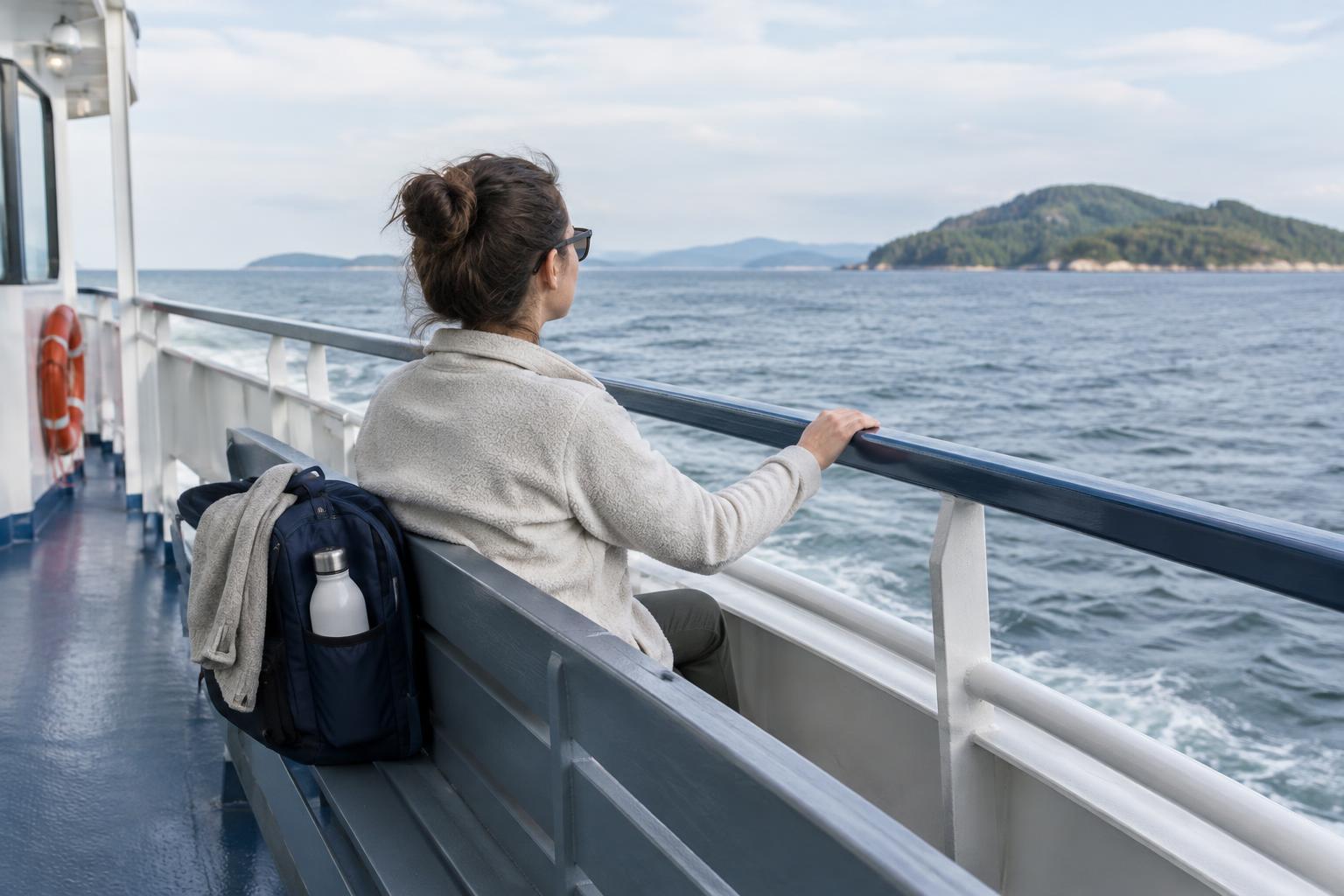
Lightweight, long-sleeved clothing gives you coverage without requiring repeated application. A shirt made for swimming or paddling can be useful when you expect to get wet; a loose, breathable overshirt may be more comfortable for a ferry crossing or coastal walk. Look for a close weave or a stated ultraviolet protection factor (UPF). Thin fabric that becomes transparent when wet may offer less coverage than you expect.
Choose pieces you will actually keep on. A collar can help cover the back of the neck, and longer shorts or trousers protect skin that may stay exposed while you sit. If you are wearing a life jacket, check what remains uncovered around its edges. Pack a dry layer if you will be out after swimming: changing into it can be more comfortable than spending the return trip in damp fabric.
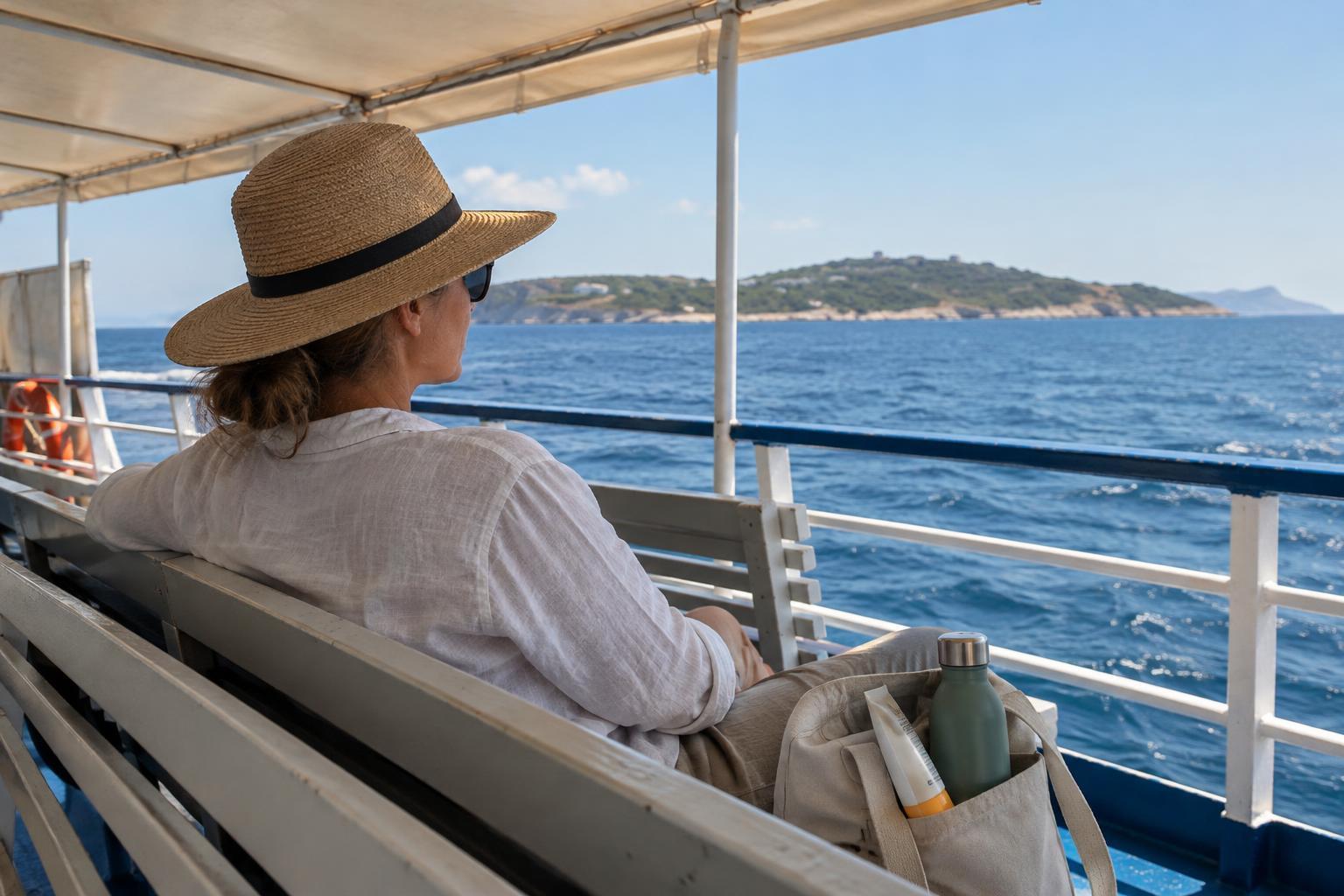
A brimmed hat should stay secure in wind; a chin cord or snug fit is worth considering on an exposed deck. Sunglasses labelled for ultraviolet protection help shield your eyes. Polarized lenses can reduce glare, but polarization alone does not tell you whether the lenses provide UV protection.
Use shade where it works
Shade is valuable, but it moves. A covered seat on one side of a boat may be in direct sun later, and a beach umbrella may leave your legs exposed as the light changes. When you can, choose a covered deck, cabin or sheltered rest stop and check your position periodically. Shade also does not replace clothing and sunscreen for skin exposed to light from the side or reflected off nearby surfaces.
On a small craft, shade may be limited by safety and space. Do not attach a makeshift canopy where it could obstruct the operator’s view or interfere with equipment. If you control your schedule, consider building in a sheltered lunch or a break off the open water. The best plan is one you can follow without making the journey awkward or unsafe.
Treat sunscreen as an ongoing task
Use sunscreen on skin your clothing does not cover. A broad-spectrum product with SPF 30 or higher is a practical starting point for many travelers; choose one you find comfortable enough to apply thoroughly. If swimming or sweating is likely, check the label for water resistance and its stated duration. No sunscreen is waterproof, so follow the product’s directions for reapplication, especially after swimming, toweling off or heavy sweating.
Apply it before you settle into a crowded seat or start handling ropes and bags. Remember easy-to-miss areas such as ears, the back of the neck, tops of feet and the edges of sleeves. A lip product with sun protection can be useful, too. Keep sunscreen accessible rather than buried in your luggage, and check it again during the trip instead of waiting until you feel hot or notice redness.
If you use a spray, be mindful of wind and nearby people so the product lands where intended. Coastal destinations may have local rules about sunscreen use. Follow posted guidance, avoid leaving product containers behind and remember that clothing and shade can reduce how much sunscreen you need to apply.
Pack a small, repeatable routine
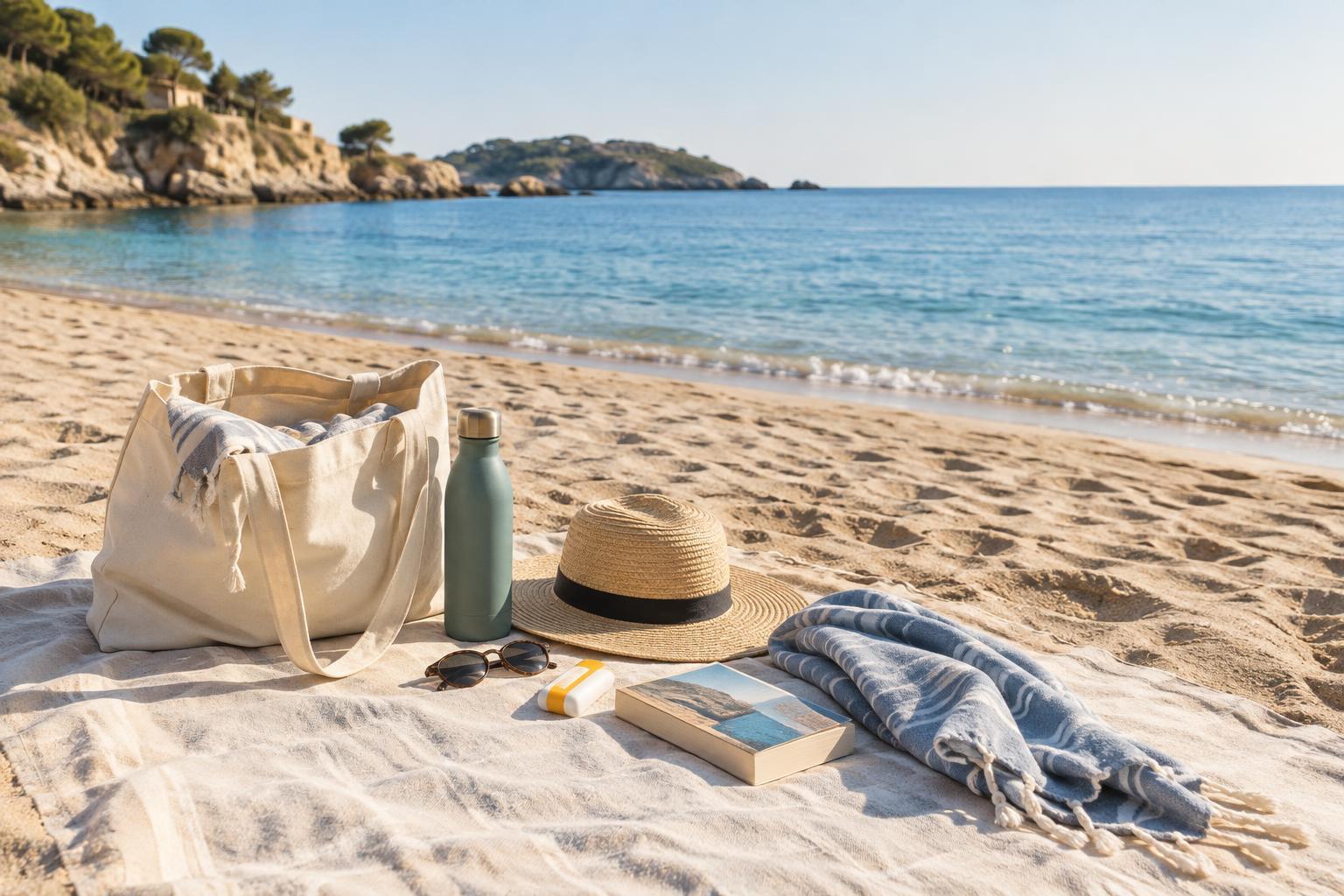
Keep the essentials together: a hat, UV-protective sunglasses, a covering layer, sunscreen and a small bag for wet clothing. Add drinking water and a way to secure loose items before boarding. A compact kit is easier to carry from a harbor café to a ferry queue than a collection of things you intend to find later.
Before departure, cover up and apply sunscreen according to its label. During the journey, use available shade and adjust as the sun moves. After a swim or a long exposed stretch, check whether it is time to reapply and put on a dry layer. This routine leaves more attention for the coastline while making sun protection a steady part of the day.