Freshness is more than a view of the harbor
Eating beside the water can make raw seafood feel like an obvious choice. Fish may be landed nearby, oysters may be a local specialty, and the menu may change with the catch. Proximity, though, is only one part of the story. Seafood still has to be stored, transported, prepared and served with care. A busy waterfront stall is not automatically safer than a quiet restaurant, and a beautiful display cannot tell you everything that happened before the seafood reached the counter.
Think of freshness as a chain of handling rather than a single quality you can spot on the plate. Appearance and smell can help you notice an obvious problem, but seafood that looks appealing is not necessarily safe to eat raw. When you are deciding where to order, pay attention to how a place works and whether staff can answer straightforward questions. You do not need a perfect account of every step; you do need to feel comfortable with the answers.
Ask about storage and preparation
A few simple questions can reveal more than a long menu description. You might ask when the seafood arrived, how it has been kept cold, and whether raw items are prepared separately from foods that will be cooked. For shellfish, ask where it came from and whether the vendor keeps the identifying information supplied with it. Staff may not know every detail at the table, but they should be able to find out rather than guess.
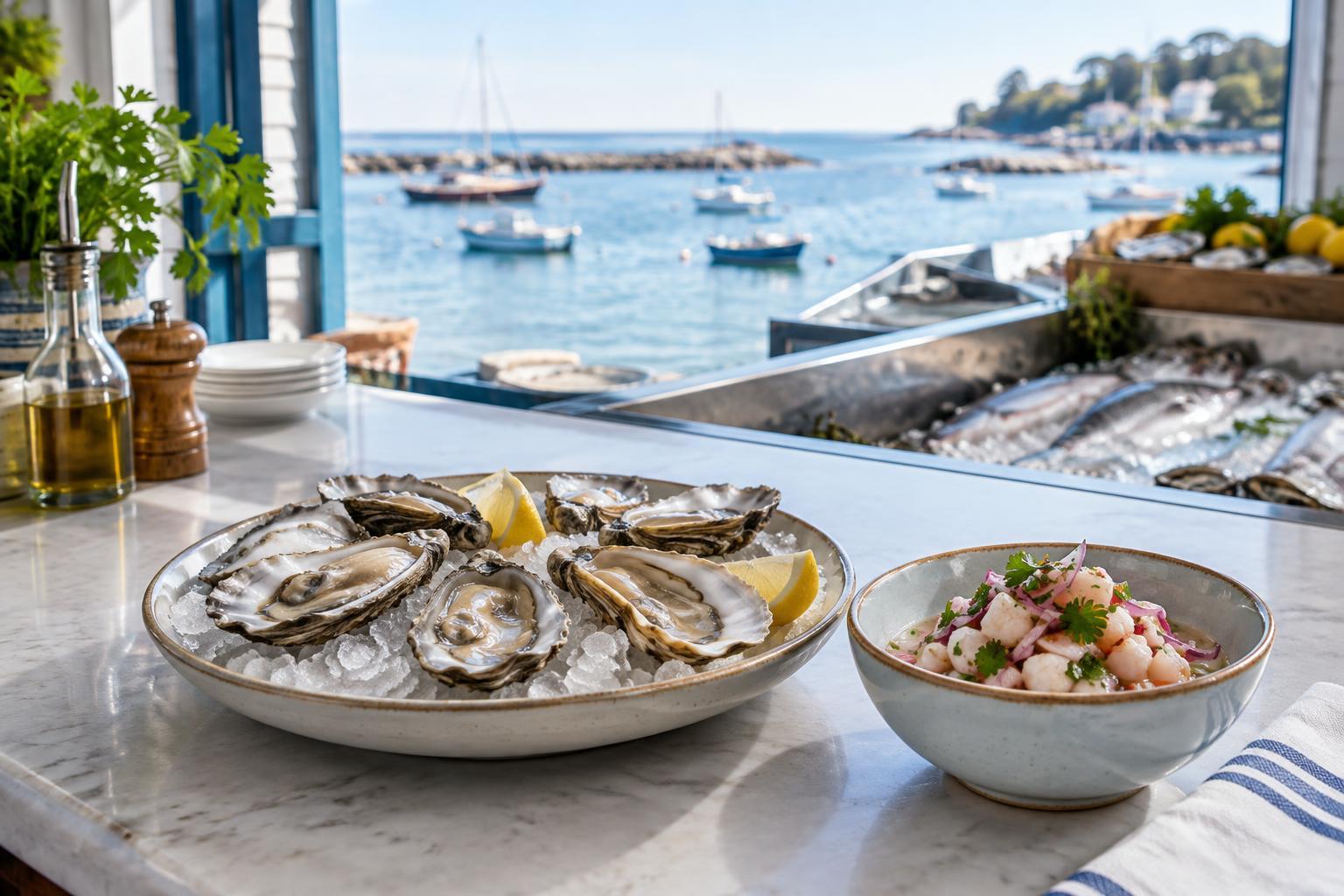
At a counter, look for seafood held cold instead of sitting out in the sun, clean utensils and work surfaces, and a clear routine for handling orders. Watch whether the same hands or tools move between raw seafood, money and ready-to-eat garnishes without being cleaned. These observations are clues, not guarantees. A tidy counter can still have problems you cannot see, while a simple setup may be run carefully. If something concerns you, it is reasonable to order another dish.
Know what a recipe does—and does not—do
Raw seafood takes many forms along a coast: oysters opened to order, sliced fish, and preparations dressed with citrus, vinegar or spice. Those ingredients shape flavor, but they do not reliably make raw seafood safe. Acid is not the same as thorough cooking, and a strong drink alongside the meal offers no protection. If you prefer not to eat seafood raw, ask whether a similar local ingredient is available grilled, steamed or in a hot stew.
Some seafood may be frozen as part of a preparation process, particularly fish intended to be served raw. Freezing practices vary by product and do not address every possible hazard, so it is not useful to treat the word “frozen” as a blanket assurance. Clear, specific answers about handling matter more than a claim that a dish is safe because it is traditional, expensive or popular.
Match the choice to your circumstances
Raw seafood always carries some risk, even when handled carefully. People who are pregnant, older, immunocompromised or living with certain health conditions may face a greater risk from foodborne illness and may prefer to avoid it. If you are unsure what is appropriate for your own health, seek advice from a qualified healthcare professional before the trip. You can still explore a region’s food traditions through cooked seafood, markets, sauces and side dishes.
Consider the rest of your day, too. A long journey without reliable cooling is not a good setting for keeping raw seafood leftovers. If you buy seafood to prepare where you are staying, check that you can keep it properly chilled and prevent raw juices from touching ready-to-eat food. When those basics are difficult, choose a meal that is cooked and served promptly instead of trying to make limited facilities work.
Make room for curiosity and an easy no
Questions about food handling need not sound like an interrogation. Ask with genuine interest, especially when a vendor is sharing a local specialty. A brief conversation about the catch, the preparation and what is being served that day can deepen the experience whether or not you order it raw. In a language you do not speak well, simple questions and a willingness to change your order may be more useful than trying to settle every uncertainty.
You do not owe any dish a taste to prove you are an adventurous traveler. If the answers are unclear, the seafood is not being kept cold, or you simply feel uneasy, choose something else without making a judgment about the whole place. Should you become ill during a trip, seek appropriate medical help, particularly if symptoms are severe or persistent. The best coastal meal is one you can enjoy with confidence, not one you felt pressured to eat.