Plan your next refill before you leave
Coastal day trips can make water feel close at hand while leaving safe drinking water surprisingly hard to find. A beach may have no tap, a trail may pass few buildings, and a small ferry terminal may have limited facilities. Before setting out, look at your route and identify places where you can ask for a refill or buy drinking water if necessary. Visitor centers, cafés and staffed accommodations may be useful stops, but do not assume they will always be open or able to help.
Start with enough water to reach a dependable next stop, plus some flexibility for a delayed ferry, an unplanned walk or a warmer-than-expected afternoon. What you need depends on the weather, your activity and the people traveling with you, so a fixed bottle size is less useful than a route-based plan. If you cannot identify a reliable refill, carry what you expect to need for the whole outing.
Choose a container you will actually use
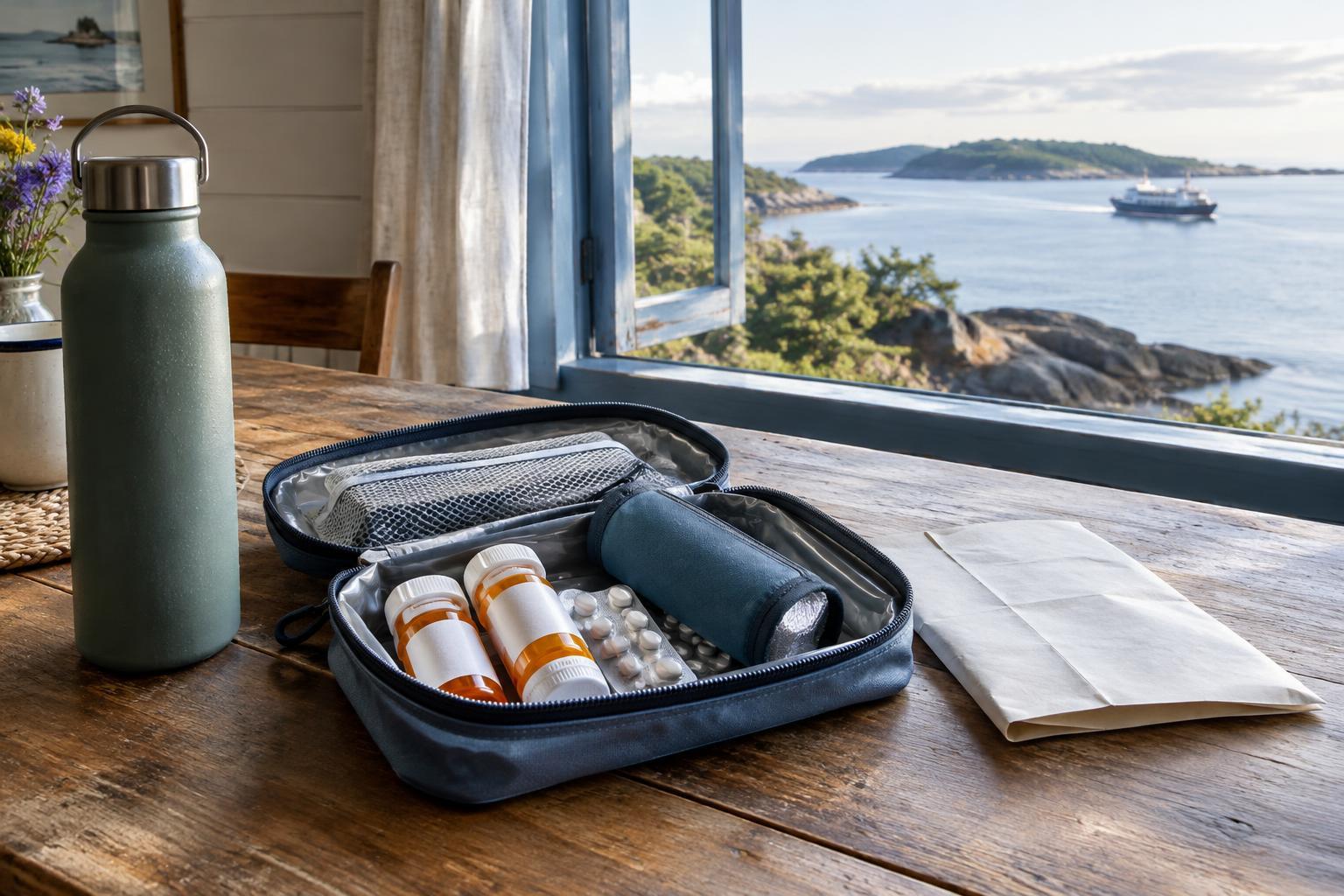
A reusable bottle is most useful when it fits your day. Check that its lid closes securely, that you can open it with sandy or damp hands, and that it fits the pocket or bag you intend to carry. A wide opening can make filling and cleaning easier. A narrow bottle may sit more comfortably in a side pocket. If you are sharing supplies, separate bottles let each person keep water within reach.
For longer stretches between refills, a second bottle or a clean, food-safe collapsible container adds capacity without requiring one very large bottle. Pack full containers upright where possible, with lids tightened and away from cameras, papers or spare clothing. Insulated bottles can keep a drink more pleasant in the heat, though they add weight. Whatever you choose, take a sip before departure: it is an easy way to discover a loose lid or a bottle that still tastes of soap.
Know what makes a refill suitable
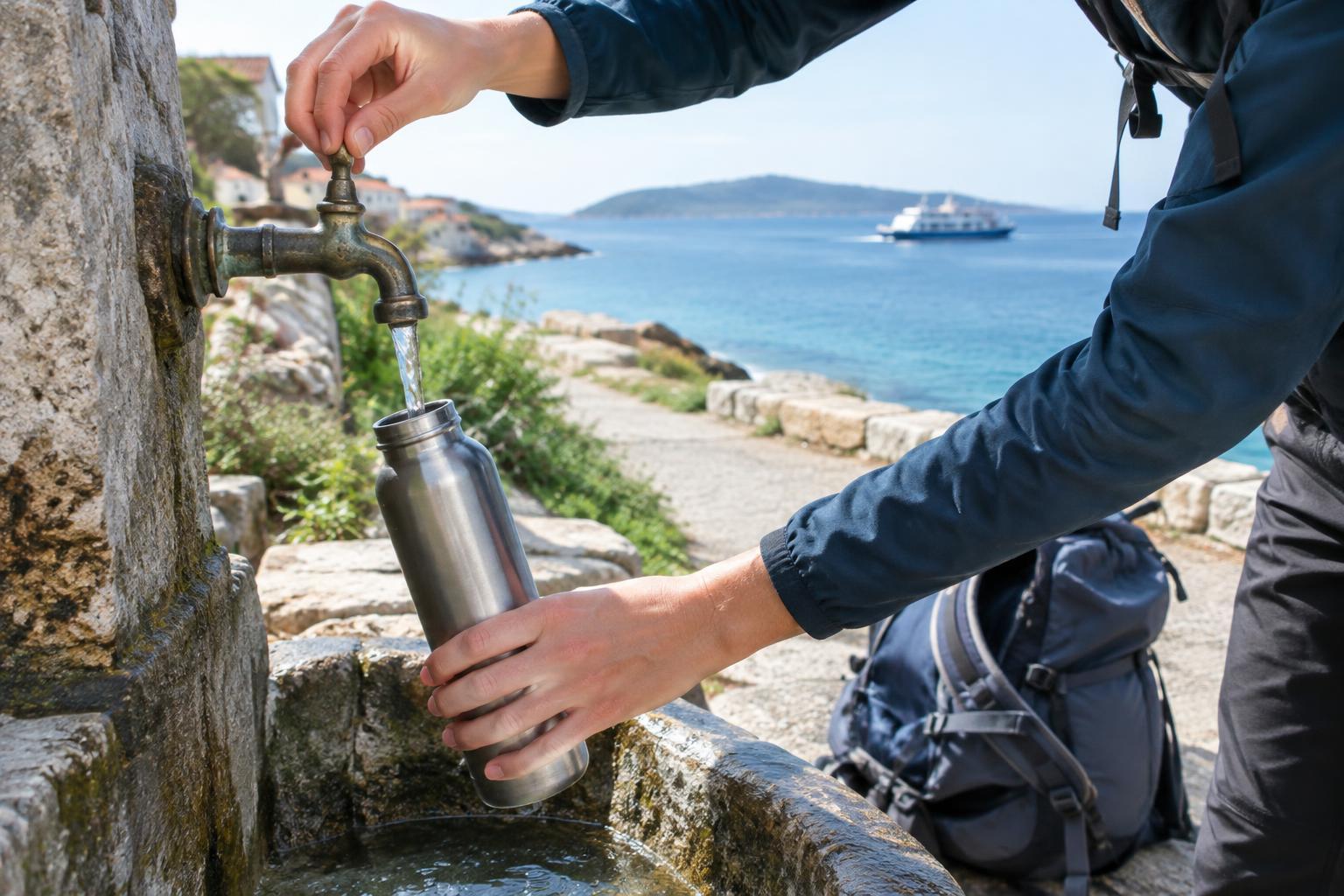
Use water clearly intended for drinking. A labeled drinking-water tap or a refill offered by someone who knows the local supply is a better choice than an unmarked outdoor spigot. If a notice says water should be boiled or is not for drinking, follow it. When you are unsure whether a tap is potable, ask rather than guess. Water that looks clear is not necessarily safe.
Do not treat seawater, brackish water, or an attractive stream as a casual backup. Ordinary filters and purification tablets are not a practical way to remove salt from seawater, and untreated freshwater can carry hazards that are not visible. If your route has no confirmed drinking-water source, bring enough from a reliable supply or plan a stop where sealed drinking water is available. On an island or remote stretch of coast, that small piece of planning matters more than carrying specialized gear you have not learned to use.
Keep water clean and easy to reach
Wash bottles and lids between outings, paying attention to threads, seals and drinking spouts where residue can collect. Let them dry thoroughly before storing them. During the trip, avoid touching the inside of a cap or setting it on a sandy surface. When filling from a tap, keep the bottle opening from pressing against the spout. If a refill point has instructions, follow them so it stays usable for the next traveler.
Carry at least one bottle where you can reach it without unpacking your whole bag. This makes it easier to drink during a walk and to check how much remains before passing a refill point. On a boat or exposed path, secure loose containers so they cannot roll away. Keep caps closed near salt spray and sand, and refill before leaving a dependable source rather than waiting until every bottle is empty.
Leave the refill point better than you found it
A thoughtful water routine reduces unnecessary packaging, but it should not come at the expense of a safe drink. Use a reliable refill when one is available; if you need to buy water, carry the empty container until you can dispose of it appropriately. Never leave bottles or caps on a beach, beside a trail or near a harbor.
Water can be a limited resource in coastal communities, particularly where supplies depend on local storage or treatment. Fill what you need, close taps fully and respect any posted restrictions. Before heading home, empty or secure any open containers that might leak in transit. A quick check of your remaining water, your next transport connection and your bag’s wet pockets makes the end of the day as straightforward as the start.