Start by asking what “local” means
A seafood meal can be a memorable part of a coastal trip, but “locally caught” is not a precise description on its own. A restaurant may mean caught near the town, landed at a nearby harbor, bought from a regional supplier or simply associated with the area’s food traditions. Those are different claims. Before treating a menu label as a promise, find out which one the restaurant intends.
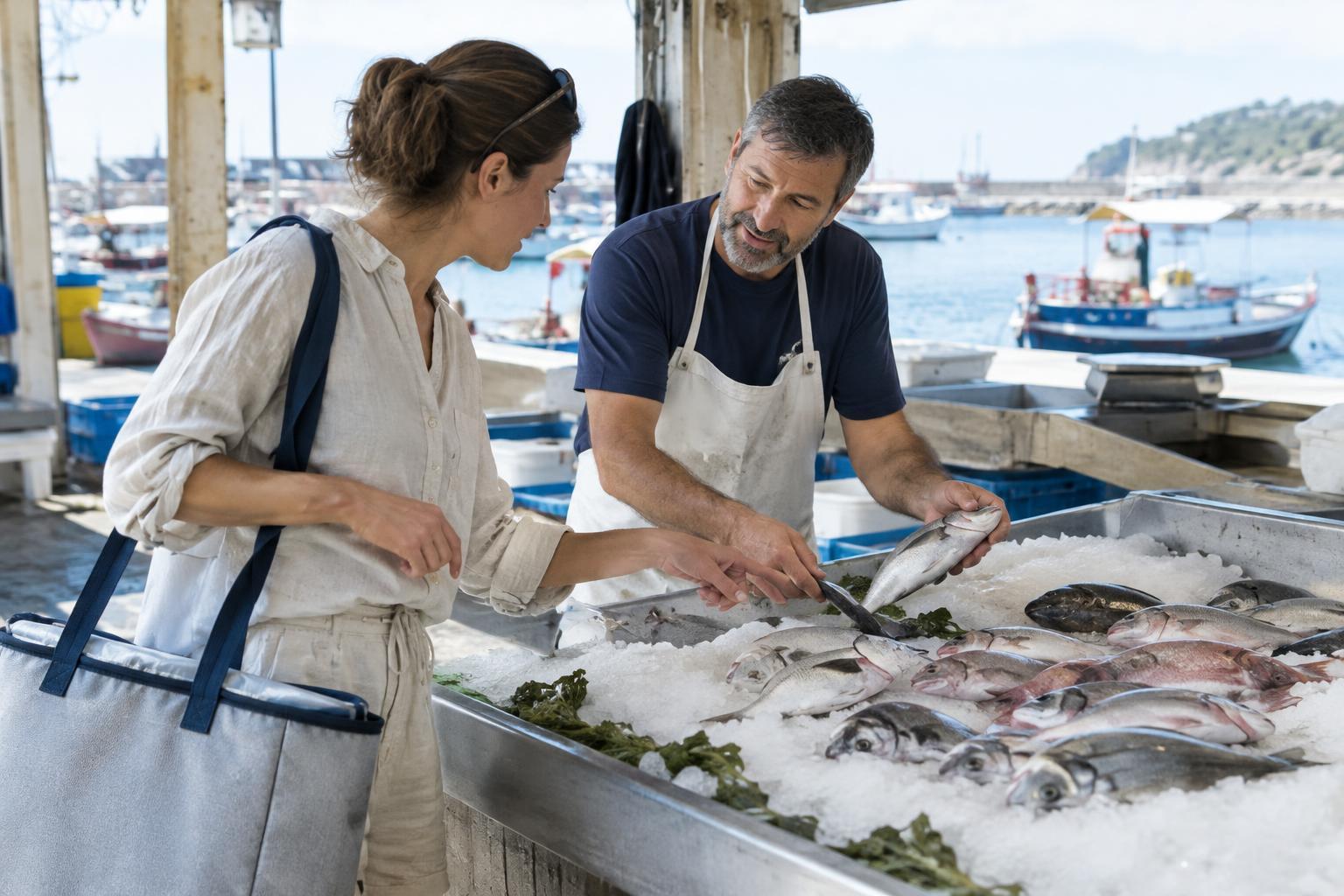
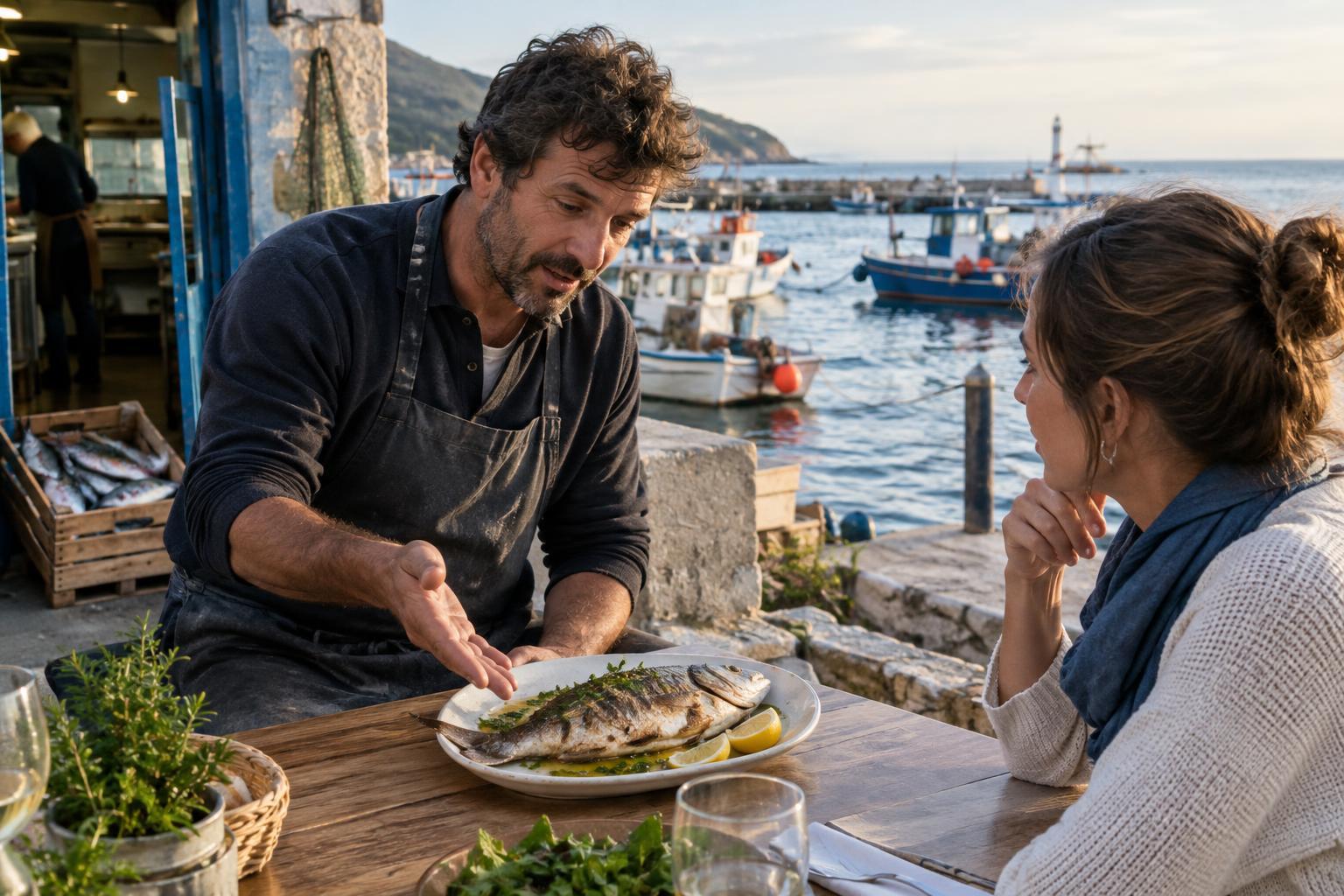
Ask about a specific dish rather than the whole menu: “Where was this fish caught or landed?” The answer may name a harbor, stretch of coast or fishing area. If the server does not know, that does not prove the claim is false. It does tell you that the menu provides more certainty than the person serving it can currently explain. A good next question is whether the kitchen can clarify.
Look for detail that fits the dish
Useful descriptions connect the fish on your plate to a plausible route into the kitchen. A restaurant might identify the species, the landing port and the supplier or fishing boat. It may describe a changing catch rather than promise the same fish every day. None of these details is proof by itself, but a clear, consistent explanation gives you more to assess than a phrase such as “fresh from the sea.”
Read the dish description carefully, too. “Locally prepared,” “local recipe” and “served with local vegetables” say little about the seafood’s origin. Even a familiar regional fish may have been brought in from elsewhere. Conversely, a modest menu that lists only some seafood as local may be drawing an honest distinction. Pay attention to which ingredient the claim actually covers, especially in mixed dishes such as stews or seafood platters.
Understand why the answer may change
Coastal kitchens work with shifting availability. Weather, fishing conditions, demand and the restaurant’s purchasing arrangements can all affect what arrives. A dish offered year-round under one name may use seafood from different places at different times. Ask whether the listed species and origin apply to today’s serving, rather than assuming a printed menu reflects every delivery.
There are also several stages between sea and table. Seafood can be caught in one area, landed in another, sold through a market and prepared farther along the coast. “Landed locally” does not necessarily mean “caught just offshore”; “bought from a local supplier” does not necessarily mean the supplier’s fish is local. Neither distinction makes a meal unworthy of ordering. It helps you decide whether the restaurant’s wording matches what matters to you.
Treat transparency as a stronger signal than a perfect story
A convincing answer need not be elaborate. “Today’s fish was landed here; the prawns come from elsewhere” is more useful than an enthusiastic assurance that everything is local. Staff may reasonably need to check with the kitchen, particularly when deliveries change. Notice whether they return with a specific answer, acknowledge uncertainty or quietly revise an overly broad menu claim.
Be cautious about relying on appearance alone. Harbor views, nets on the wall and a handwritten specials board create atmosphere, not traceability. Price is no guarantee either. At the same time, a short menu or a dish that sells out can have many explanations beyond local sourcing. Use these as prompts for conversation, not tests that automatically certify or disqualify a restaurant.
Choose the meal that fits your priorities
If eating nearby catch is important to your trip, keep your questions brief and courteous. Ask what seafood is local today, what “local” refers to and whether an alternative dish has a clearer origin. You can also ask about the preparation: a simple method may let an unfamiliar coastal species shine. If no one can establish where the seafood came from, choose it for other reasons or order something else without treating uncertainty as deception.
Local origin is only one consideration. It does not, by itself, tell you how a species was caught, whether a fishery is well managed or how workers were treated. A restaurant that explains the limits of its knowledge may be a better guide than one that offers sweeping assurances. The aim is not to interrogate your host over dinner; it is to make a more informed choice and leave room for the honest complexity of food by the sea.