A yard arranged around the water
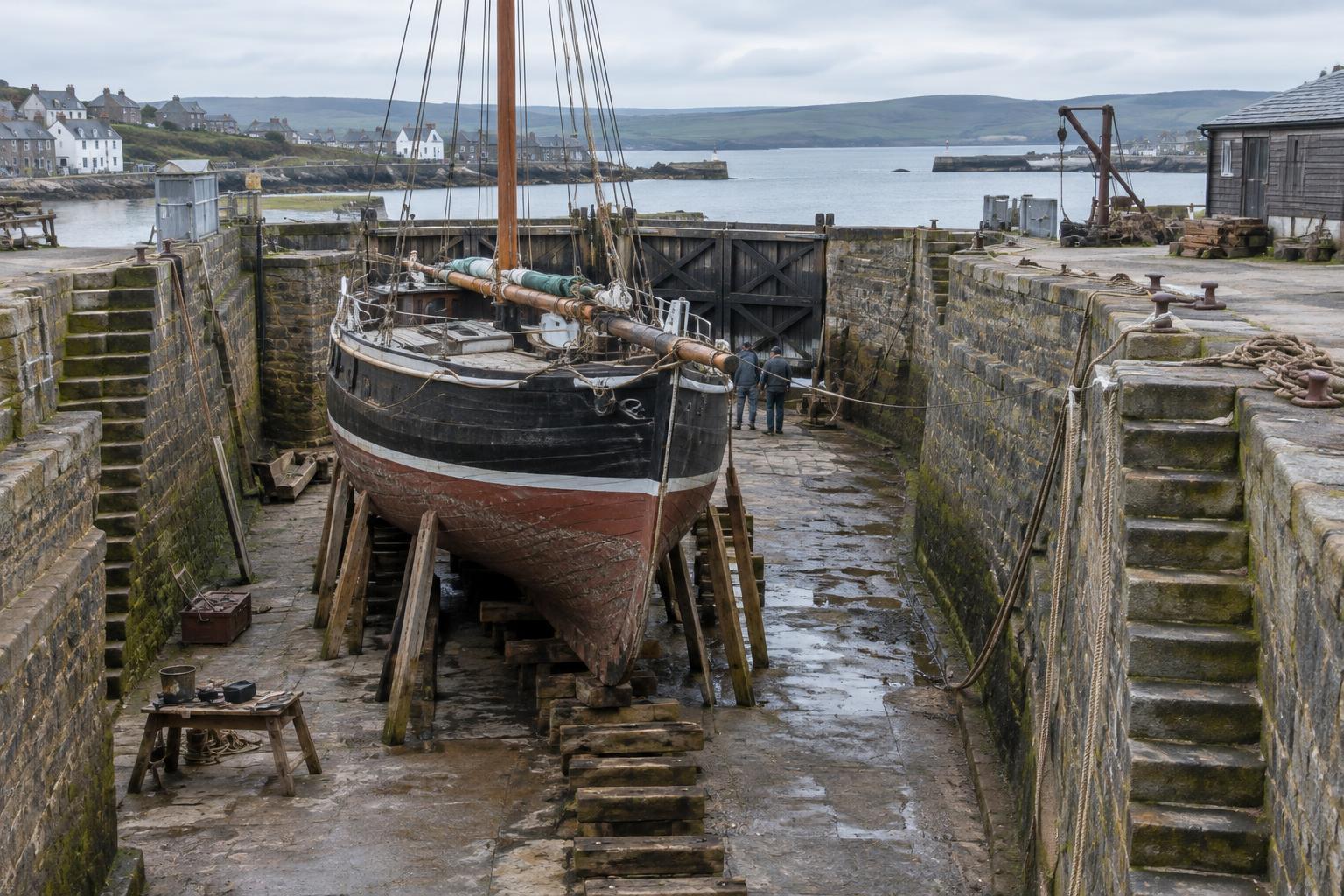
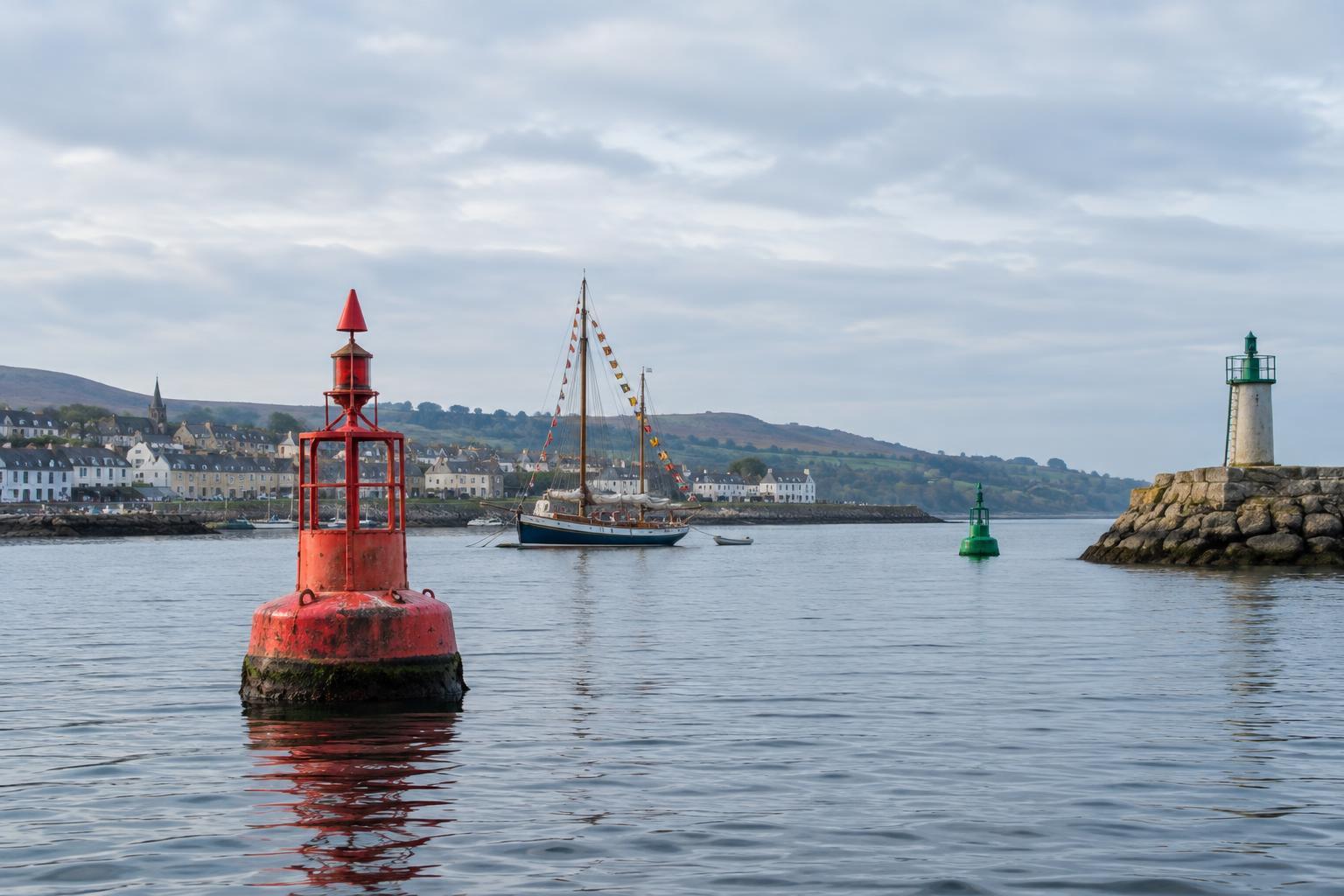
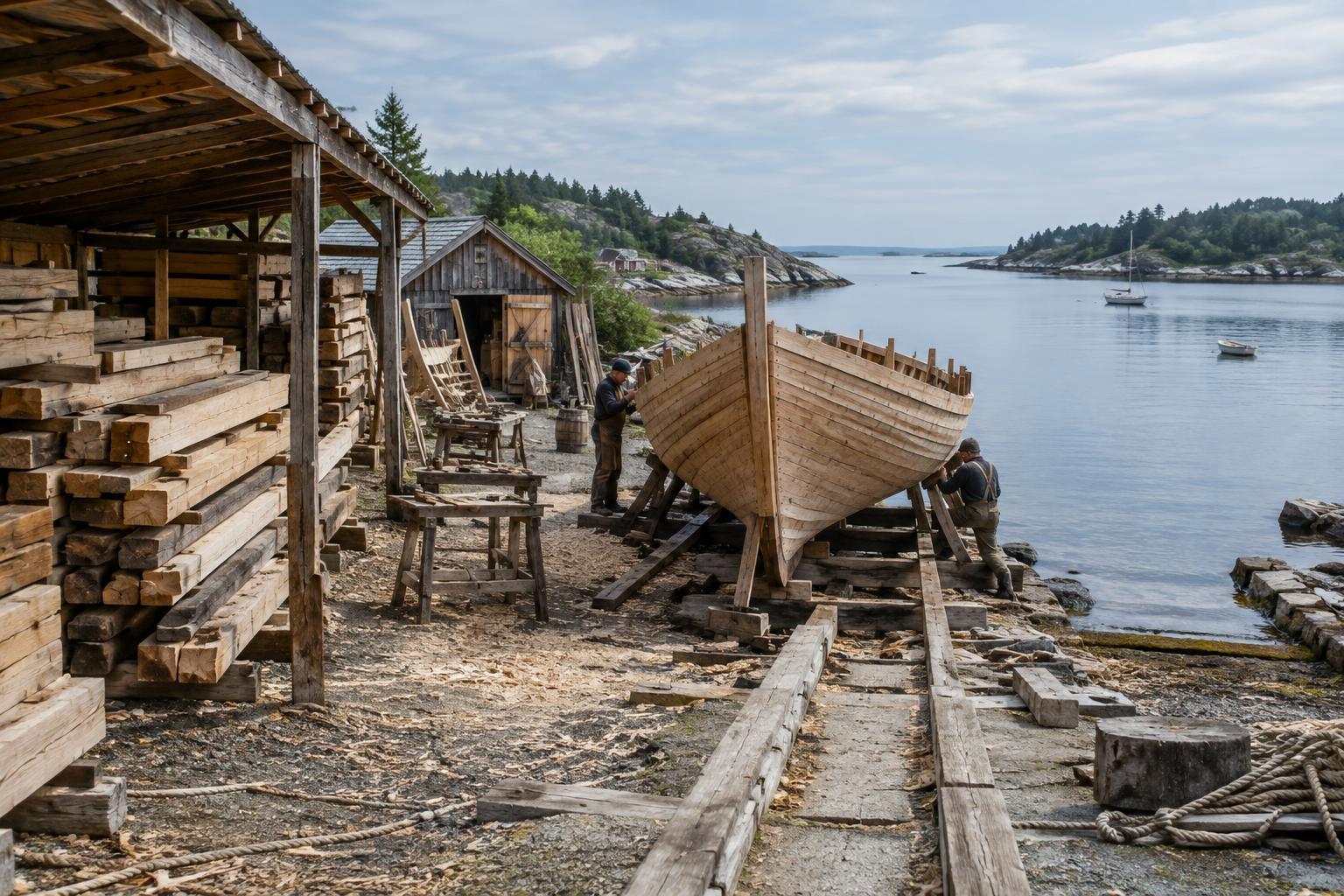
A wooden shipyard needed room for materials, people and a vessel that would grow too large to move easily by hand. Its layout varied with the shoreline and the kind of craft being built, but the water shaped nearly every decision. A launching slip sloped toward a sheltered basin, river or harbor. Nearby stood stores for timber and supplies, sheds for tools and smaller parts, and open ground where crews could work around a hull.
It helps to picture the yard as a sequence of connected spaces rather than a single workshop. Heavy timber had to reach the build site; shaped pieces had to arrive in the right order; and, eventually, the vessel needed a clear path to the water. A small boatyard might carry out several stages under one roof, while a larger yard could have separate areas and specialist crews. Repairs often happened alongside new construction, adding another rhythm to the waterfront.
Choosing and storing the timber
Wood arrived in many sizes and forms. Long, relatively straight pieces might be set aside for planks or beams, while naturally curved branches and trunks could suit the bends needed for frames and other structural parts. Shipwrights chose wood according to the job it had to do, the timber available locally or by trade, and the building practices they knew. Stores had to keep this valuable material organized and accessible, not simply piled out of the way.
Timber also needed time and care before use. Depending on the wood and the method of construction, builders might season it to reduce moisture, protect it from excessive drying, or shape it while it was still comparatively easy to work. There was no single storage rule for every yard. What mattered was that the shipwright could find suitable pieces when the build called for them. A yard’s timber stacks were, in effect, an inventory of possible hull shapes.
Turning a plan into a hull
Before cutting the major pieces, builders needed a way to translate the intended vessel into full-size shapes. In some yards, lines were drawn on a lofting floor; elsewhere, builders relied on templates, established proportions or methods passed down through practice. These guides helped workers shape matching components and check how one part would meet the next. The amount of formal drawing depended on the vessel, the period and the yard.
Construction usually began with the vessel supported securely on blocks or a building cradle. The keel formed a central foundation, with end structures and frames establishing the hull’s shape. Builders then fitted planking to the framework, fastening each piece as required by the design. Other craftspeople prepared fittings, ironwork and joinery. The work did not always follow a neat assembly line: shaping, fitting and checking happened repeatedly as the hull took form.
Making the vessel ready for water
A planked hull still needed careful finishing. On many traditionally built vessels, caulkers worked material into seams to help keep water out, then applied suitable coatings or coverings. The precise methods varied widely by region and construction type. Decking, internal structures and equipment were fitted as space and timing allowed. Sails, rigging, engines or other gear might be installed before launch, after launch, or in stages on either side of it.
These tasks brought different trades together. Shipwrights shaped and fitted structural wood; caulkers attended to seams; smiths made or adapted metal parts; and ropeworkers, sailmakers and joiners contributed according to the vessel’s needs. A visitor looking only at the hull might miss the less visible work in nearby sheds. Yet a shipyard depended on those benches and stores as much as on the people working at the water’s edge.
The launch was a transition, not an ending
To launch a vessel, workers prepared a supported route down the slip and arranged a controlled way to release the hull. The exact gear depended on the yard and the vessel’s size. Launching demanded coordination: the path had to be clear, supports had to come away in the right sequence, and the hull had to enter water deep enough to float. It was a visible moment, but one built on many quieter checks.
Once afloat, the vessel might be moved to a berth for further fitting, inspection and adjustment. Its first time on the water could reveal work still to be done. When visiting a former shipbuilding waterfront, look for more than a preserved slipway. The position of timber yards, workshops, access routes and sheltered water can show how materials and skilled hands moved through the site. Together, those spaces tell the story of a working yard, from the first stored plank to a vessel ready to sail.