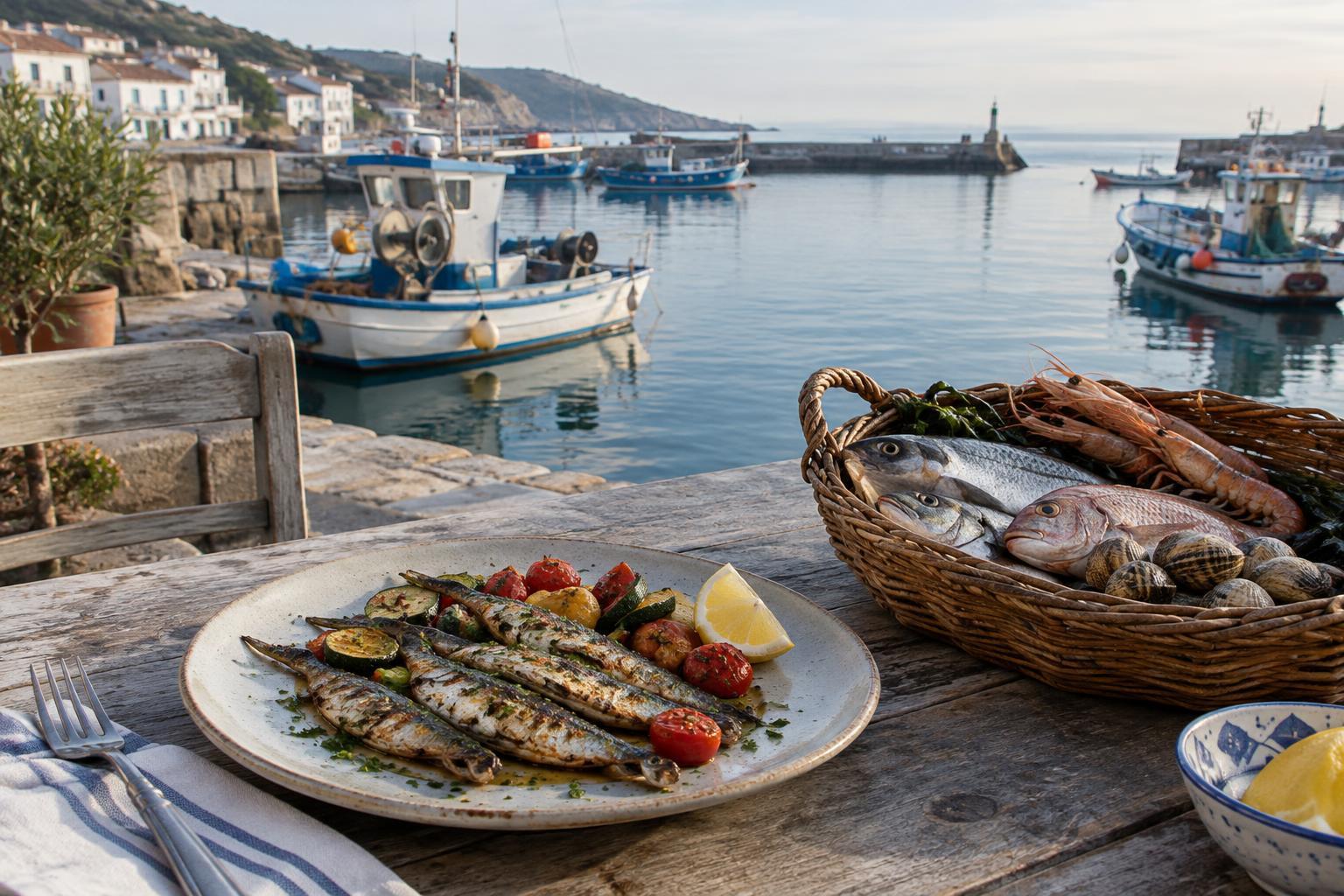
Seasoning begins with the seafood
A grilled fish, a bowl of shellfish and a plate of sliced raw seafood ask for different kinds of seasoning. The first may welcome a bright finish; the second might need its cooking juices left intact; the third could be built around a sharp dressing. Coastal cooking is not one style, but many ways of responding to what has been caught, how it is prepared and what else is on the table.
Citrus, vinegar and fermented sauces are useful to think of as three distinct tools. Citrus brings fragrance as well as acidity. Vinegar offers a sharper, more consistent tang, with a character that depends on what it is made from. Fermented sauces contribute salt and savory depth, sometimes with sweetness or a pronounced aroma. Cooks often combine them, but each changes the balance of a dish in its own way.
Citrus: aroma before acidity
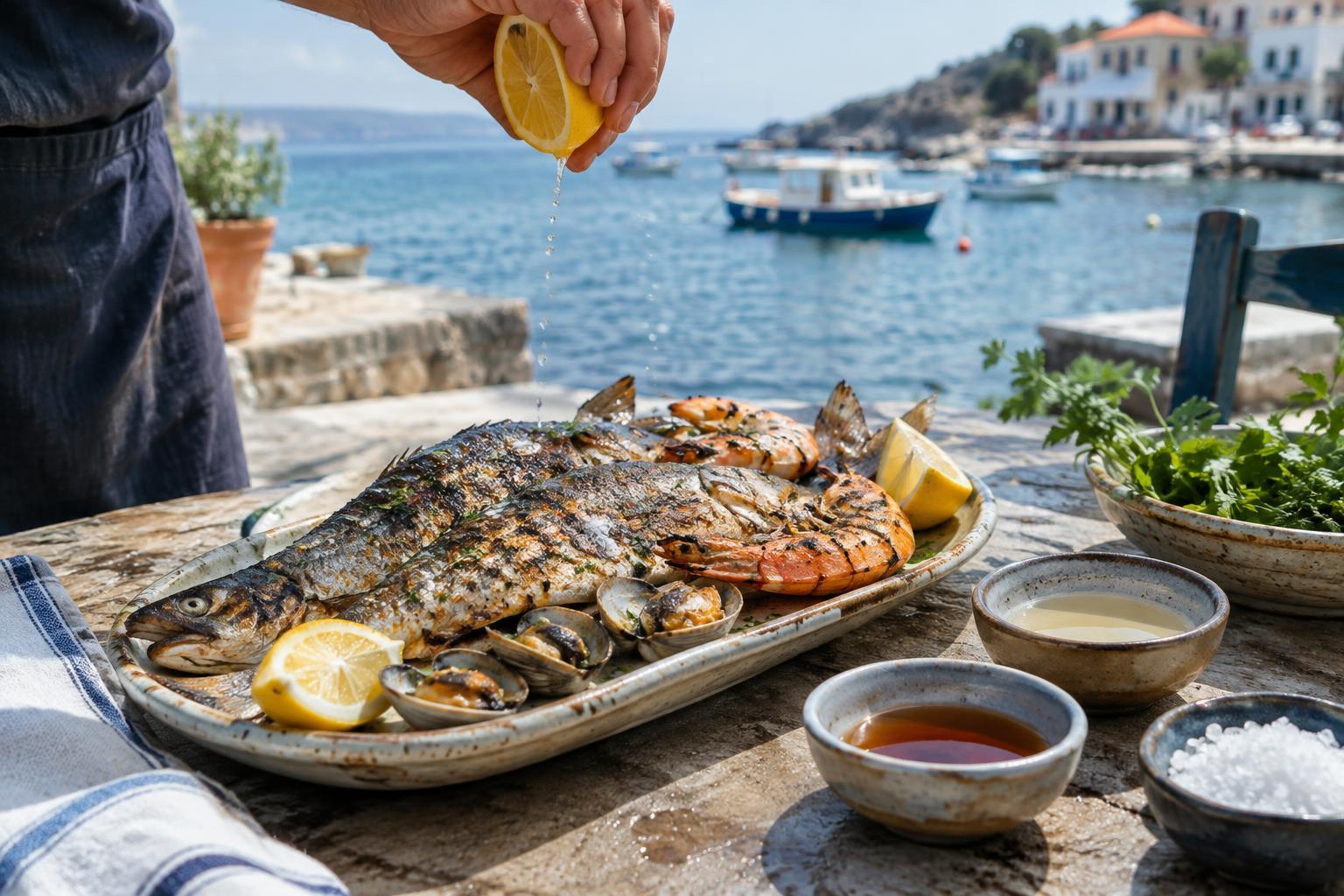
Lemon or lime squeezed over seafood can make a rich or oily bite feel lighter. Yet juice is only part of the effect. The peel carries fragrant oils, so a little zest can lift a dish without adding more sourness. That distinction matters when a sauce already has enough acid but needs a fresher aroma.
Timing changes the result. Citrus added just before serving stays lively and distinct. If seafood sits in a citrus-heavy dressing, its surface can turn firmer and more opaque as the acid affects its proteins. That change in appearance is not the same as making raw seafood safe to eat. For home cooking, treat raw seafood as a separate food-safety decision rather than relying on lemon or lime juice.
When tasting a local dish, notice whether the citrus arrives at the table as a wedge or has already been mixed into a marinade. A wedge lets each person adjust the final bite; a prepared dressing makes the acidity part of the cook’s intended balance. Neither approach is automatically better.
Vinegar: a sharper edge with room for variation
Vinegar is useful when a dish needs acidity that remains noticeable beside onions, herbs, oil or strongly flavored seafood. It can enliven a cold dressing, cut through fried fish or give pickled vegetables enough bite to stand up to a seafood meal. Different vinegars can also bring grain, fruit or wine-like notes, so choosing one is about flavor as well as sharpness.
A little vinegar goes a long way. In a simple dressing, start with a small amount, then taste it with the seafood or an accompanying vegetable rather than tasting the dressing alone. Oil, cooking juices and other ingredients soften its edge on the plate. A vinegar that seems too forceful from a spoon may be balanced in a finished dish—or it may still need diluting.
Pickled accompaniments show another role for vinegar. Instead of seasoning the fish directly, cooks may put the tang in onions, peppers or other vegetables served alongside it. Each forkful can then vary between rich, salty and sour. This makes acidity something to choose bite by bite.
Fermented sauces: salt with depth
Fermented sauces made from fish, soybeans or other ingredients can season seafood with more than salt alone. Depending on the sauce, they may add a deep savory note, a rounded sweetness or a pungent aroma. They are often powerful in small quantities, especially when a dish also contains salted or dried ingredients.
The most useful habit is to add a little, taste and only then add more. A fermented sauce can be stirred into a dipping mixture, brushed onto seafood during cooking or used to season vegetables that share the plate. Diluting it with water, citrus juice or another ingredient can make its flavor easier to distribute. Its role is not necessarily to announce itself: sometimes it simply makes the other ingredients taste fuller.
Names and recipes vary widely between places, and two bottles with similar labels may taste quite different. When traveling, ask what a table sauce is meant to accompany, then try a small amount first. That is both more respectful of the cook’s balance and more useful than assuming every fermented sauce should be poured on generously.
Read the whole plate, not just the sauce
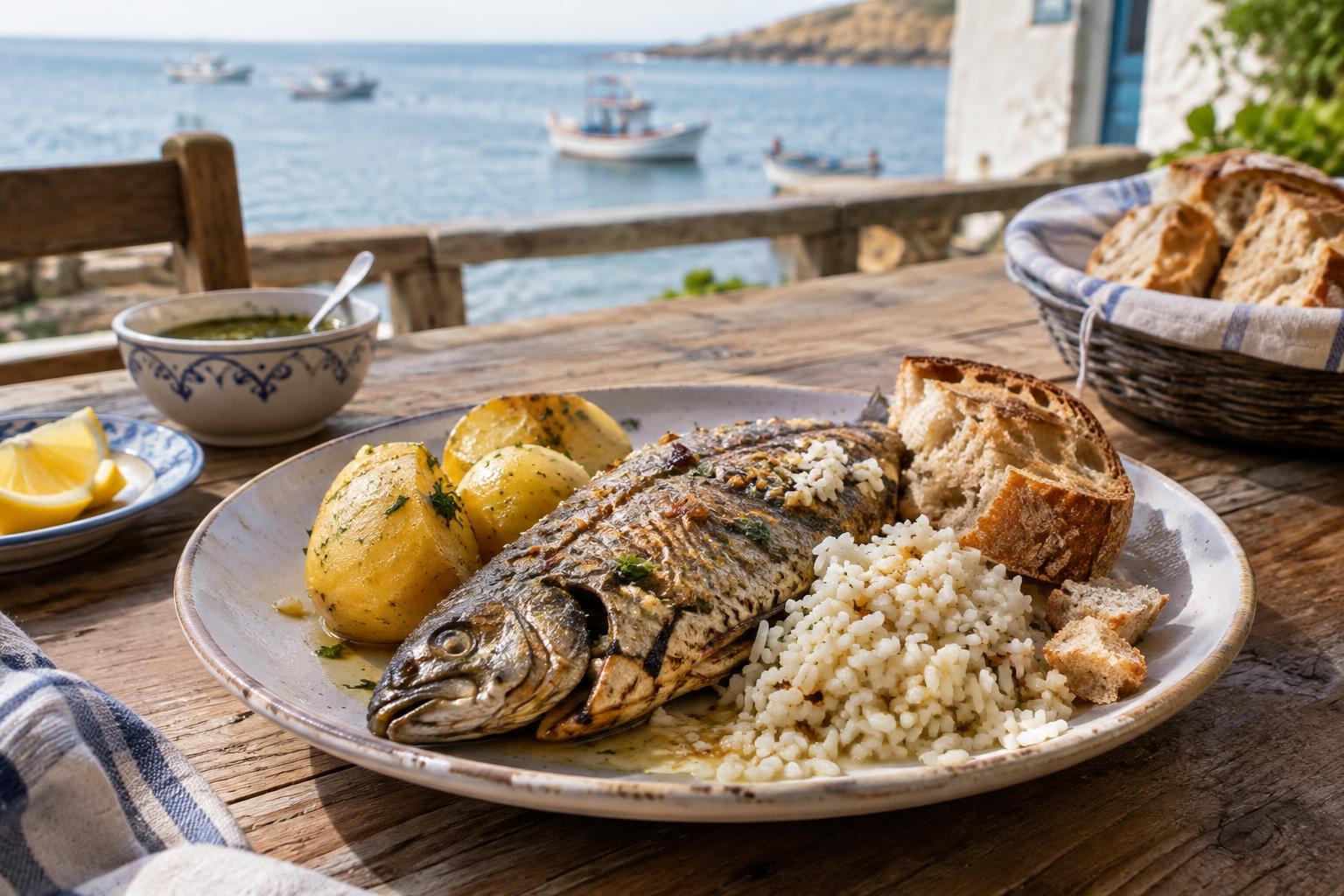
Seafood seasoning makes the most sense as part of a meal. Plain rice, bread or boiled vegetables can absorb a salty sauce. Fried food may benefit from something sharp. A gently cooked fish might need no more than its own juices and a restrained finishing touch. Texture matters too: a crisp crust reacts differently to a wet dressing than tender flesh does.
For a slower food journey, pay attention to what arrives separately: a citrus wedge, a small dish of sauce, a spoonful of pickles. Taste the seafood first, then try each addition in a modest amount. You will learn more about the dish than you would by combining everything at once. Coastal cooks have many ways to build brightness, tang and savory depth; noticing where each flavor sits on the plate is a way into those traditions.