Start with the journey, not the suitcase
A remote coastal trip may involve a flight, a ferry and a long drive before you reach your lodging. Think through each leg of the route and identify where your medicines will be during it. A bag checked onto a plane or stowed away on a boat may be inaccessible for hours, so keep medicines you might need during travel with you whenever transport rules allow.
Before departure, count what you will need for the whole trip, including transit days. Ask your prescriber or pharmacist how to prepare for a reasonable delay, especially if a refill would be difficult at your destination. Do not assume that a small island pharmacy will stock your medicine or be able to dispense a prescription issued elsewhere. If your trip depends on a particular medicine, discuss a realistic contingency plan before you leave.
Check the rules for every stop
Permission to carry a prescribed medicine at home does not necessarily mean you can take it across a border. Requirements may differ for the places where you arrive, transit and depart, and some medicines face additional restrictions. Check the relevant official travel, customs or health guidance for each jurisdiction, allowing time to ask questions or obtain any required paperwork. If the rules are unclear, seek clarification from the appropriate authority rather than relying on a general packing list.
Keep medicines in their labeled packaging where practical. A current prescription record or a letter from your prescriber can help identify the medicine and its purpose, but neither replaces a required permit or guarantees entry. Keep essential documents accessible while traveling, and consider a separate copy in case a bag is lost.
Protect medicines from heat, moisture and separation
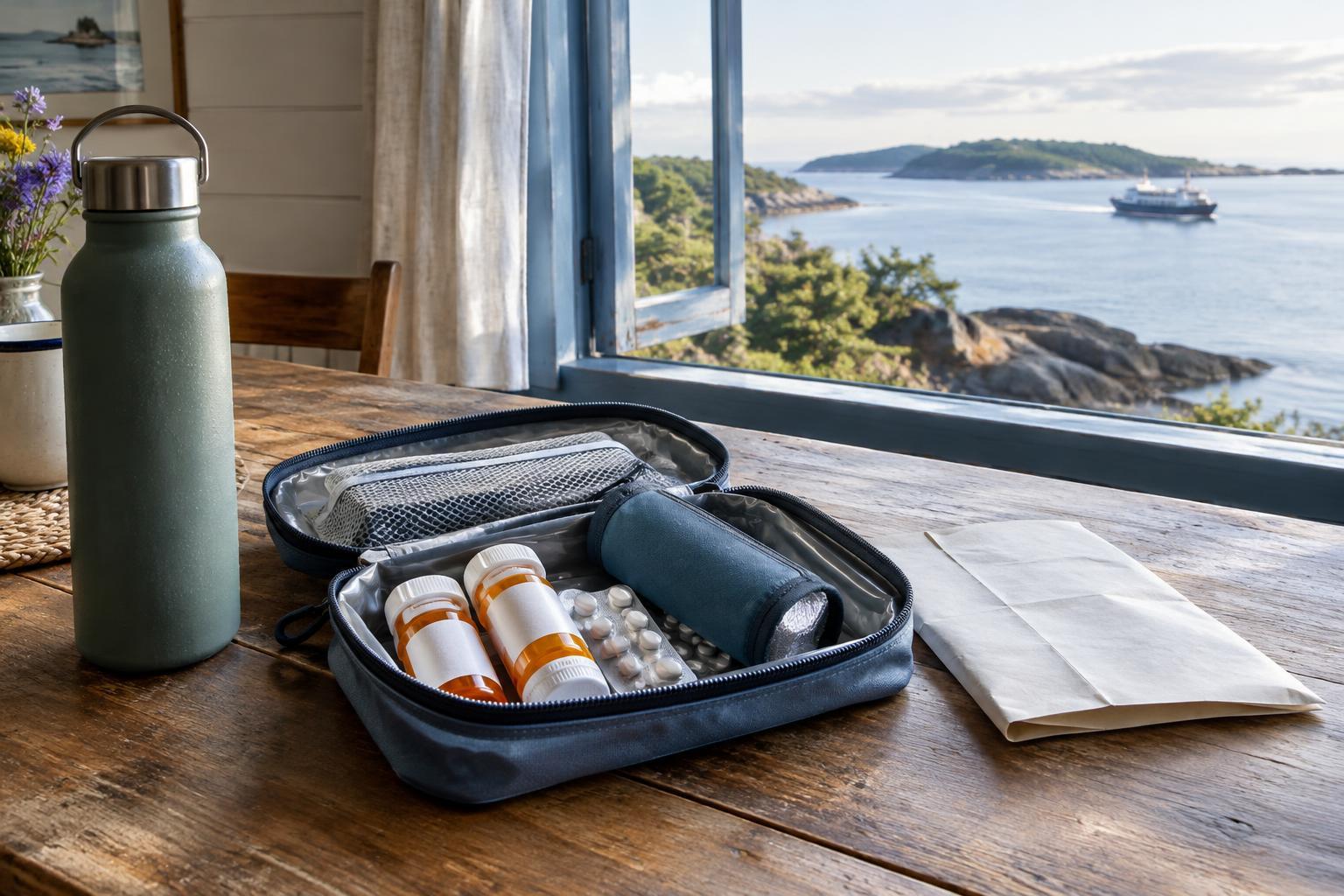
Coastal travel exposes bags to sun, spray, rain and changing temperatures. Pack medicines in a sturdy, water-resistant pouch, then place that pouch where you can reach it without unpacking everything. Water resistance is useful on a ferry deck or during a wet transfer, but a sealed bag can also trap heat if left in direct sun. Avoid leaving medicines in a parked vehicle or on a windowsill.
If a medicine has specific storage requirements, ask your pharmacist how to meet them throughout the actual route, including time on a boat or away from reliable electricity. A cooler is not automatically safe: some medicines should not freeze or sit against an ice pack. For flights, check the carrier’s current rules for liquids, needles, cooling supplies and carry-on bags. Keep enough medicine accessible for the journey if other luggage is delayed, while following the applicable rules.
Make a simple plan for missed connections
Write down the names of your medicines, their strengths and your usual schedule, and keep that list somewhere separate from the containers. If you use a phone reminder, make sure you can still see the information without a signal. Time-zone changes, an early ferry departure or an overnight crossing can make a familiar routine less obvious; ask your prescriber or pharmacist in advance if you are unsure how to handle the schedule.
Before heading somewhere isolated, note where you could seek help if a bag went missing, a crossing were canceled or a medicine were damaged. Your lodging host may be able to explain local transport and opening hours, but questions about replacements and dosing belong with a qualified health professional. Keep the contact details for your prescriber, pharmacy and travel insurer available offline, and check what your insurance covers rather than assuming a replacement will be straightforward.
Keep the kit useful, private and ready to go
Organize your medicines so you can find the right one in a dim cabin or a crowded terminal without tipping everything onto a table. A small, clearly labeled pouch is usually easier to manage than several loose packets. Keep prescription details private when sharing luggage or accommodation, and do not share your medicine with another traveler, even if their symptoms seem familiar.
Just before leaving, check that you have the medicines, any required documents and any supplies needed to take or store them. Then put the kit in the bag you intend to keep close. That final check is modest, but it supports the kind of unhurried coastal journey you came for: less time searching for essentials, and more attention for the crossing ahead.