Know what you are protecting against
The coast presents two different problems for electronics. Salt spray can leave a residue on exposed surfaces and around buttons, ports and seals. Sand can scratch a lens or screen and work its way into moving parts. Neither requires a dramatic wave to cause trouble: wind, wet hands and a bag set down on the beach can bring both into contact with your gear.
Start by checking the limits of what you carry. Weather resistance varies by device, and a water-resistant camera body may be less protected when paired with a different lens or fitted with an open port cover. A protective pouch also has limits. Unless its maker rates it for immersion and you have closed it correctly, treat it as a barrier against splashes, not permission to take your device underwater.
Pack in layers, not in one perfect bag
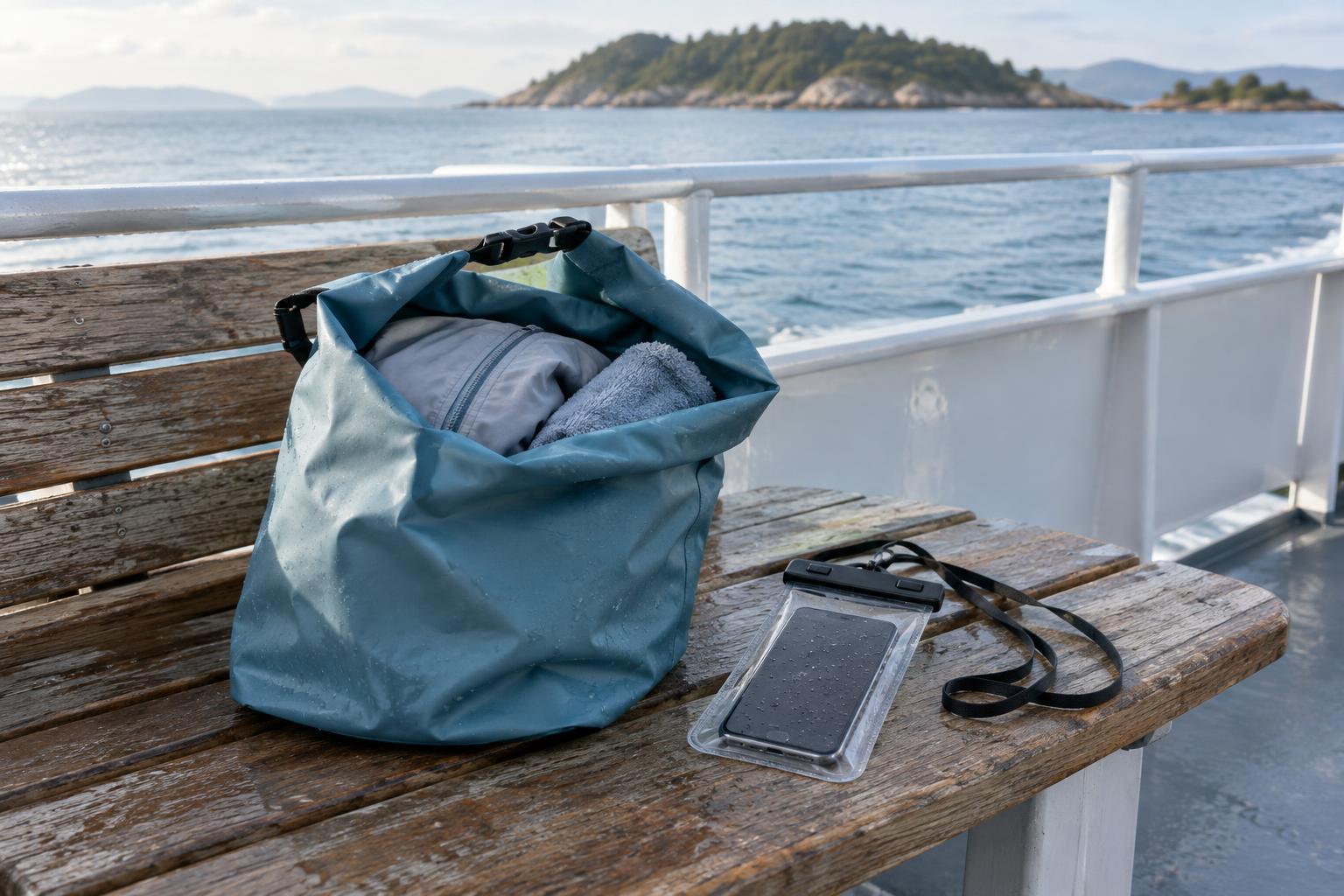
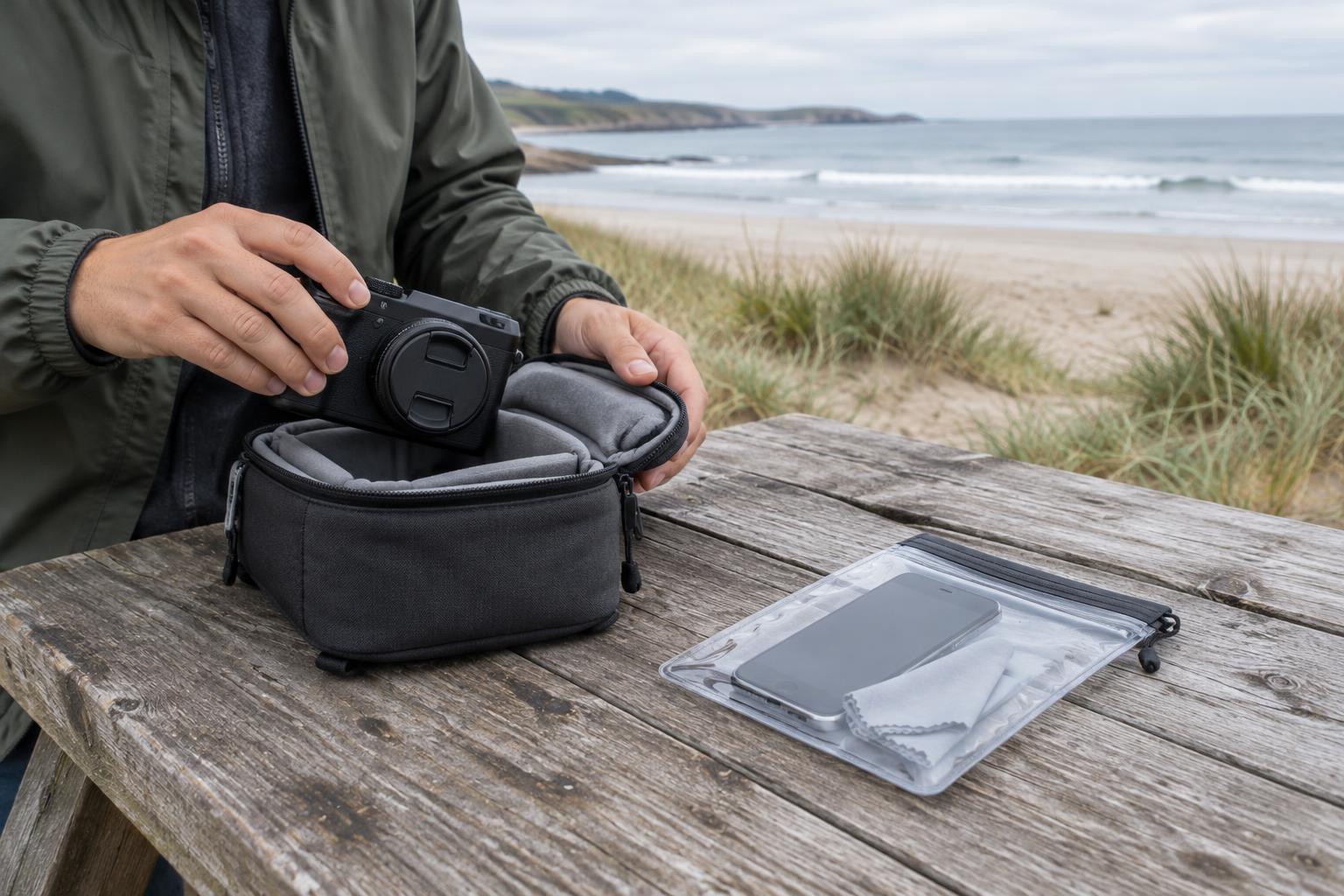
Give each frequently used item a simple first layer, such as a fitted case or a clean, resealable pouch. Keep that inside a bag you can close quickly when spray picks up. For a boat crossing or a wet landing, a dry bag can provide another layer, but avoid relying on its closure without checking it for trapped grit, wear or an incomplete roll. Put electronics high in the bag rather than beside a damp towel or water bottle.
Bring a few small cleaning items: a manual air blower, a soft brush intended for camera gear, clean microfiber cloths and a spare pouch for used cloths. A lens cap helps when you are walking rather than shooting. Pack cables and chargers separately from wet clothing, and keep charging ports covered while you are outside. If you use a reusable dry box or case, make sure its seal is clean before closing it.
For longer trips, a small amount of desiccant in a closed storage bag may help manage lingering moisture. It is not a substitute for drying wet equipment, and it works best when the bag and its contents are already dry.
Choose your moments to take gear out
Before you reach a windy stretch of beach or an open deck, fit the lens you expect to use, check your battery and clear space on your memory card. Fewer changes outdoors mean fewer chances for grit to enter a camera. If you must change a lens or open a compartment, move to shelter first. Keep openings pointed away from blowing sand and finish the change promptly.
Pay attention to your hands and where you place the bag. Dry, sand-free fingers are safer around buttons, screens and lens mounts. A bench or a clean cloth inside the bag is usually a better resting place than the beach itself. On a boat, secure your gear so it cannot slide, and put it away before spray reaches you. A good photograph is rarely worth leaving an open camera exposed while you search for a better angle.
Clean gently after the outing
At the end of the day, inspect your gear before wiping it. Loose grains can scratch a screen or lens if dragged across it. Use a blower to lift grit, then a suitable soft brush for stubborn particles. Once the surface is free of sand, use a clean microfiber cloth. Follow the device maker’s instructions for cleaning screens, lens coatings and seals; methods that suit one surface may not suit another.
Salt residue deserves attention, but do not rinse an electronic device simply because its exterior looks salty. If the manufacturer permits it, use a barely damp cloth on the appropriate exterior surfaces, keeping moisture away from openings, then dry them with a clean cloth. Clean the outside of a protective case too, especially near its closure, before opening it. Let gear dry in a sheltered, ventilated place rather than sealing damp equipment in a bag overnight.
If something gets wet or gritty, pause
If salt water reaches a device that is not meant to get wet, switch it off if you can do so safely. Do not plug it in, test every button or apply strong heat to hurry it dry. Remove any external accessories you can detach without forcing them, and consult the maker’s guidance or a qualified repair service. Salt-water exposure can affect parts you cannot see, even if the outside appears dry.
Likewise, do not force a gritty dial, zoom ring or port cover. Set the item aside until you can inspect and clean it in a calmer place. The most useful habit is also the simplest: take gear out with a purpose, protect it between uses, and give it a careful check when you return. That leaves more of the trip for the shoreline, rather than for troubleshooting your camera.