A shoreline woven into daily life
A promenade may be the first place a visitor goes to see the water, but for residents it often serves less dramatic purposes. It can be a route to work, a place to sit after shopping or somewhere to take an evening walk. Its value comes partly from being available for ordinary moments as well as special ones. A person can arrive alone, stay a few minutes and still feel connected to the life around them.
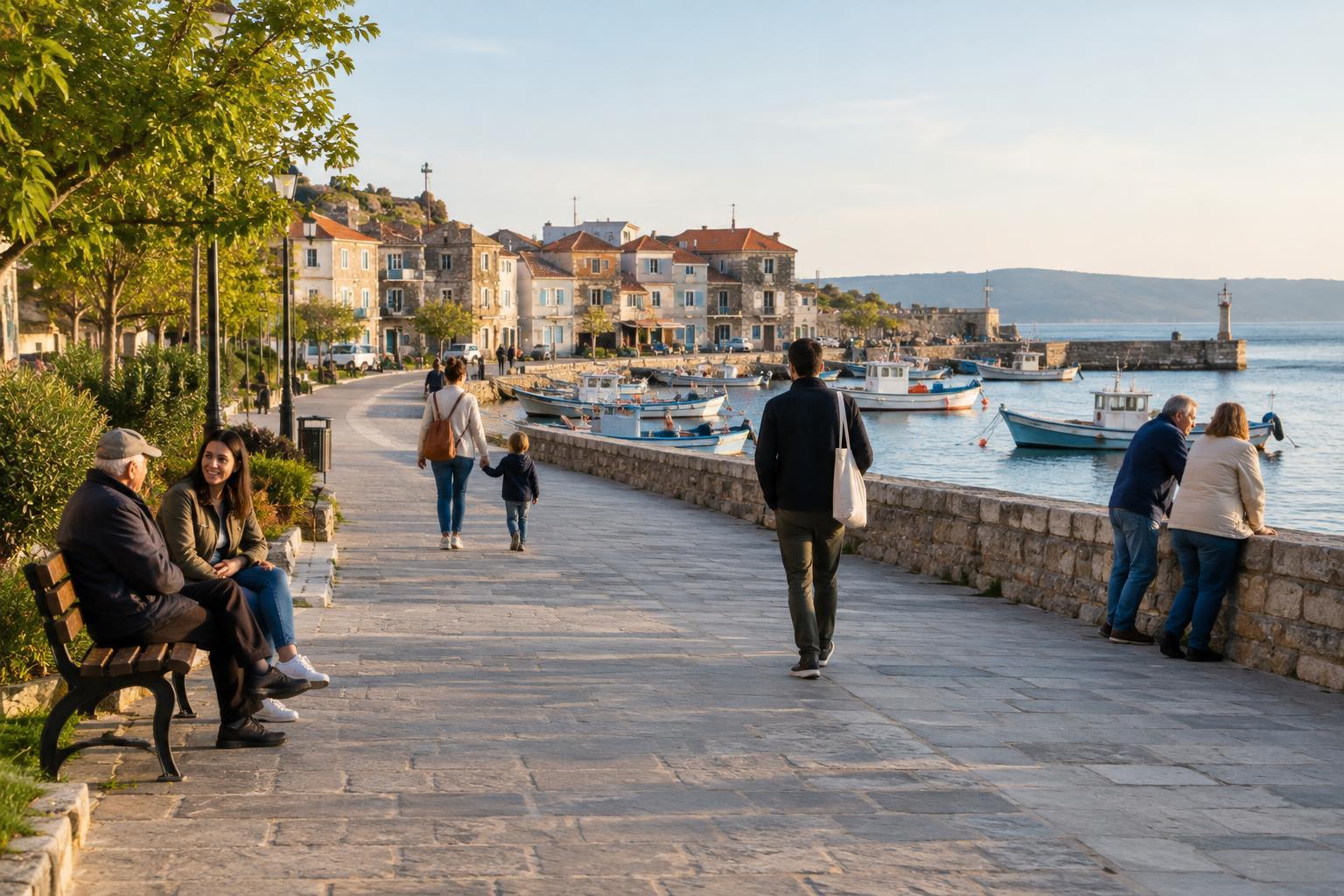
Unlike a venue built around one activity, a waterfront path can accommodate many rhythms at once. Walkers pass people resting on benches; friends pause to talk without arranging a formal visit. This ease of encounter helps make a promenade a gathering place. The sea provides a shared outlook, while the path, seating and open space give people reasons to return.
A place for different generations to meet
Promenades often give people of different ages a way to share public space without having to do the same thing. A child may be interested in waves and boats, while an older neighbor prefers a familiar bench and the chance to greet passersby. People walking together can set their own pace. Those small choices matter: community life is not only made at festivals or organized events, but also through repeated, low-pressure meetings.
The character of a promenade changes over the day. A quiet morning may suit conversation or exercise; later, the same stretch may become a place for families and groups of friends. Where there is enough room to move and pause, these uses can coexist. Where a path is narrow or seating is scarce, people may have to compete for space. Paying attention to these details tells a fuller story than a photograph of the view alone.
Where a town meets its maritime past
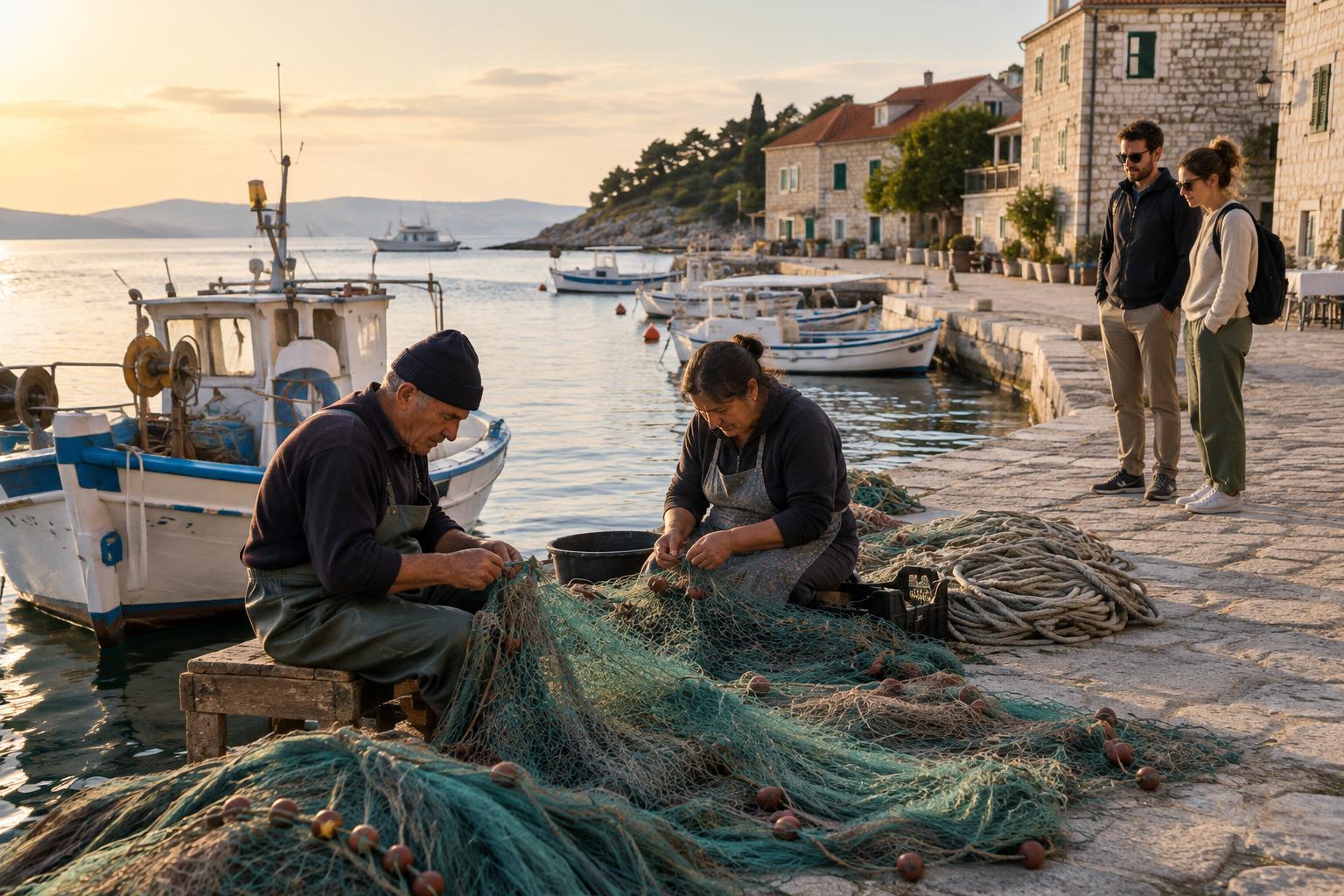
A waterfront can make a coastal town’s working life visible. Depending on the place, a walk might pass a harbor entrance, a ferry landing, fishing boats or buildings once tied to trade. These features invite questions about how people have crossed, worked beside and depended on the water. They also remind visitors that a coast is not simply a backdrop for leisure.
The relationship is not always straightforward. Some waterfronts have shifted from industrial or working uses toward recreation, and traces of earlier activity may sit beside cafés, gardens or new paths. A thoughtful walk leaves room for both stories. Reading public signs, noticing what remains in use and looking beyond the most polished stretch can help a visitor understand why the shore matters locally. Working areas deserve respect: an inviting view does not make every quay or access road a public walkway.
What makes a promenade welcoming?
A beautiful setting alone does not guarantee that everyone can enjoy it. Clear routes, places to rest, shade where possible and crossings that connect the waterfront to nearby streets all affect who can use a promenade comfortably. So do less visible considerations: whether people feel free to linger without buying anything, whether signs are easy to understand and whether faster-moving users leave room for those traveling slowly.
Waterfronts also face practical limits. Wind, spray, tides and exposed sun can change the experience from one hour to the next. Planted edges and wildlife areas may need protection from heavy foot traffic. Good shared use is often a matter of balancing access with care rather than trying to turn every part of the shoreline into a paved viewpoint. A promenade works best as public space when its design acknowledges both the people who gather there and the coastal setting they came to enjoy.
How to visit without taking over
For travelers, a promenade offers an easy introduction to a place, especially at the start of a slower trip. Walk a stretch without rushing toward a single landmark. Notice where people enter from the town, where they stop and which parts of the shore are still used for work. A nearby food stall or café may add to the experience, but sitting quietly and watching the water can be just as revealing.
Treat the space as someone else’s everyday route. Keep groups from blocking the path, give working waterfront activity room and avoid photographing people as though they were part of the scenery. If a section is busy, move on rather than claiming the best viewpoint for a long stop. These small courtesies help preserve what makes a promenade appealing in the first place: the possibility for many people, visitors and residents alike, to feel at home beside the sea.