Start with the bowl, not the name
On a coast, the line between fish stew and seafood soup is rarely as neat as a menu heading suggests. Both can begin with a fragrant liquid and end with fish, shellfish or other seafood in the bowl. A cook may call a dish a soup because it is served as a first course, while a diner might consider it substantial enough to be dinner. Local names and household habits matter more than a universal rule.
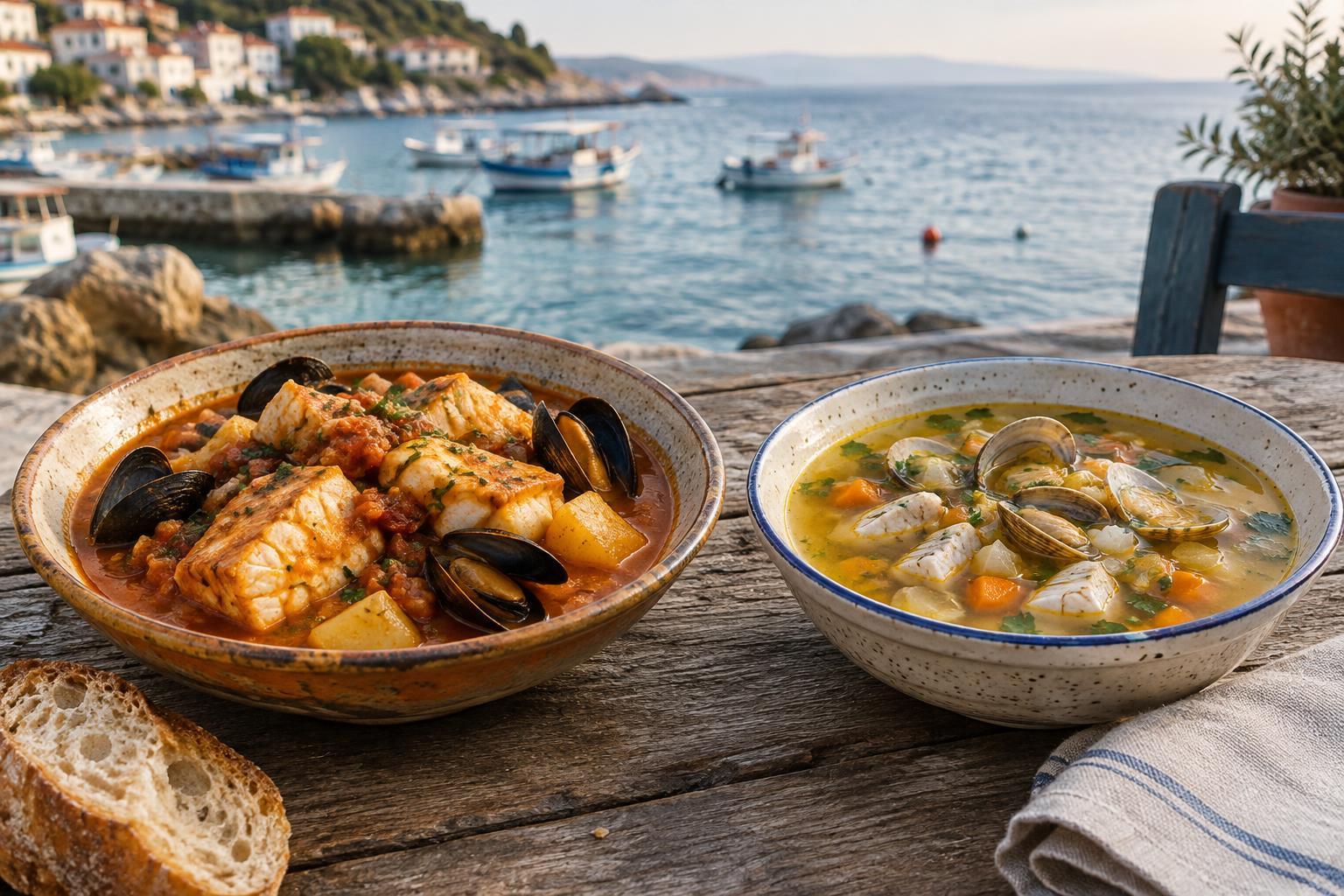
As a useful starting point, think of seafood soup as a dish in which the liquid has a leading role. Fish stew often puts more emphasis on the pieces of fish and the ingredients cooked alongside them. This is a guide to what you might encounter, not a test that every coastal recipe must pass. The pleasure lies in noticing how a particular kitchen builds its version.
Notice what the liquid is doing
Look first at the space around the seafood. In a soup, there may be enough broth to fill a spoon easily: clear and light, cloudy with a purée, or enriched by tomatoes, herbs or a little cream. The liquid is often meant to be enjoyed on its own. It may carry much of the flavor even after the larger pieces have been eaten.
A stew may have less free liquid, or a sauce that clings to the fish, potatoes and vegetables. Its broth can still be delicious and worth mopping up with bread. Thickness alone, though, does not settle the question. A blended seafood soup can be thick, while a fish stew can be brothy. Ask instead whether the dish invites you to sip, spoon or gather up a forkful of several ingredients at once.
Look at the catch and how it is cooked
A fish stew often uses pieces large enough to remain recognizable in the finished dish. Firm fish may hold together through a gentle simmer, while more delicate fish is commonly added later so it does not break apart. Vegetables and other ingredients may cook in the same pot, giving the meal a sense of everything coming together. In a seafood soup, the fish might appear in smaller flakes, sit in a generous broth, or be used primarily to flavor the liquid.
Shellfish complicates any simple distinction. Mussels, clams, prawns and crab can turn either style into a mixed seafood dish; their shells can also make a bowl look fuller than the edible portion suggests. There is no need to rank one approach above another. If you are choosing between dishes, ask what seafood is actually in the pot, whether it arrives in pieces or shells, and whether the kitchen serves it as a light course or a main meal.
Pay attention to what comes beside it
The accompaniments offer another clue. Bread may be there to soak up broth, hold a spoonful of fish, or make a modest bowl more filling. Some kitchens place toast in the bowl; others keep it crisp on the side. Potatoes, rice or noodles can make either a soup or a stew feel more substantial, so consider the whole serving rather than the name alone.
Condiments are worth trying gradually. A spoonful of a garlicky sauce, a squeeze of citrus or a pinch of spice can change the balance of a carefully made broth. Taste the first few spoonfuls before adding anything. If a menu description is brief, asking how the dish is served is often more helpful than asking whether it is “really” soup or stew.
Order with curiosity, then eat at the dish’s pace
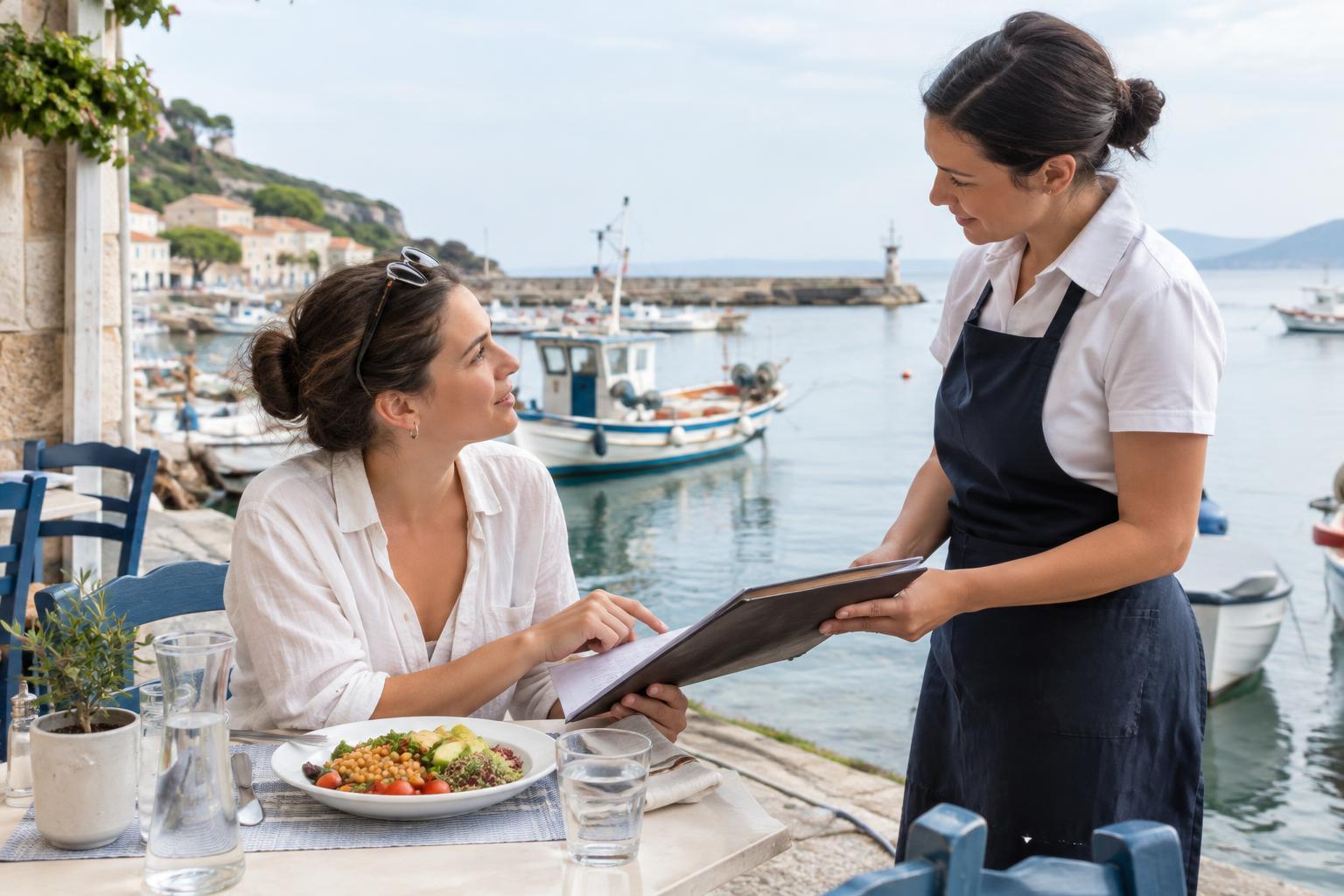
Coastal cooking often reflects what a kitchen can obtain, preserve and prepare, but a menu cannot tell you the full story of a fishing community. Avoid assuming that a rustic name guarantees a particular catch or method. A simple question—“Is this mostly broth, or a hearty bowl with pieces of fish?”—can help you choose without asking anyone to defend a local tradition. If ingredients matter to you, check before ordering; seafood mixtures and broths may contain more than the menu name reveals.
Once the bowl arrives, let its texture guide you. Spoon up broth first, then try the fish with whatever vegetables or bread accompany it. Set shells aside as you go, and take care with bones in dishes made from whole fish or substantial pieces. Whether the kitchen calls it stew or soup, the most useful distinction is the one that helps you appreciate what is in front of you: the flavor of the liquid, the character of the seafood and the way they work together.