Plan for the crossing you are actually taking
A short ferry ride across a sheltered channel is different from several hours on open water. Before you leave, check the expected journey time, the type of vessel, and whether you can go outside during the crossing. If your plans are flexible, allow time before and after the boat trip rather than making a tight connection. That margin gives you room to travel at an unhurried pace, even if you need a break on arrival.
If you have felt motion sick before, prepare before boarding instead of waiting to see how you feel. Ask the operator where passengers can sit or stand, and note where the restrooms are when you board. On a small boat, crew instructions and available seating will matter more than any general rule about the best spot. Follow their guidance, particularly when the boat is moving or conditions change.
Pack for comfort, not just for the destination
Keep a small bag within reach rather than putting everything in a larger case. Water, a light layer, tissues, and a sealable bag for used tissues or other waste can make an uncomfortable stretch easier to manage. A spare top may be reassuring on a longer trip. If you are traveling with children, pack their essentials where you can find them quickly without searching through luggage.
Think about your routine before departure, too. Being tired, rushing to the dock, or arriving hungry may make a crossing feel harder. Aim for enough time to board calmly, drink water as needed, and eat something familiar if that usually suits you. There is no single meal that works for everyone; the useful approach is to avoid experimenting with unfamiliar food just before a journey you expect to find difficult.
Choose a place that helps you settle
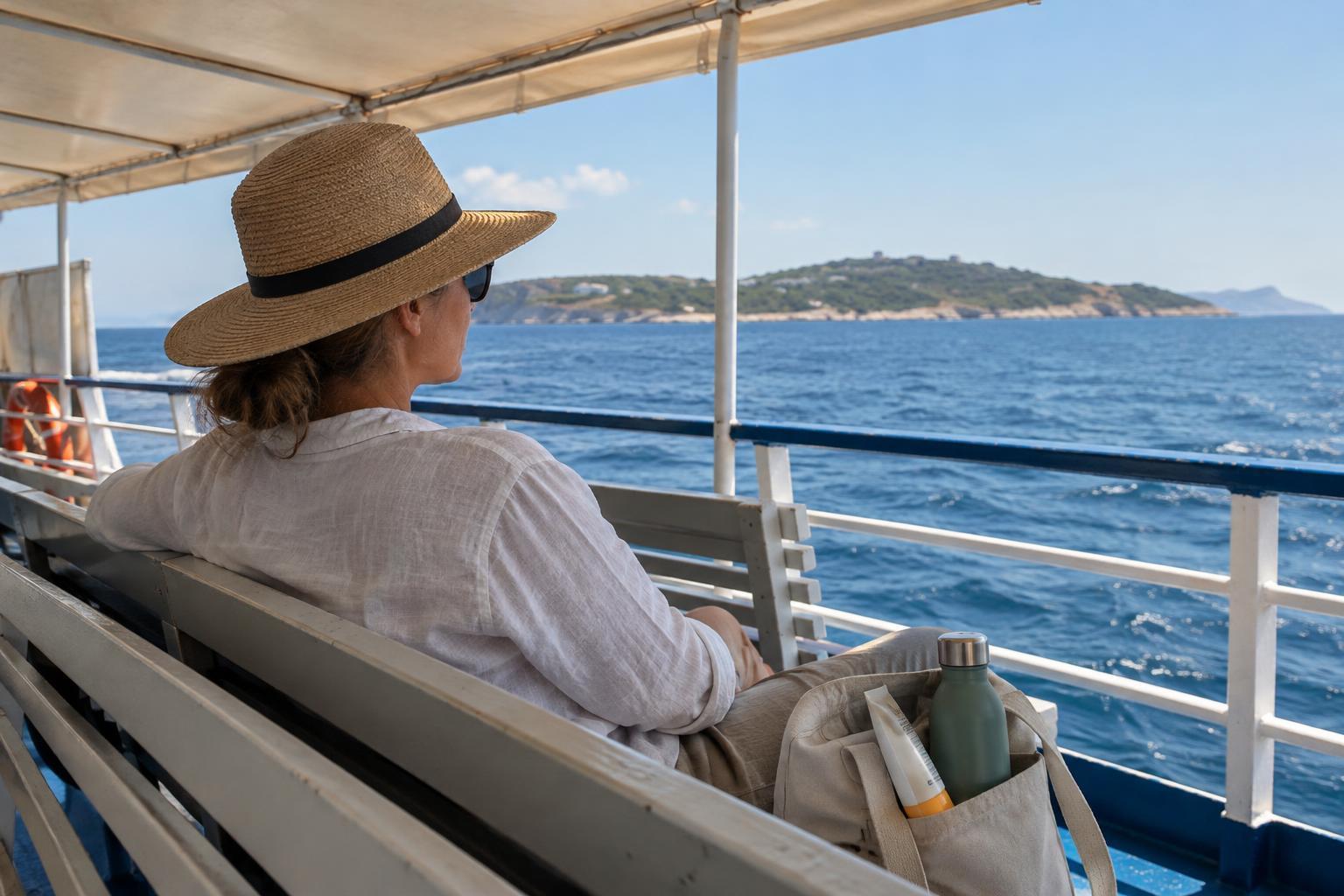
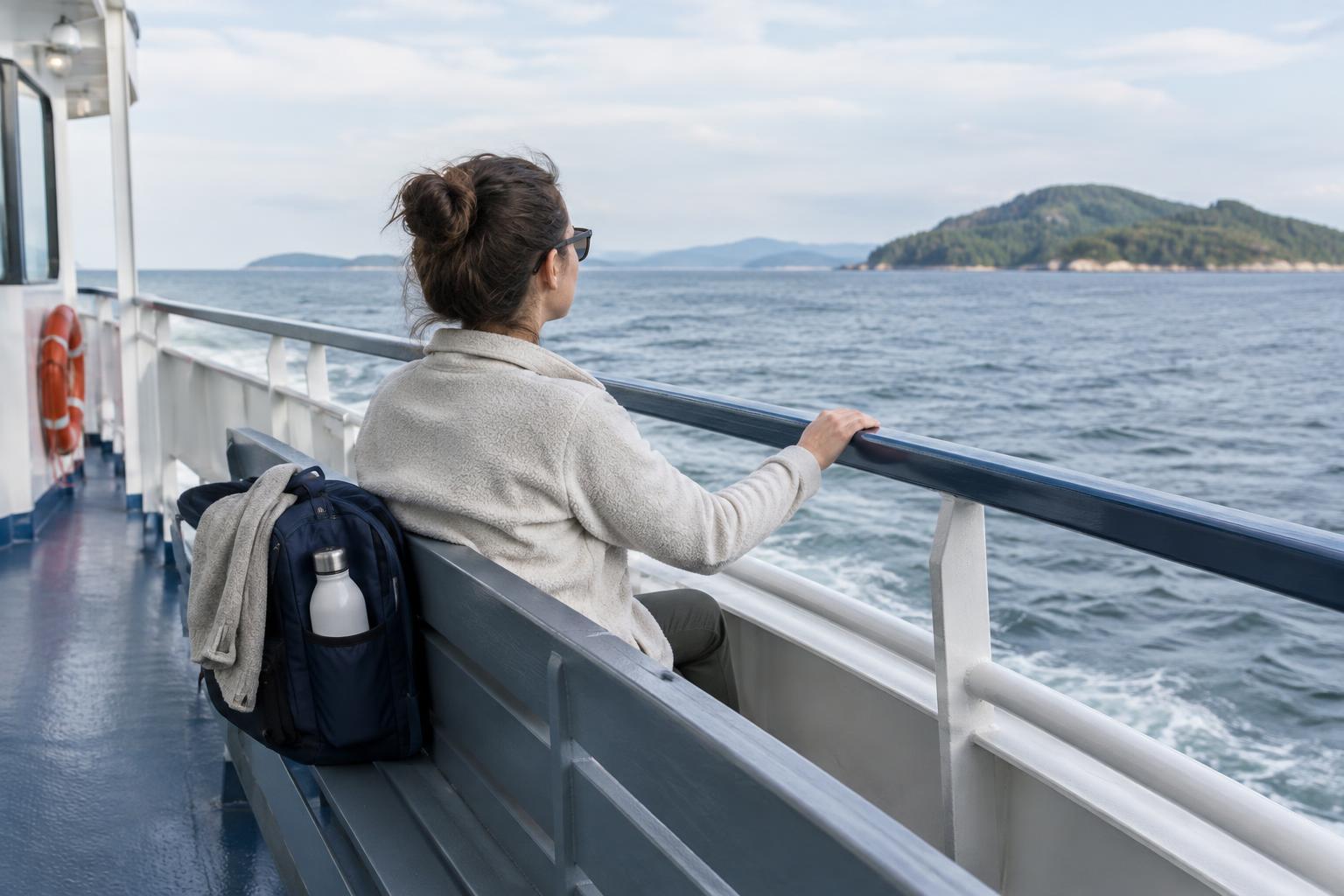
Many travelers find it easier to look toward the horizon than down at a phone or book. If you can, choose a spot with a view outward and try to keep your head comfortably supported. Areas nearer the middle of a vessel may feel steadier than the bow or stern, though layout and sea conditions vary. On a ferry, you may be able to move if your first seat does not feel right; on a smaller boat, ask the crew before changing places.
Fresh air helps some people feel more comfortable, but an open deck is not always available or suitable. Dress for wind and spray if you expect to spend time outside. Wherever you sit, secure loose belongings so you can focus on the journey rather than chasing a bag across the floor. If reading or scrolling seems to make you feel worse, put the screen away and give your eyes a distant point to rest on.
Know your options before you need them
Some travelers consider motion-sickness medicines or other products before a crossing. Options differ in how they are used and in their possible side effects, including drowsiness. Rather than trying something unfamiliar at the dock, read its instructions in advance and ask a pharmacist or clinician what is appropriate for you, especially if you take other medicines, are pregnant, or are planning for a child. Do not assume a product will be suitable simply because it is sold for travel.
It also helps to agree on a simple plan with your companions. Tell them if you would prefer a quiet seat, a view outside, or help finding the restroom. If you begin to feel unwell, pause activities that demand close focus, breathe steadily, and let a crew member know if you need assistance. Crew members cannot remove the motion of the boat, but they can tell you which spaces are safe to use and what facilities are available.
Leave room for recovery on shore
The crossing is only one part of the day. After disembarking, give yourself a moment to regain your bearings before navigating a busy terminal or setting off on a demanding walk. Sip water if you want it, find a comfortable place to sit, and let your travel companions know whether you need more time. A slower first hour can be a better start to an island visit than pushing immediately toward the next booking.
If symptoms are severe, unusual for you, or continue after the journey, seek advice from a healthcare professional. For most travel planning, though, the goal is straightforward: reduce avoidable discomfort and keep your options open. A well-placed seat, an accessible bag, and a little flexibility can help you approach the water with more confidence, even when you cannot predict exactly how the crossing will feel.