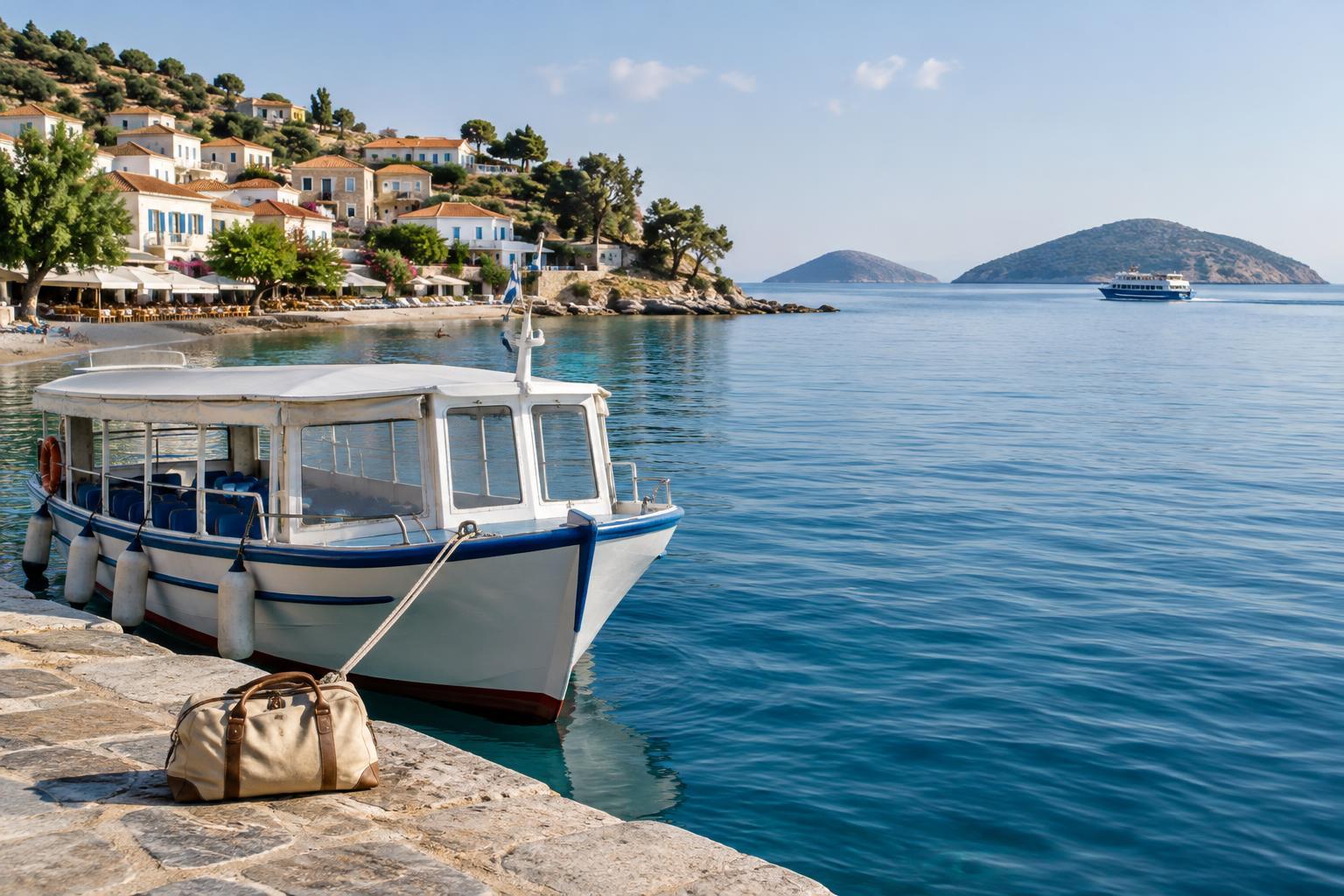
Start with the crossing, not the accommodation
An island may look close on a map, but the ferry route determines how easily it fits into your trip. Before choosing a place to stay, find out which ports serve the island, whether boats run every day and whether the crossing is direct. Some routes call at other islands along the way; others operate differently depending on the day or season. A timetable can reveal that the most convenient-looking arrival port leaves you with a long onward journey.
Work backward from the time you want to spend on the island. If you hope to settle in for several nights, an afternoon arrival might be pleasant. If you have only one night, that same arrival followed by an early departure could leave little time to explore. Treat ferry times as part of the itinerary rather than transport to squeeze in after everything else is booked.
Read the timetable as a whole
Check both your outward and return sailings before committing to either one. A route with a convenient Friday crossing may have a limited choice of returns on Sunday. Look carefully at operating days, seasonal variations and notes that apply only to certain sailings. Confirm which port each service uses, especially if a larger island has more than one terminal.
Also check the operator’s booking and boarding instructions. The time printed for departure is not necessarily the time by which you need to arrive. Foot passengers, cyclists and people taking vehicles may have different check-in requirements. If you need to make a reservation, do it before building a tight itinerary around a particular sailing. Save your booking details somewhere you can reach without a mobile connection, and check the timetable again shortly before travel.
Give every connection breathing room
A ferry can be the only link between two fixed parts of your journey, so avoid treating it like a short transfer across town. If you are arriving by train, bus or plane, allow time to get from that arrival point to the ferry terminal, find the right boarding area and deal with ordinary delays. The same care matters on the return: a late ferry can make an onward departure stressful even when the crossing itself is brief.
Where the stakes are high, consider spending a night near the departure port or returning from the island a day before a fixed onward journey. That adds a stop, but it can turn a fragile chain of connections into a more relaxed trip. A port town may also be worth exploring in its own right. Keep essential medication, a warm layer, water and anything you need for the next day with you rather than packed out of reach.
Make room for weather and changes
Conditions at sea can affect a crossing, and a published schedule is not a promise that every boat will sail exactly as planned. Flexibility matters most on islands with infrequent service. Before you go, find out how the operator announces updates and what your options are if a sailing is delayed or cancelled. Keep contact details for your accommodation handy, so you can let someone know if your arrival changes.
Build a simple alternative plan rather than trying to predict every disruption. Could you stay another night on the mainland or island? Is there a later sailing, or would you need to wait until the next day? Pack and budget with enough margin for a modest change of plans where possible. If your dates are fixed, choose a route and trip length that do not depend on catching the last available boat at every stage.
Let the schedule support a slower visit
Once the crossings are secure, plan the days between them lightly. Note how you will get from the island port to your accommodation: a bus may meet certain ferries, while a walking route that looks short on a map may be steep or exposed. Check local transport hours before assuming you can arrive late and travel onward easily. If you are bringing a bicycle or vehicle, confirm the booking requirements and think about where you will leave it when exploring on foot.
Resist the urge to fill every hour ashore. A ferry timetable gives the trip a natural beginning and end; the time in between can be spent following a coastal path, visiting a harbor or lingering over a meal without watching the clock. Leave a little space on departure day to reach the terminal calmly. The best island itinerary is not necessarily the one that fits in the most stops, but the one that gives you time to feel where you have arrived.