More than one kind of sea vegetable
Seaweed is a broad kitchen term for edible marine algae, not a single ingredient with one flavor or texture. Some varieties are delicate and leafy; others are thick, chewy or crisp when dried. Their tastes can range from gently salty and grassy to deeply savory. The way seaweed is harvested, dried and prepared matters as much as its name: a brittle sheet meant to wrap rice behaves differently from a strip intended to flavor a simmering pot.
For a traveler, seaweed can be a useful way into a coastal food tradition. It may appear as a snack, a garnish, a vegetable side dish or an ingredient that quietly shapes a broth. Rather than assuming it tastes the same wherever it is served, notice its role on the plate. Is it there for crunch, tenderness, seasoning or depth? That question makes an unfamiliar menu easier to read.
Sheets, flakes and seasonings
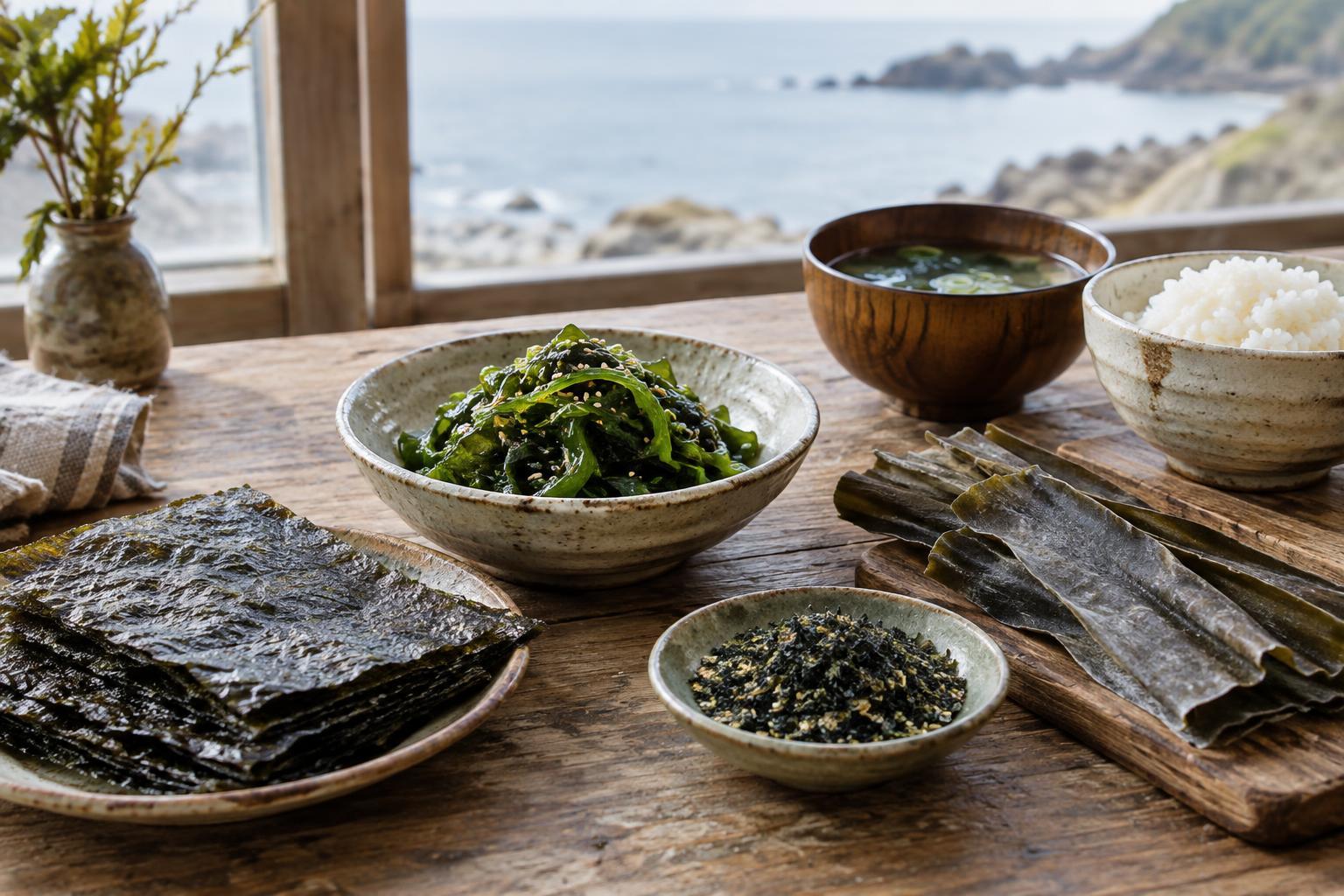
Nori is familiar to many diners as a thin, dark sheet used to wrap rice. It is also cut into strips over noodles or crumbled onto a finished dish. A sheet can lose its crispness when it sits against moist food, so add it just before eating if you want a little snap. At home, torn nori offers a simple finish for rice, eggs or roasted vegetables without requiring a recipe built around seaweed.
Dulse is often sold dried as whole pieces or flakes. Depending on how it is prepared, it can be chewy, crisp or easy to sprinkle. A small amount can bring a savory, briny note to potatoes, soups or bread. Sea lettuce, with its thin green leaves, is another seaweed sometimes dried and crushed into a seasoning. These are different ingredients, but both show how coastal cooks can use a modest harvest to season food well beyond the shore.
Seaweed for broths and tender dishes
Kombu is commonly used to lend savory depth to liquid. A piece can be steeped or gently heated in water as a base for soup, noodles or vegetables, then removed or cut up for another use if the recipe calls for it. Its contribution is less about a strong taste of the sea than about making other ingredients seem fuller. If a recipe gives a steeping method, follow it rather than boiling the kombu aggressively by default.
Wakame is often sold dried in small pieces that expand considerably when soaked. Once softened, it brings a tender, slightly slippery texture to soups and salads. Start with less than you think you need, then drain and cut larger pieces if necessary. On a menu, it may be part of a substantial vegetable dish or simply provide a contrasting texture in a bowl of broth. Texture is often the best guide to understanding why it was chosen.
How coastal kitchens make room for it
Seaweed is often paired with foods that benefit from its saltiness or savory character: grains, beans, fish, shellfish, potatoes and vegetables. It can also offer contrast. Crisp fragments brighten a soft bowl of rice, while tender leaves sit comfortably beside crunchy vegetables in a salad. In many kitchens, the aim is not to make every bite taste intensely marine, but to use seaweed as one ingredient among others.
When eating by the coast, look beyond a single signature dish. A baker might work dried flakes into a loaf, a cook might build a broth around a strip of kelp, or a simple plate might bring together local vegetables and dressed seaweed. Preparations vary by place and household, so ask what kind is being served and how it was prepared. That conversation often reveals more than the general label “seaweed” on a menu.
Buying and preparing it thoughtfully
For home cooking, choose seaweed sold as food and check the package for its name, preparation instructions and storage guidance. Dried seaweed generally needs to be kept sealed and dry; fresh or rehydrated seaweed needs more prompt, careful handling. Rinse or soak only when the product or recipe calls for it, since washing can change its texture and flavor. Wild gathering requires reliable local knowledge of species, water conditions and access rules, so buying from a food seller is the simpler starting point.
Begin with small amounts and let each form show what it does well: a little nori for crunch, wakame for tenderness or kombu for a broth. Seaweeds can differ substantially in iodine content, and some prepared products contain added salt or other ingredients. If you need to manage your iodine intake or have a relevant dietary restriction, check the label and seek appropriate professional guidance. Otherwise, curiosity and a light hand are good tools for bringing this coastal ingredient to the table.