Start with time, not distance
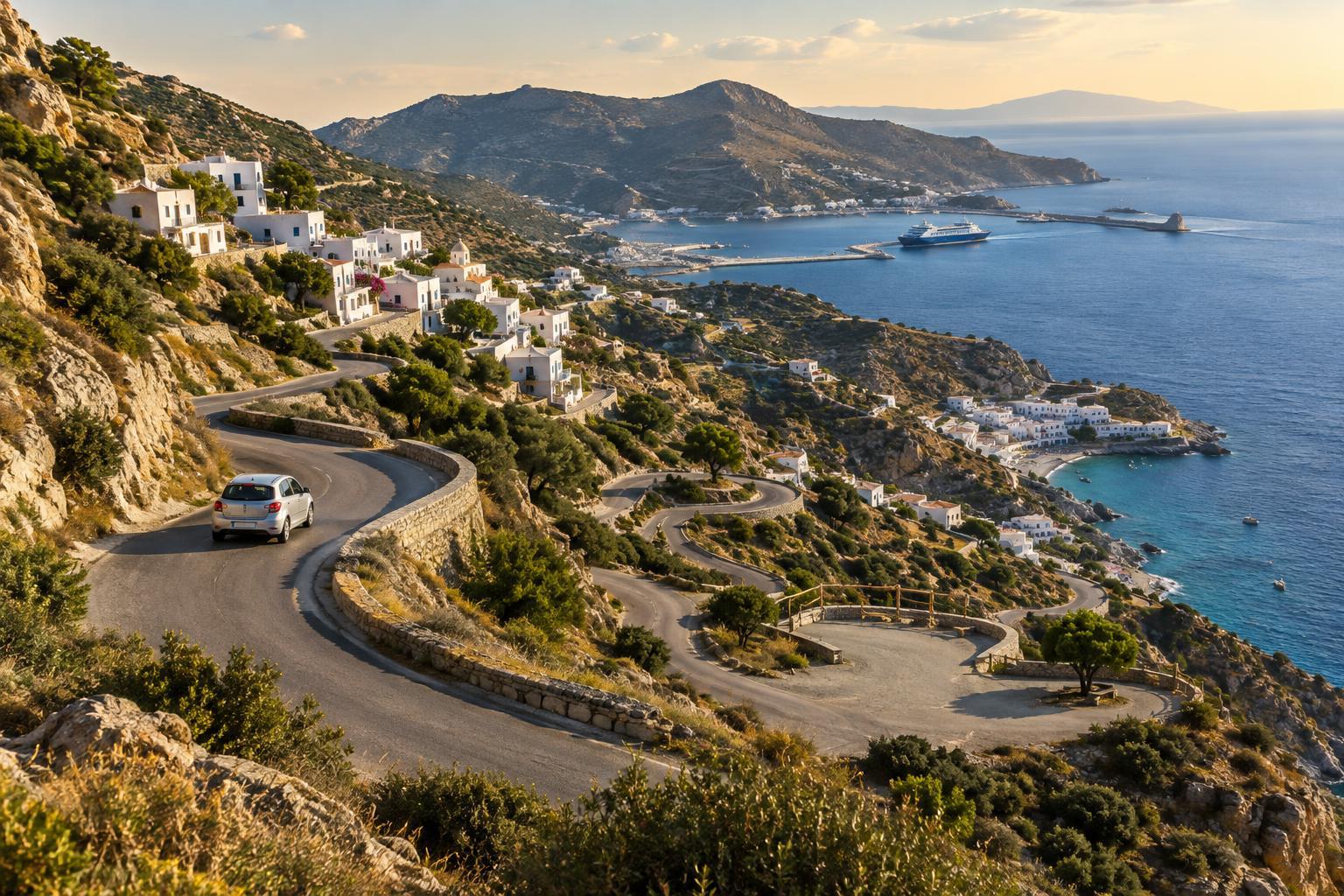
On an island, two places can look close on a map yet feel far apart on the road. A route may follow the coast around coves, climb inland before descending to the next village, or pass through a series of tight bends. Distance tells you how far you will travel; it does not tell you how quickly you can travel it.
Begin with a route planner’s driving estimate for the exact start and end points, rather than calculating from kilometres alone. Check that it has selected the road you intend to use: a shorter inland route and a scenic coastal road can make very different days. Treat the displayed time as a starting point for the drive, not a promise about when you will walk through the door at your destination.
Read the route for likely slow points
Zoom in on the journey before committing to a schedule. Look for mountain crossings, repeated hairpin bends, roads that narrow through settlements and stretches where the route leaves the main road. A final few kilometres down a small lane may take more attention than a much longer stretch of open road. If you are unfamiliar with the vehicle or prefer an unhurried pace, allow extra time rather than assuming you will match a planner’s estimate.
Road conditions can also change the rhythm of a drive. On narrow routes, you may need to slow for oncoming traffic, cyclists, livestock or people walking near the road. Weather and visibility matter, particularly on exposed or steep sections. None of these factors has a reliable, island-wide time penalty, so avoid applying a single percentage to every journey. Give more room to routes with several potential slow points and less to straightforward links between nearby towns.
Add the time that driving estimates leave out
Make a separate allowance for everything between leaving your accommodation and actually beginning an activity. That might include loading bags, finding a place to park, paying for parking and walking from the car to a beach, trailhead or restaurant. A viewpoint stop belongs in the plan too, even if you expect to stay only briefly. Small pauses are part of the appeal of an island journey, but they add up when you have a reservation later.
A simple working estimate is: planned driving time plus known stops plus a flexible buffer. For example, if a route planner suggests 70 minutes, you might allow 20 minutes to park and reach your destination, then leave another 20 minutes for an unplanned pause. That makes the door-to-door plan 110 minutes. These added amounts are choices for that particular outing, not rules for every island road. Review them if the route is especially narrow, the destination is busy or your group needs more frequent breaks.
Plan backward from fixed commitments
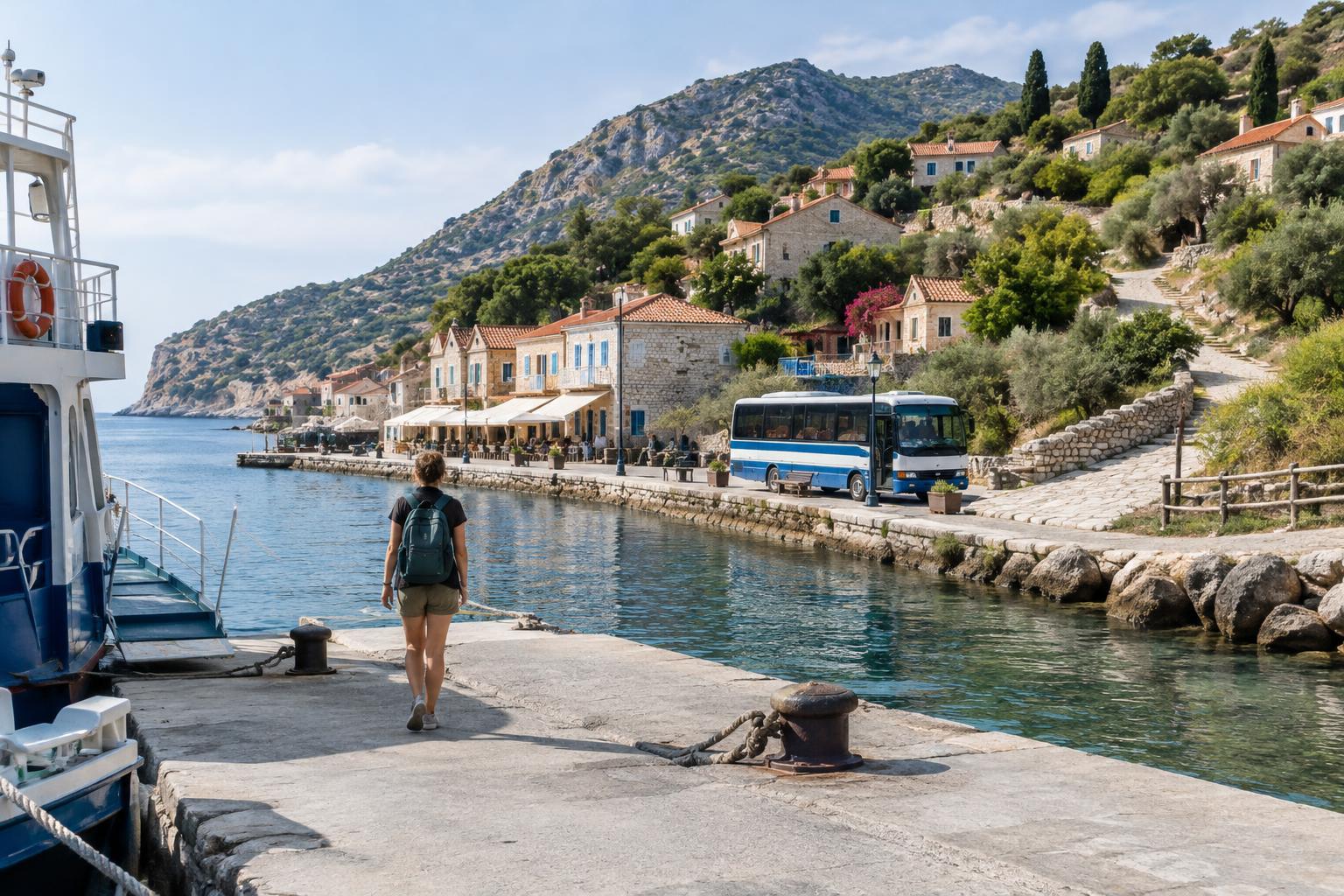
Ferries, guided visits and accommodation check-ins deserve a different approach from a casual beach day. Start with the time you need to be at the terminal or meeting point, not the published departure or activity time. Check the operator’s instructions for vehicle boarding and allow for the drive to the correct entrance, possible queues and the walk from parking or check-in. If missing a connection would disrupt the rest of your trip, choose a larger buffer or travel to the departure area earlier.
For a day with several stops, write down an arrival window for each one instead of a precise minute. This makes it easier to decide which stop to shorten if the first leg runs slowly. Try not to build a schedule in which every scenic pull-off, meal and village visit depends on the road being clear. When the journey itself is part of the reason for visiting, a plan with fewer stops often leaves more room to enjoy them.
Before setting out, check the route and any relevant opening or boarding details again. Keep an offline map or clear directions as a fallback where mobile coverage may be patchy, and follow posted signs and local road rules over any suggested shortcut. The most useful island travel estimate is not the fastest possible time: it is one that lets you arrive safely, meet your commitments and still notice where you are.