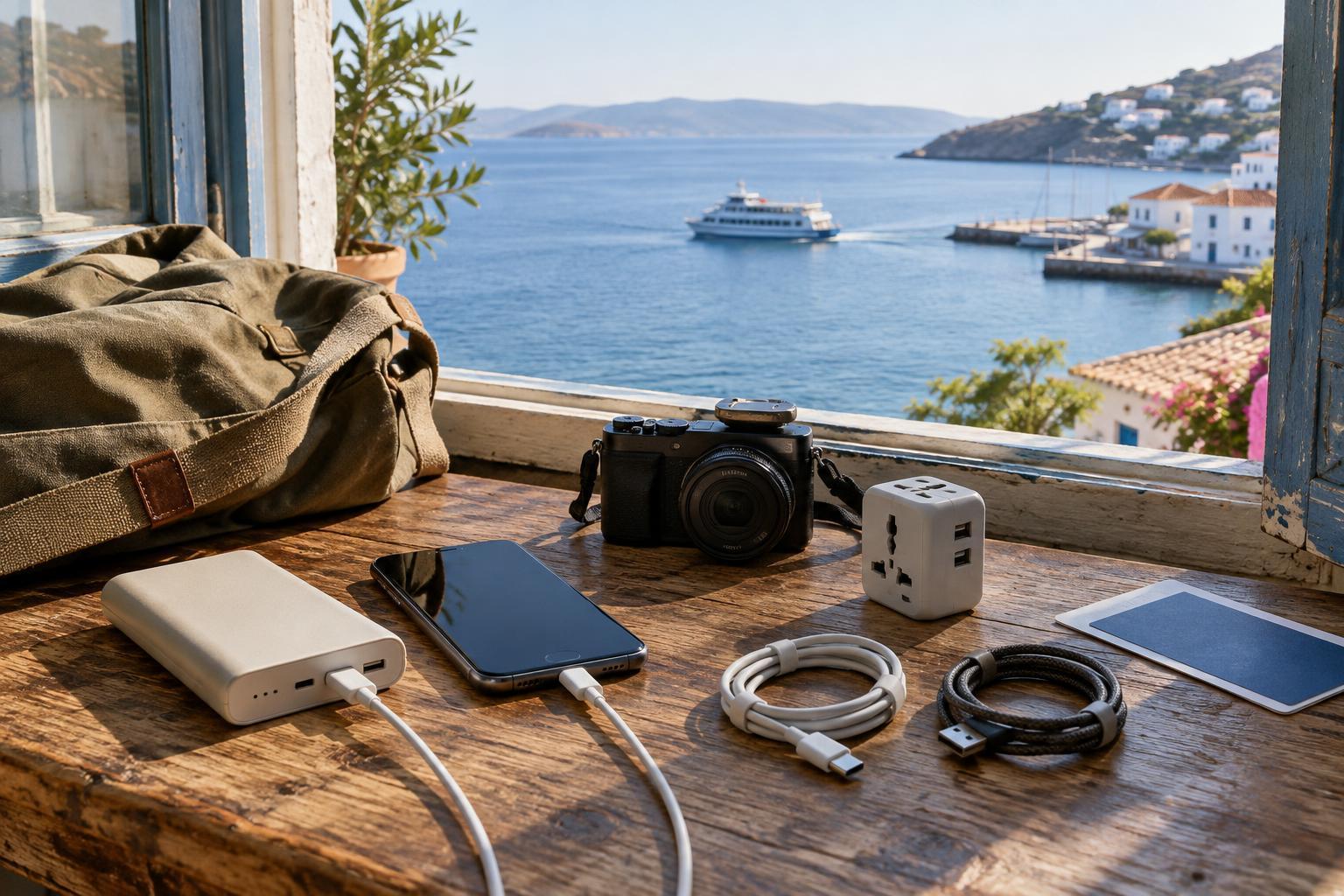
Decide what needs power before you pack
Start with the devices you expect to use every day: perhaps a phone for tickets and directions, a camera, headphones or an e-reader. Then separate essential uses from optional ones. If your phone holds your accommodation details and onward travel information, keeping it charged matters more than keeping every entertainment device at full capacity.
For each device, note its charging port and whether its cable is in good condition. A short list can prevent the familiar problem of carrying several plugs but leaving behind the one cable you need. If two devices use the same connection, consider whether one cable is enough or whether a spare would be more useful on days when both need charging.
Before departure, save important booking details where you can access them without a connection. A paper note with your accommodation address and next departure point is a useful backup if your phone runs low. The aim is not to abandon digital tools, but to avoid making one battery responsible for the whole trip.
Build a small, compatible charging kit
Choose a charger that suits the number of devices you will realistically charge at once. A compact multi-port charger may reduce clutter, but check that its ports match your cables and that its output is suitable for your devices. Pack an appropriate plug adapter for your destinations, and read the markings on chargers and devices rather than assuming an adapter also changes electrical voltage.
Keep the kit together in a pouch so cables do not disappear into different bags. Loosely coil them instead of bending them tightly at the connectors, and put a small label on similar-looking cables if that helps you identify them quickly. A spare cable for your most important device may be more useful than several rarely used accessories.
A power bank can provide a reserve between reliable outlets. Choose one you can comfortably carry for a full day, and charge it when you have a convenient opportunity rather than waiting until it is empty. Before any flight or crossing, check the carrier’s current rules for carrying and using batteries; requirements can vary by operator and route.
Plan around ferries and long days away from outlets
Treat a charging point on a ferry as a bonus, not the foundation of your plan. An outlet may be occupied, inconveniently placed or unavailable where you are sitting. Charge your essential devices before you leave your accommodation, especially if the crossing is followed by a walk, a bus connection or a late check-in.
For a long day out, use power deliberately. Download maps or other information you expect to need while you have a connection, and close activities you are not using. If you rely on your phone for a ticket, keep the booking accessible offline where possible and follow the operator’s instructions about what must be shown at boarding.
Store your power bank and one charging cable where you can reach them without unpacking everything. Keep them away from loose liquids in your day bag. If you expect to be outdoors for hours, a protective bag or pouch can help keep your charging kit separate from wet clothing and sandy items; charge devices only when the connections are clean and dry.
Make charging part of your arrival routine
When you reach a new room, locate the usable outlets before settling in. This is especially helpful if you are sharing a room or leaving early the next morning. Put the charger somewhere visible but out of the way, and avoid stretching a cable across a walkway. If an outlet looks damaged or a connection feels insecure, use another one and let your host know.
Make a brief evening check: phone, power bank, any device needed for the next day, and the cables that must go back into your bag. Charging everything every night may be unnecessary, but checking what the next day requires takes little time. On a morning with an early ferry, confirm that you have taken the charger out of the wall before closing your bag.
A good charging plan should feel almost boring. A compatible kit, a modest reserve and a few offline backups let you spend less time looking for outlets and more time paying attention to the places you came to see.