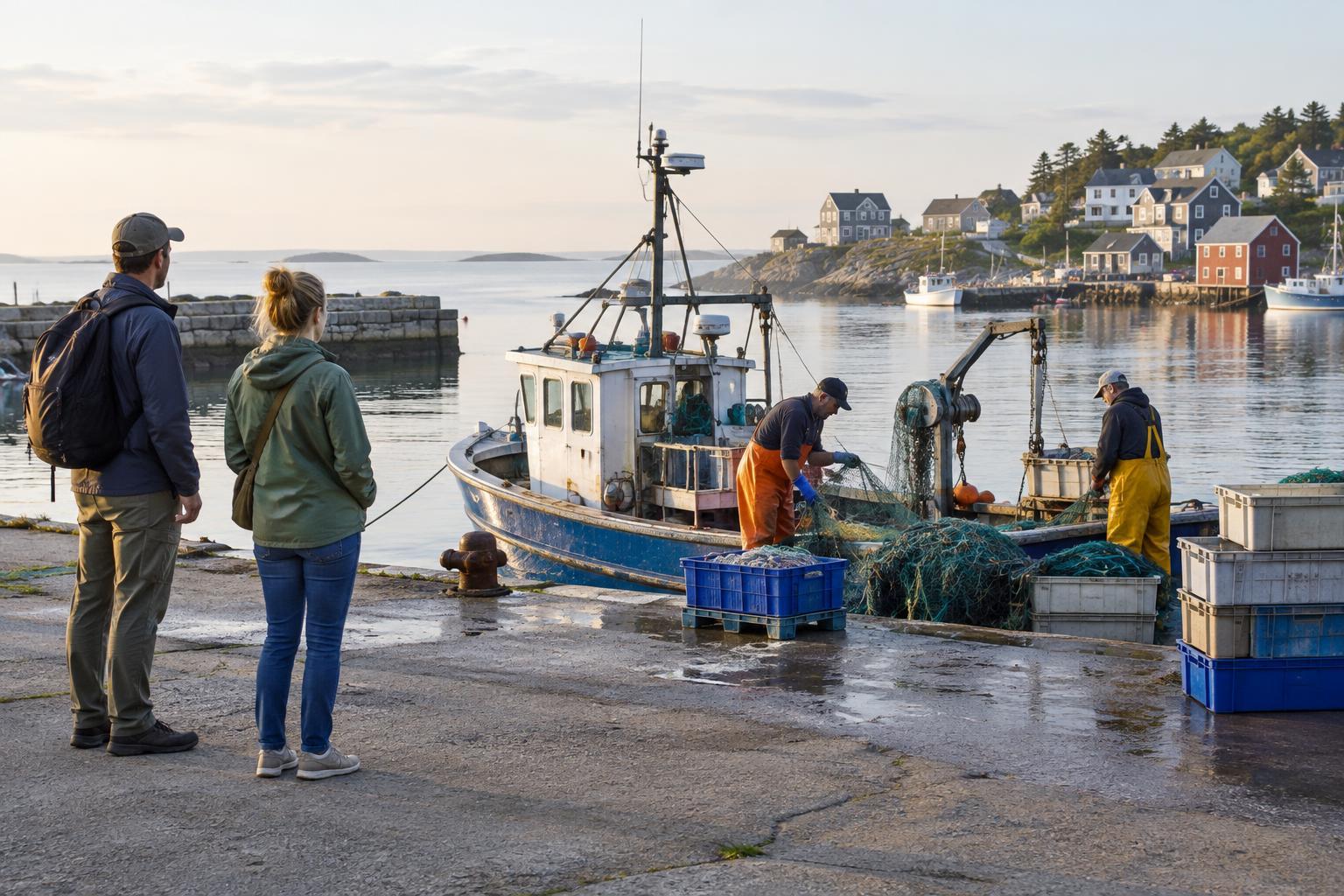
See the harbor as a workplace
Fishing boats, ferries, repair yards and waterfront cafés may sit within a short walk of one another. From a visitor’s perspective, the harbor can feel like one continuous public space. For the people who work there, it may be a patchwork of loading areas, access routes, storage spaces and places to take a break. Keeping both views in mind makes a waterfront visit more interesting and more considerate.
Start by looking for clues about how the space is used. A wide quay may need to stay clear for vehicles, even when no delivery is happening. Coiled lines, stacked crates and equipment set beside a boat are not props. Gates, painted markings and signs can indicate where public access ends; if the boundary is unclear, choose an established walking route rather than testing it. Rules and layouts vary between harbors, so follow local signs over assumptions based on another place.
Give working routines room to change
Waterfront work does not necessarily follow a visitor’s sightseeing schedule. A quiet stretch can become busy when a vessel arrives or a delivery begins. If you stop to watch, stand somewhere that leaves paths, ramps and doorways open. Move on when activity picks up, rather than waiting for someone to ask you to shift. This small adjustment lets you enjoy the scene without turning routine work into an obstacle course.
Sound travels differently around open water and hard surfaces, but a harbor is not always a peaceful place. Engines, tools and conversations may be part of its daily rhythm. Instead of expecting a working quay to behave like a viewing terrace, seek out a designated public path or nearby seating area when you want to linger. Keep children and companions close in areas where people or equipment are moving, and treat any posted restrictions as practical boundaries, not invitations to find a better angle.
Let curiosity guide you, not interrupt you
A working waterfront offers plenty to notice without requiring an explanation from the people in it: the way boats are tied up, how goods move between shore and vessel, or how different parts of the harbor connect to nearby streets. Observation can raise useful questions to explore later at a local museum, visitor center or public display. It does not oblige a crew member to pause a task and answer them.
If you do speak with someone, choose a moment when they are clearly available, keep the question brief and accept a short answer or no answer at all. The same care applies to photographs. An open view of boats is different from a close image of a person at work. Ask before making someone the subject, and avoid photographing through workshop doors or into spaces that appear private. Putting the camera away can also make it easier to notice the harbor as a lived-in place rather than a collection of pictures.
Connect the waterfront to the wider town
A harbor is rarely separate from the community around it. Streets leading away from the water may hold suppliers, cafés, homes and other businesses whose routines overlap with waterfront work. Exploring those streets on public routes can give a fuller sense of the place than staying at the most photographed viewpoint. It also helps spread your attention beyond the people and spaces already accommodating visitors.
When you stop for food or browse a shop, look for ordinary ways to be a welcome customer: respect opening hours, make room for regular trade and avoid assuming every item has a maritime story attached to it. If a business shares details about its products or local connections, listen with interest; if it does not, there is no need to press. Coastal culture includes everyday transactions and familiar routines, not only the traditions highlighted for travelers.
The most rewarding waterfront visits often leave space for both appreciation and restraint. Walk where visitors are welcome, pause where you are not blocking anyone, and remember that the view continues to be someone’s working day after you leave. That awareness need not make a harbor feel off-limits. It can make your time there more attentive.