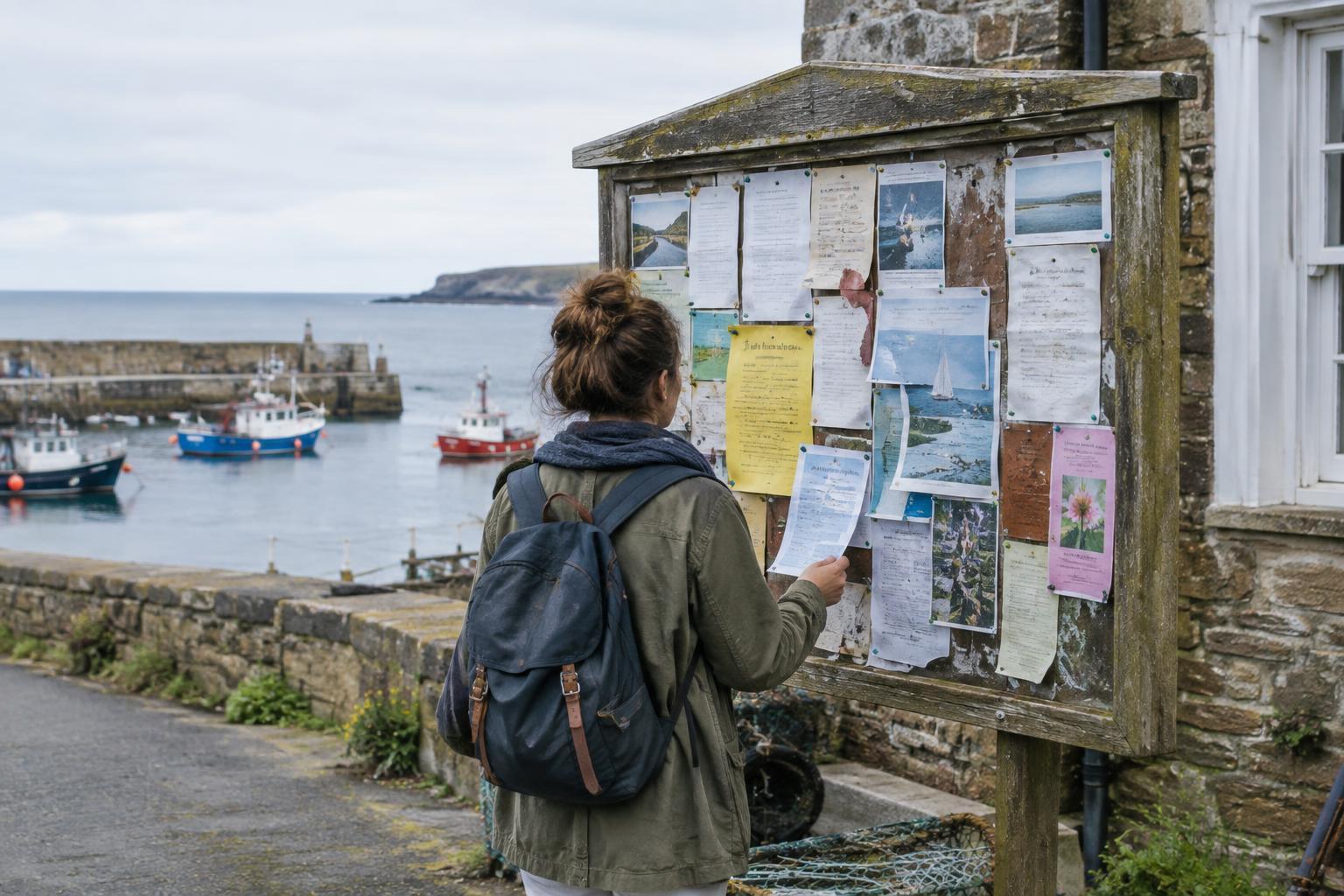
Start with what the board is for
A community noticeboard may look like a list of things to do, but it usually serves a wider purpose. Alongside concerts or exhibitions, you might see a request for volunteers, a change to a local service, a lost-item notice or an invitation to a residents’ meeting. Each poster is addressed to a different audience. Reading the board well means noticing those differences rather than treating every notice as a visitor recommendation.
Look for boards in places you already have reason to enter, such as a public library, community hall, café or ferry waiting room. Check whether a board is intended for public browsing; a notice inside a workplace or residential building may not be. Take a moment to read the heading, location and date of each poster before deciding it is relevant. In a town you do not know, a familiar-sounding venue name may refer to a building some distance away.
Tell an open invitation from a local message
An event advertised in public is not necessarily designed for drop-in visitors. A club meeting may welcome new members but expect an ongoing commitment. A fundraiser might be open to anyone, while a rehearsal or workshop may require booking. Look for wording such as “all welcome,” admission details, a booking contact or a clear description of who can attend. If the invitation is ambiguous, ask the organizer before turning up.
Approach community-run events as a participant, not an observer of local life. Arrive at the stated time, follow the same entry process as everyone else and pay any listed contribution. If an event has a small capacity, booking matters even when admission is free. Avoid photographing people, children or personal notices without permission. A public poster makes an event discoverable; it does not make everything at that event public material for your trip.
Check the practical details
Noticeboards are often updated by several people rather than a single editor. An old poster may remain beneath newer ones, or a handwritten change may be easy to miss. Check the year if one is printed, then confirm the venue, start time, booking requirements and any access information through the contact details the organizer provides. If you cannot confirm an important detail, keep a backup plan instead of assuming the event will run as advertised.
Think through the journey home as well as the journey there. An evening event in a neighboring village might be easy to reach but difficult to leave without a car. In places served by ferries or infrequent buses, transport schedules may determine whether attending is practical. Check the relevant service information separately, and allow for a change of plans. A noticeboard is a starting point for planning, not a substitute for it.
Read between the event listings
Even when you do not attend anything, a board can help you understand which activities have a place in town life. Repeated notices for a repair group, language class or community meal suggest ways people regularly gather. A poster for a beach clean-up or heritage talk may point to a subject residents care about. These are clues, not a complete portrait of a community: the people who use a board and the groups able to print posters will shape what appears on it.
Be especially careful with notices about personal needs or local disputes. They may be posted for neighbors who know the context, not for visitors to discuss or share. You can learn from the fact that a board serves everyday purposes without repeating someone’s contact information or turning a private concern into a travel anecdote.
Let the board guide a modest next step
The best discovery may be a straightforward one: a public talk that fits your schedule, an exhibition at a small venue or a community-run event that clearly welcomes newcomers. Choose something you are genuinely interested in, confirm the details and leave room to listen. If nothing suits your visit, that is fine too. A few minutes spent reading can still help you see the town as a place where people make plans, exchange help and maintain shared spaces.
Before leaving, put posters back as you found them and avoid covering notices with your own material unless the board’s rules allow it. Small courtesies matter because the board is useful primarily to the people who live nearby. For a visitor, its value lies less in uncovering a hidden experience than in learning to recognize the difference between a public invitation and an ordinary message between neighbors.