Start with the station’s position
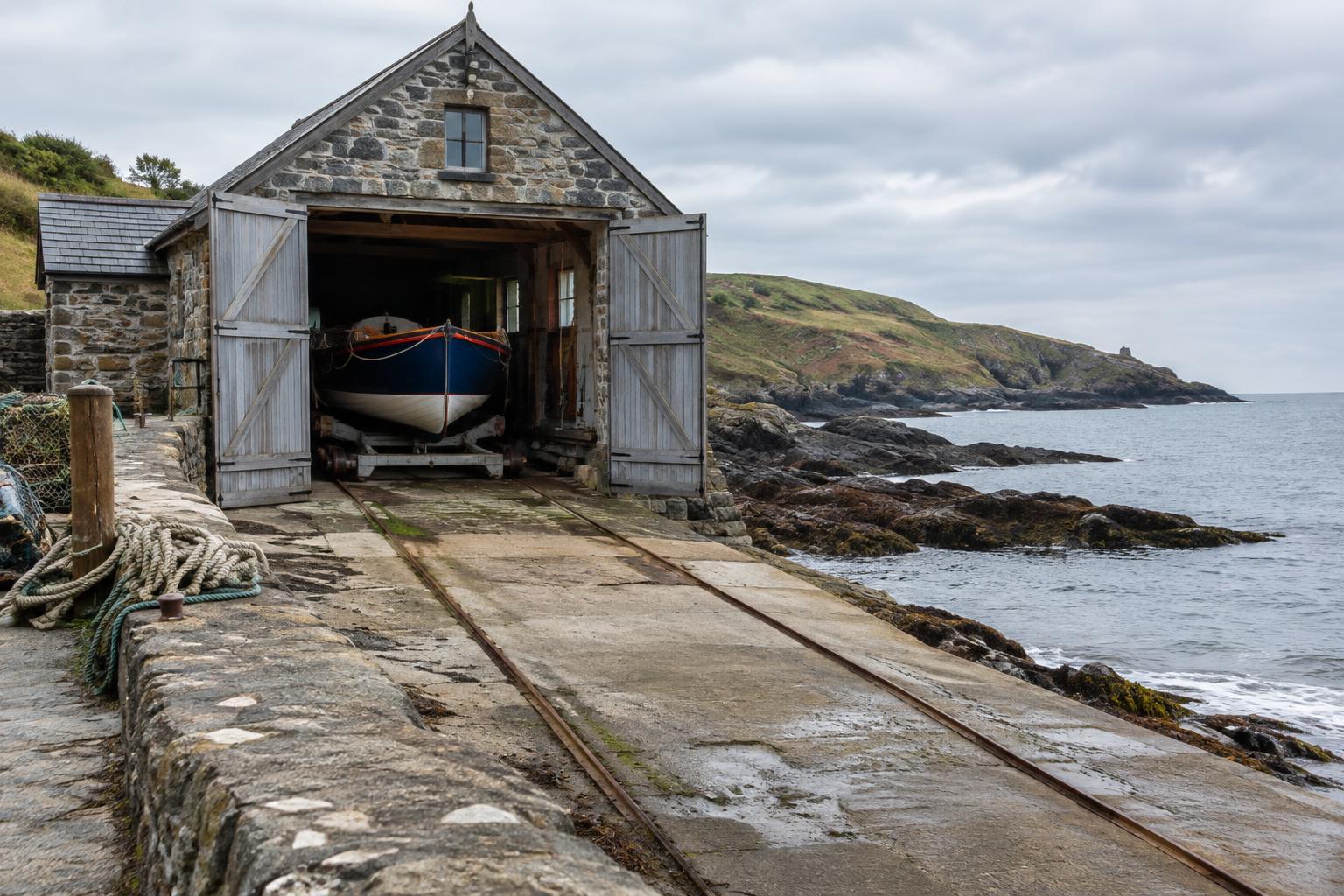
A lifeboat station is best understood from outside first. Notice its distance from the water, the slope between its doors and the shore, and the kind of coast it faces. A station beside a sheltered harbor may have launched differently from one facing an exposed beach. Its location can suggest which routes were practical for getting a boat into the sea, though the shoreline may have changed since the building was first used.
Look for a wide doorway, a ramp or slipway, and space where a crew could gather. These features were shaped by the work of moving a boat quickly, not simply by architectural taste. If the building has been converted into a home, café or museum, try to distinguish older working features from later additions. An interpretation panel or local archive may help, but the building itself is a useful place to begin asking questions.
Consider how the boat reached the water
The lifeboat on display is often the most striking object, but its launch method tells an equally important story. Some boats could be pushed down a slipway; others were taken across a beach on a carriage or kept afloat nearby. The practical choice depended on the boat, the terrain and local conditions. A photograph of a launch may reveal details that a boat viewed indoors cannot: the number of people involved, the route to the water and the effort required before a rescue could even begin.
Look beyond the boat for equipment used to haul, steer, signal or maintain it. An old winch or carriage might appear modest beside a vessel, yet it helps explain the station as a working system. If objects come from different periods, avoid treating them as one complete scene. Ask which boat and equipment were used together, and whether displays show ordinary practice or a particular event.
Look for the people behind each launch
Rescue history is sometimes told through dramatic accounts of storms. Those stories matter, but a station also depended on routine work: keeping equipment ready, practicing, watching conditions and organizing a crew when help was needed. Crew lists, photographs and station records can make that less visible labor easier to see. They may also raise questions about who carried out support work ashore and whose contributions were recorded.
When reading a rescue account, pay attention to the people in danger as well as those who went to help. Were they traveling, fishing or working aboard a vessel? What could the crew know about the conditions before launching? A brief display may not answer everything. Rather than filling the gaps with assumptions, use them to recognize how difficult decisions could be when information was limited and weather or visibility was poor.
Read the wider coastline
A station’s surroundings can help explain why rescue provision was needed there. From a safe public viewpoint, look toward harbor entrances, headlands, offshore rocks or stretches of exposed shore. Think about how those features might affect a vessel approaching land, particularly in rough weather or poor visibility. Conditions change from day to day, so a calm visit offers only a partial impression of the challenges faced at sea.
The station may be part of a larger network of coastal safety. Nearby lights, lookouts, communication points and sheltered anchorages each had different purposes. They did not remove danger, but they can show how people tried to identify hazards, call for help and respond. If you explore several sites in one area, compare their positions rather than assuming every station served the coast in the same way.
Visit with care
Check whether a station is a heritage site, a working rescue facility or both before approaching it. An open door is not necessarily an invitation to enter, and ramps, access roads and boat storage areas may need to remain clear. Follow posted guidance, keep a safe distance from a launch or training exercise, and ask before photographing people at work. A coastal path or public viewpoint can often provide a better view of the station’s setting without interrupting its use.
Before leaving, take one more look from the shore toward the building. Imagine the sequence of a call for help: gathering people, preparing equipment, reaching the water and returning safely. That sequence connects the objects inside to the landscape outside. It also makes room for a quieter understanding of maritime heritage—one concerned not only with vessels and voyages, but with the communities prepared to respond when a voyage went wrong.