Start with the place, not a shopping list
A coastal picnic is more enjoyable when the food suits the day you actually have. Before visiting a market, consider how far you will carry your meal, whether you can sit comfortably at your destination, and how long the food will be out of a refrigerator. A short walk to a shaded waterfront bench allows different choices from a long journey to an exposed beach.
Check whether eating is permitted where you plan to stop. Some shorelines have protected habitats, limited access or rules about fires and waste. You do not need a remote spot to have a memorable meal: a public picnic area near a harbor can offer views, shelter and bins, while keeping food and belongings away from fragile dunes.
At the market, look around before committing to a menu. A picnic might begin with ripe fruit, a loaf of bread or a prepared vegetable dish rather than a particular coastal specialty. Notice what sellers can portion for you, what comes with excessive packaging and what needs to stay chilled. A flexible plan makes room for local finds without leaving you with more food than you can carry or eat.
Choose foods that travel well
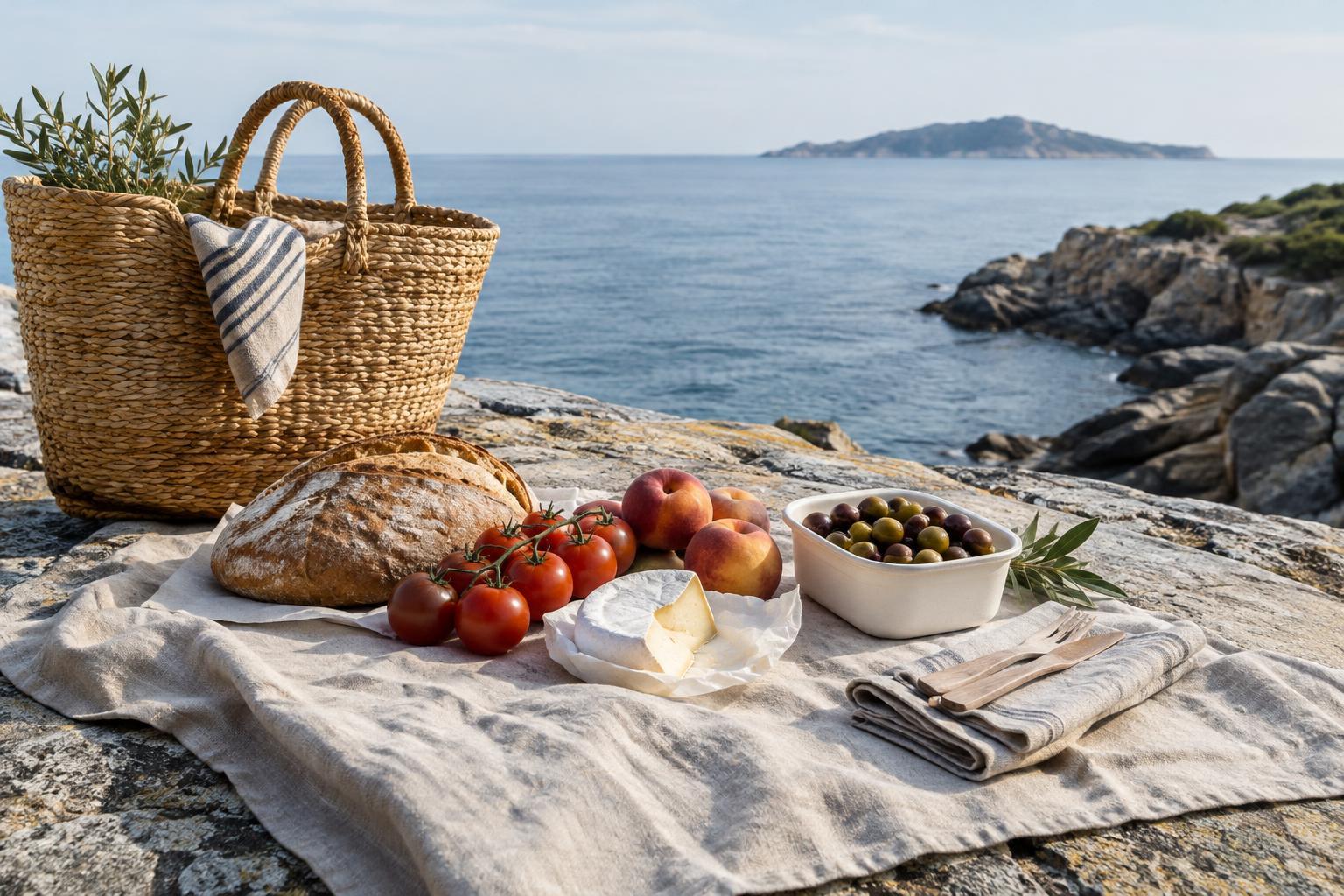
Build the meal around a few complementary items: something filling, something fresh and something with a strong flavor. Bread or another sturdy staple can accompany tomatoes, sliced vegetables, cheese, olives, pickles or a spread. Local specialties need not be seafood; a regional pastry, preserved vegetable or seasonal fruit can make the meal feel rooted in its setting. If you are unsure how an unfamiliar food is usually eaten, ask the seller a simple question rather than guessing.
Match delicate foods to your route. Soft pastries can be crushed in a crowded bag, and dressed salads may become soggy on a long walk. Whole fruit, sturdy rolls and foods packed in small containers are often easier to manage. If you buy a prepared dish, ask whether it is meant to be eaten cold, whether it contains ingredients you need to avoid, and whether it requires refrigeration.
Take particular care with foods that need to stay cold, including many dairy, meat, cooked rice and seafood dishes. An insulated bag with cold packs can help during the trip, but it is not a substitute for refrigeration over an extended outing. If you cannot keep a perishable item appropriately chilled, choose a different food or plan to eat it promptly near the place where you bought it. Follow any storage directions provided by the seller.
Pack for the meal you want to eat
A small picnic kit makes market shopping easier. A reusable container can protect soft produce; a cloth or lightweight mat provides a clean surface; and a napkin, spoon or blunt table knife may be enough for simple food. Check travel and venue rules before packing any sharp utensil. Bring drinking water, especially when the walk to the picnic spot is longer than expected.
Think through how you will serve each purchase before buying it. A whole melon may look appealing but be awkward without a cutting board, while berries can be eaten with little preparation. If you buy a spread, make sure you have something to put it on. Ask for only the packaging you need, and use a separate bag or container for scraps and wrappers in case no bin is available.
Wind is part of many coastal meals. Lidded containers and food that can be held in the hand are less troublesome than loose paper, light plates or an elaborate arrangement of small dishes. Set your belongings well back from the water and give yourself time to eat without rushing to beat the tide or the weather. If conditions change, a sheltered bench can be a better picnic spot than the beach you first imagined.
Leave room for the experience
A picnic is an opportunity to notice how a place eats, not to assemble a perfect collection of specialties. One unfamiliar purchase alongside reliable favorites is plenty. Try it slowly and pay attention to its texture and flavor. You may find that the bread, fruit or simple accompaniment is the part of the meal you remember most.
When you finish, pack out everything you brought, including small scraps that might blow away. Avoid feeding birds or other wildlife, and leave shells, stones and plants where they belong. If you have leftovers that need refrigeration, return them to suitable storage promptly rather than carrying them through the rest of the day.
The best coastal picnic is often modest: food you can carry comfortably, a place where you are welcome to pause, and enough time to enjoy both. By shopping with your route and surroundings in mind, you can turn an ordinary market visit into a meal that belongs to the journey.